
If you run your site in two languages, you are already being treated differently by two AI systems, and almost nobody has told you which way.
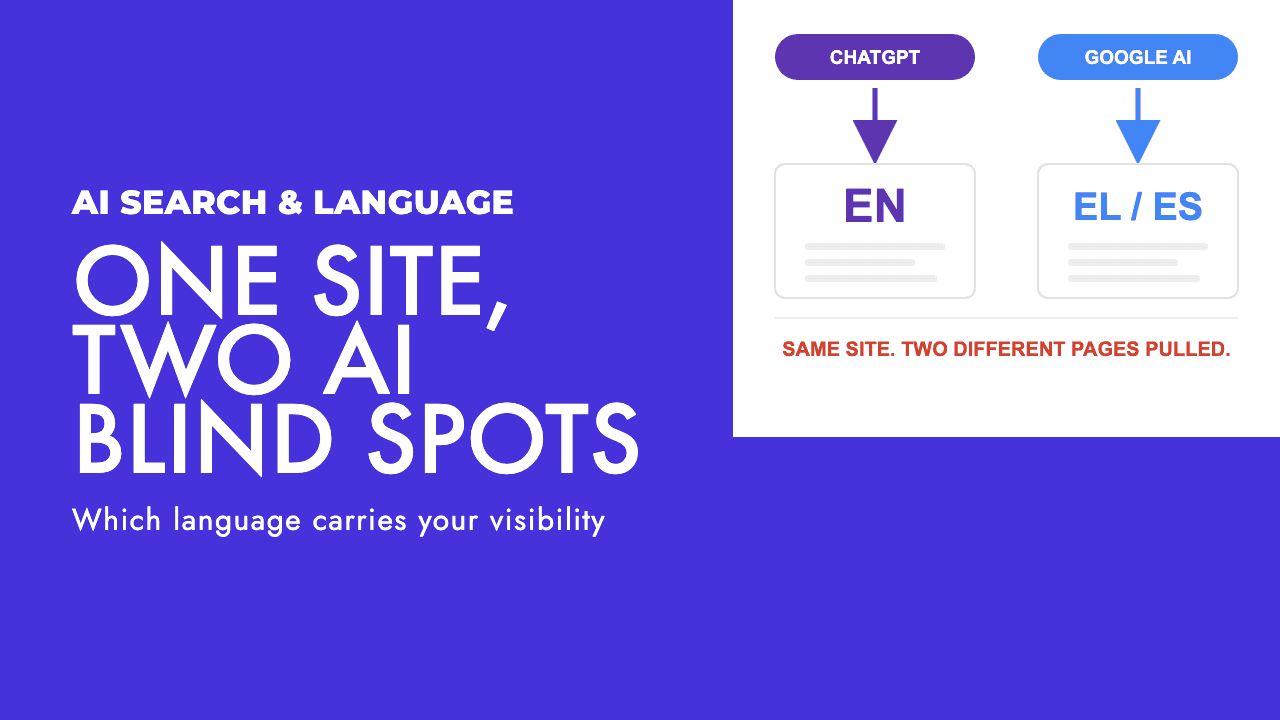
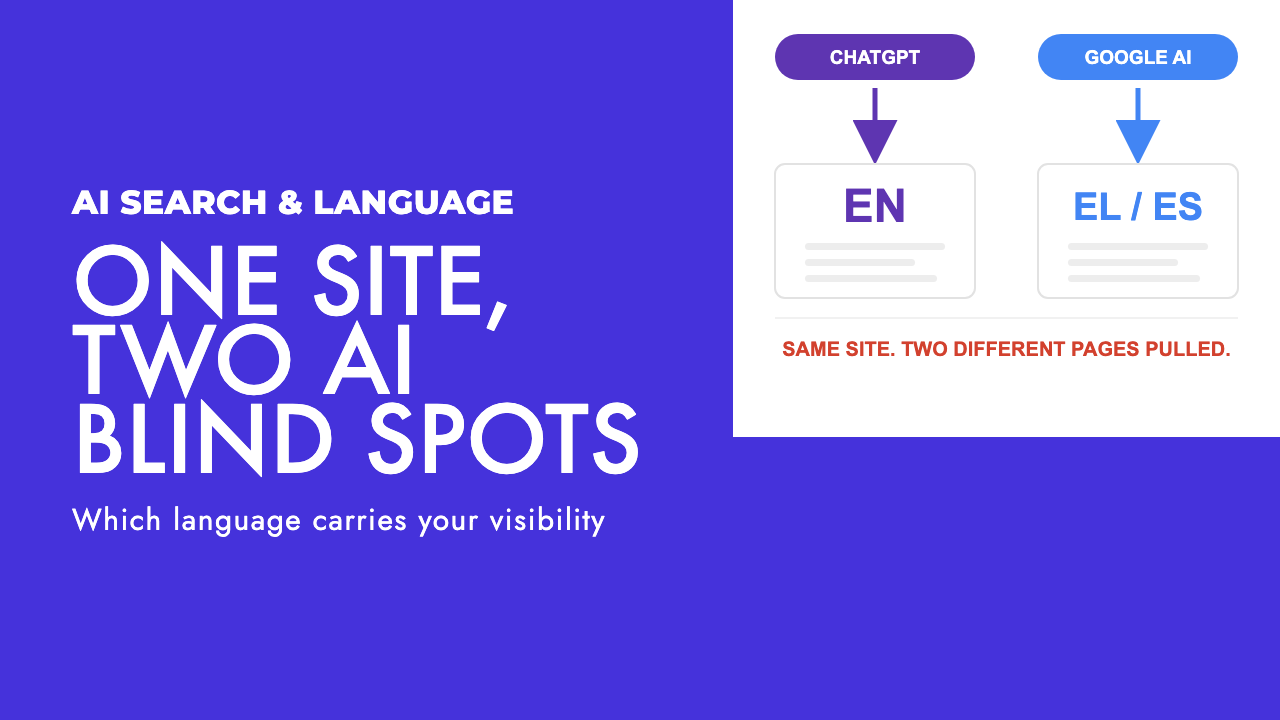
Two pieces of research published this summer landed on the same finding from opposite ends. ChatGPT reaches for English pages far more often than actual search demand justifies. Google's AI does close to the opposite, staying inside the language the question was asked in. Same site, same content, two completely different retrieval behaviours.
For Cyprus, where Greek and English sit side by side on most business sites, this is not a theoretical problem. Same for anyone in the US serving Spanish speakers. You are not choosing between languages any more. You are choosing which AI system can see you.
What the research actually found
The clearest numbers come from an analysis of multilingual sites across ChatGPT, Copilot and Google AI published on Search Engine Land in early August. Scored against actual search demand, ChatGPT retrieved English pages at roughly 2.6 times the rate you would expect, pulling English between 65% and 79% of the time. Copilot came out essentially neutral. Google's AI Overviews leaned very slightly towards the local language (Search Engine Land).
The detail that matters most is where the bias comes from. It shows up at retrieval time, when the bot goes out to fetch pages to build an answer. It is not baked into the training data. That means it is a plumbing decision, not a deep property of the model, and plumbing decisions get changed.
From the other direction, Weglot analysed over 1.3 million citations across AI platforms and found Google AI Overviews cited Spanish pages for Spanish queries about 96% of the time, with AI Mode close behind at 93% (Weglot). Weglot's own read on ChatGPT is that it queries the web in both English and the user's language, so the two studies disagree on how strong the ChatGPT skew is, and agree that Google's surfaces stay in the query language. Ask in Spanish, get cited in Spanish, or do not get cited at all.
Put the two together and the picture is simple. An English-only page has a real shot in ChatGPT and almost none in a Greek or Spanish AI Overview. A Greek-only page is the reverse.
Our take: the panic translation is the wrong move
The obvious reading is "add English pages everywhere, ChatGPT is huge." We think that is the wrong first instinct, and the research quietly agrees.
The same Search Engine Land analysis flags the trap: an outdated English page will happily outrank a well maintained local-language page in AI citations. The retrieval bot is not weighing which version you actually keep current. It is reaching for English. So a three-year-old English "About" page with the wrong prices, the wrong opening hours and a discontinued service becomes the version an AI quotes to a customer, while the Greek page you actually maintain sits unread.
We see the milder version of this constantly on client sites. A half-finished second language, launched during a redesign, abandoned within a year, never removed. In classic search it mostly just diluted things. In AI search it can become your primary voice.
The rule we work to: never publish a language you are not committed to maintaining. An English version is an ongoing cost, not a launch task. If you cannot commit to updating it every time you update the Greek, you are better off with one strong language than two, one of which lies about you.
Which blind spot is actually yours
Work out where your buyers are before touching anything.
If your customers ask in Greek and buy in Cyprus, Google AI Overviews and AI Mode are your priority surface, and they want Greek. Your Greek pages are the asset. An English version helps you reach the ChatGPT crowd, expats, tourists and international buyers, but it is expansion, not a fix. Do not degrade the Greek to fund it.
If you sell professional services internationally from Cyprus, and a lot of firms here do, the balance flips. Your buyers research in English, often through ChatGPT. English is the primary asset and Greek is the local trust signal. Depth on the English side is where the return is.
If you are a US business serving Spanish speakers, the Weglot finding is the one to act on. Spanish queries in Google's AI surfaces almost never surface English pages. If your Spanish presence is a machine-translated afterthought or does not exist, you are invisible for that entire audience, no matter how strong the English site is.
What to fix, in order
1. Check whether your second language is real. Open ten pages in each language side by side. If the second language is thinner, older or partly machine-translated, that is your finding. Fix or remove it before you build anything new. This is a standard part of a full site audit on any multilingual site.
2. Get hreflang right. This is unglamorous and it still breaks constantly. Reciprocal tags, correct region codes, self-referencing on every page. Our guide to hreflang on multilingual sites walks through the implementation, and while the examples are from iGaming the mechanics apply anywhere.
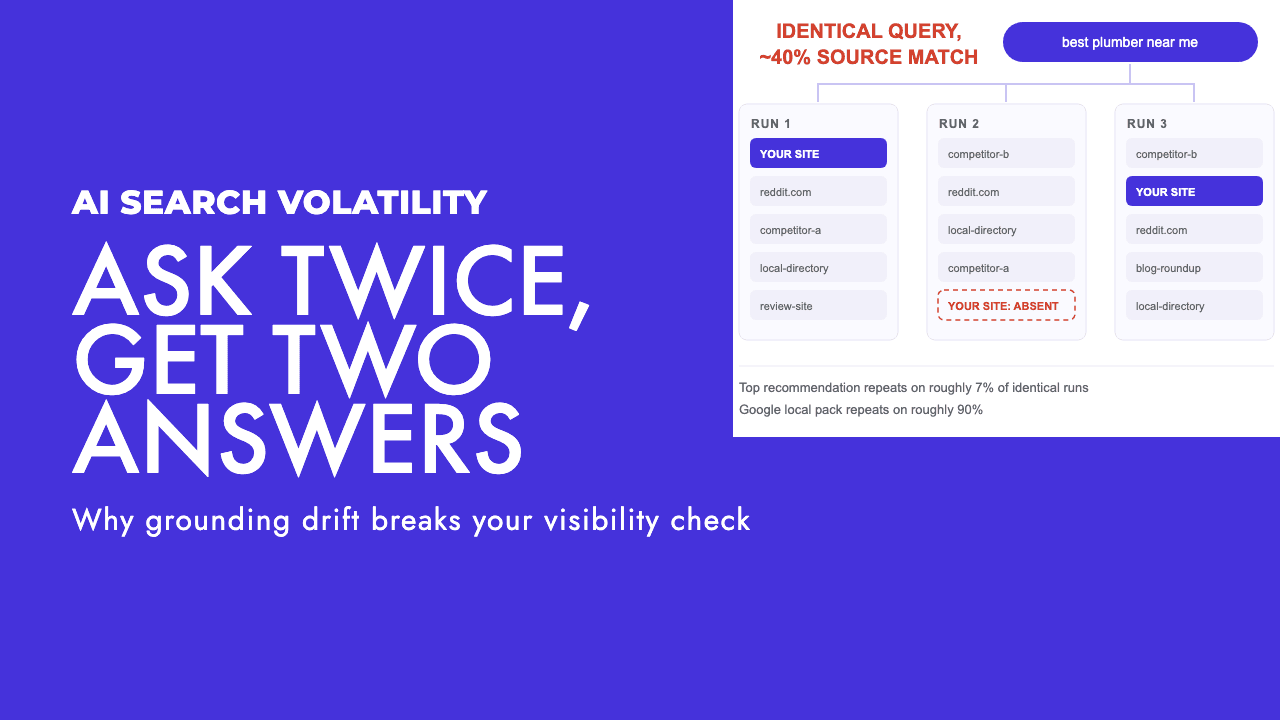
3. Test the actual answers. Ask ChatGPT, Google AI Mode and Perplexity the five questions your customers ask, in each language, and run each one a few times because the sources change between runs. Read which pages get pulled. This takes an hour and tells you more than any tool dashboard about where you stand.
4. Watch for the stale citation. If an old English page is what surfaces, you have found your highest-priority update. Not a rewrite of your homepage. That page.
5. Only then consider adding a language. With a maintenance plan attached, in writing, with an owner.
Why this is worth doing now
The English retrieval bias is a retrieval-layer decision, and it will narrow as the models get more non-English training and retrieval catches up. The Search Engine Land analysis expects the English advantage to diminish over time for exactly that reason. So the window where a quick English page buys you disproportionate ChatGPT visibility is a window, not a permanent structure.
What does not close is the underlying discipline. Content in the language your customer thinks in, maintained properly, marked up correctly. That works in Google AI Overviews now, it works in ChatGPT now, and it will still work when the retrieval quirks have been ironed out.
The failure mode we would genuinely worry about is the opposite. Businesses reading "ChatGPT prefers English" and quietly letting their local-language content rot, right as Google's AI surfaces become more language-strict, not less. That is trading a permanent asset for a temporary quirk.
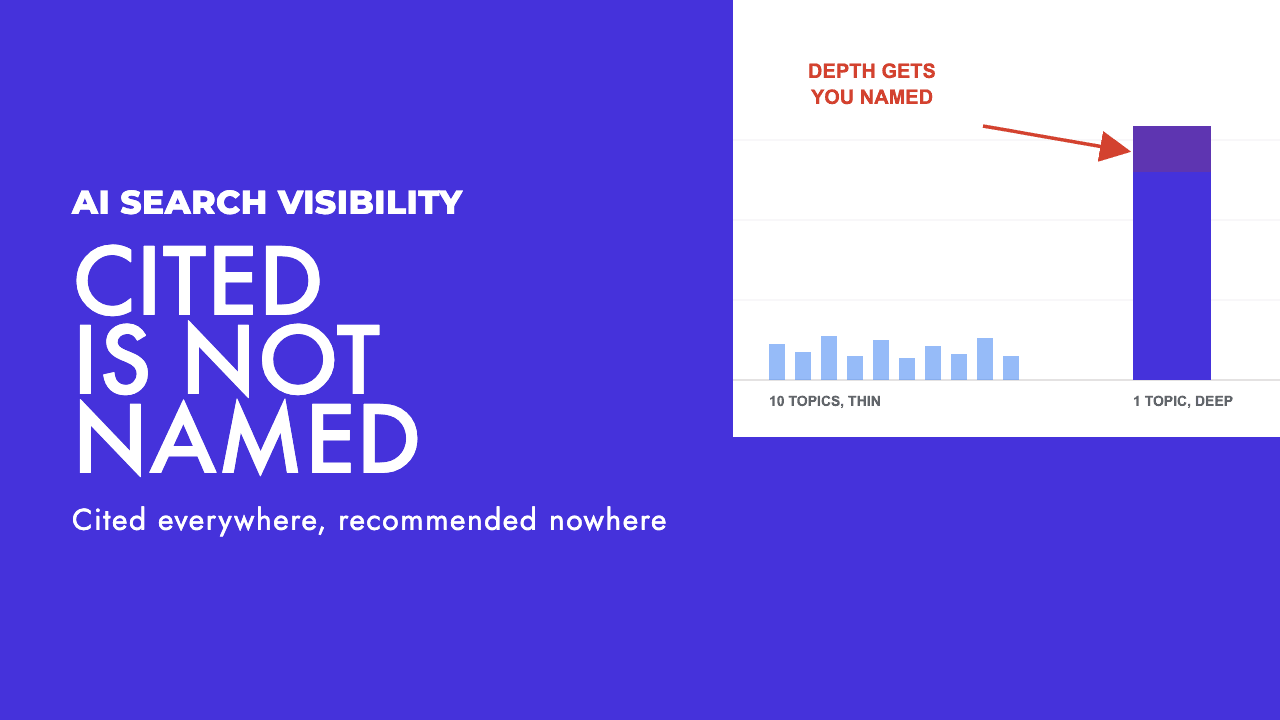
This connects to something we wrote about recently on how AI can cite you without naming you. Language adds another layer to the same problem. You can be the source of an answer, in the wrong language, invisible to the person reading it.
The short version
ChatGPT over-reaches for English. Google's AI stays in the language of the question. Neither behaviour is something you control, and both are worth designing around.
Pick the language your buyers actually think in and make that version genuinely good. Add a second only if you will maintain it. Then go and read the answers the AI systems are giving about you, in both languages, because that is the only place this shows up honestly.
If you want a hand working out which language is carrying your visibility, that is exactly what our international SEO and AI search optimisation work covers, and you can start with a free SEO review.