
Your AI visibility dashboard says you appear in thirty categories. Your pipeline says two of them are real. Both readings are correct, and there is now research that explains why.
Being cited by an AI engine and being recommended by one are not the same outcome. Most tools count them as the same number, which is how a lot of GEO budget quietly gets spent on topics that will never send you a customer.
What the new data actually shows
Kevin Indig published an analysis on Search Engine Land on 5 August 2026 that pulls the two apart. Working from Semrush's US ChatGPT visibility data across 1,094 categories, five prompt variants per category, January through June 2026, he compared citations (your URL used as a source) against named brand mentions (the model saying your name in the answer) (Search Engine Land).
The split is the finding. In categories close to a brand's core expertise, 74% of appearances were citations and 44% were named mentions. In categories far from that core, around 50% were citations and only 25% were mentions.
So the further you drift from what you are known for, the more the engine treats you as raw material rather than as an answer. It reads your page, takes the explanation, and recommends somebody else.
There is a second finding that matters more for planning. Shallow presence across many categories, showing up for one of five prompt variants, carried a slightly negative association with brand mentions. Consistent presence across all five variants inside a category carried a slight positive one. The brands that already own a category are the ones that expand successfully.
Citation is a footnote. Recommendation is a referral.
A citation is the model borrowing your sentence. A recommendation is the model telling a buyer to go to you.
Those produce completely different commercial outcomes and they are earned in different ways. We wrote earlier about ghost citations, where the engine links your page without naming you at all. This is the layer above that problem. Even when the engine does name brands, it names the ones with repeat presence in the category, and you can be sitting in the source list watching a competitor get the introduction.
If your reporting rolls citations and mentions into one "AI visibility" score, you cannot see any of this. Split the metric. Count how often you are named on comparison and recommendation prompts, separately from how often you are merely cited.
Our take: the breadth instinct is the wrong instinct right now
Here is our opinion, and it runs against most content advice we read.
The standard SEO growth play is to expand outward. You rank for your core topic, so you build out the adjacent cluster, then the one next to that, and coverage becomes the strategy. In classic ten blue links that worked reasonably well, because each page competed on its own merits.
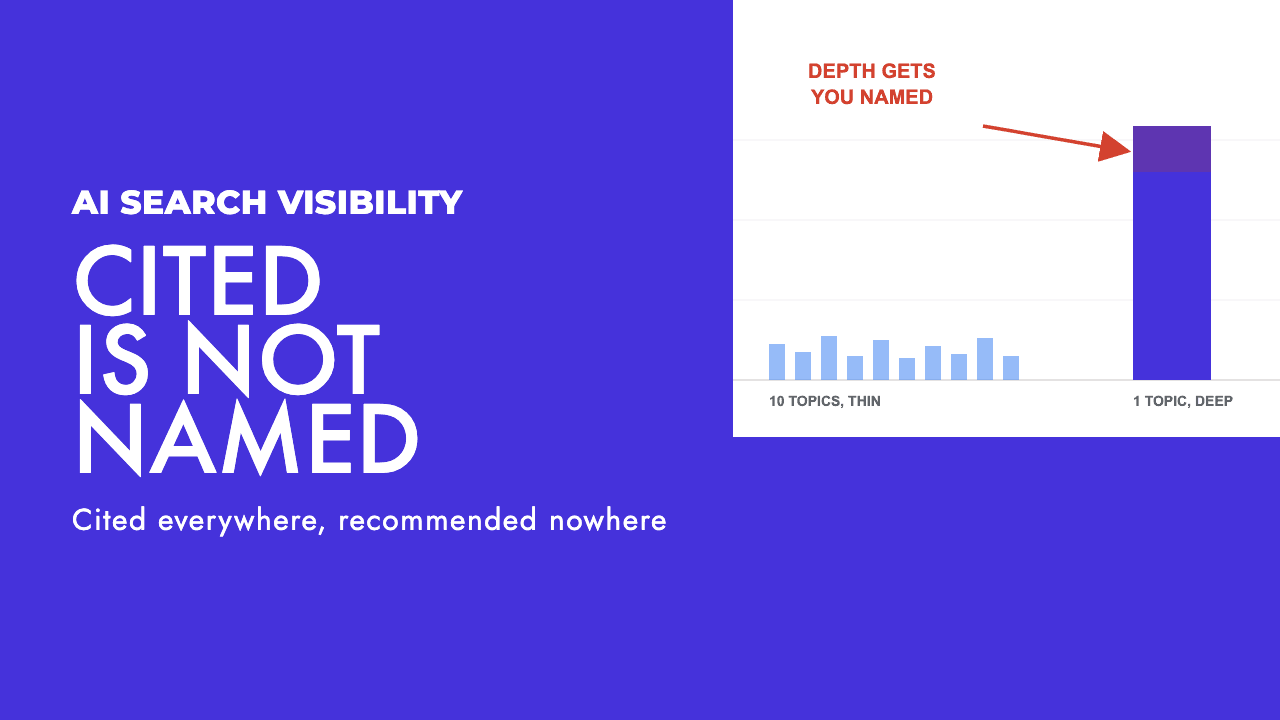
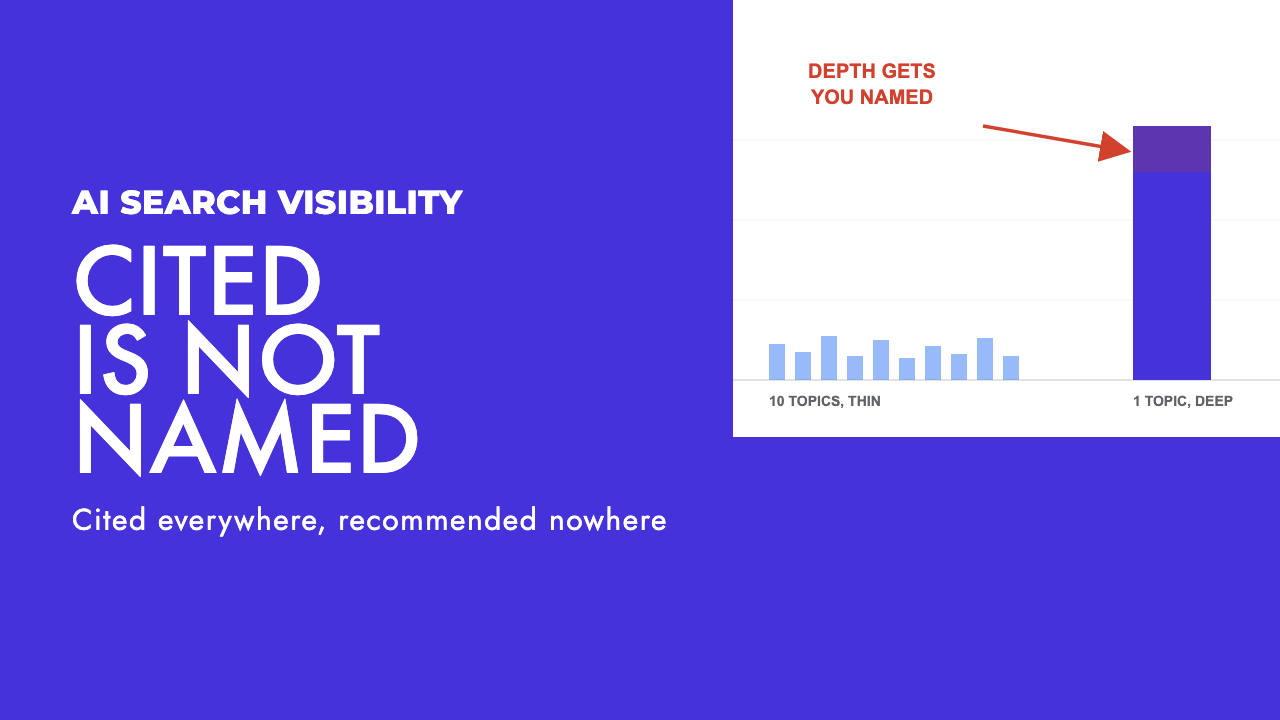
In AI search it backfires for small and mid-sized businesses. Thin coverage of ten categories buys you citations in ten categories and recommendations in none. We see this constantly with client sites that have been publishing for a year: broad topic maps, respectable crawl coverage, and no category where the brand is the obvious answer.
The honest read is that breadth itself is not the problem. Shallow is the problem. Indig's data does not say a big brand should stop expanding, it says presence that appears in one phrasing out of five is not presence at all. If you cannot cover a category properly, covering it badly is worse than skipping it.
For a business in Cyprus or a regional US firm, that is genuinely good news. You were never going to outrun a national competitor on breadth. Owning one narrow category is achievable.
What "owning" a category looks like in practice
Pick the category where you already have real depth, then test it the way the research did.
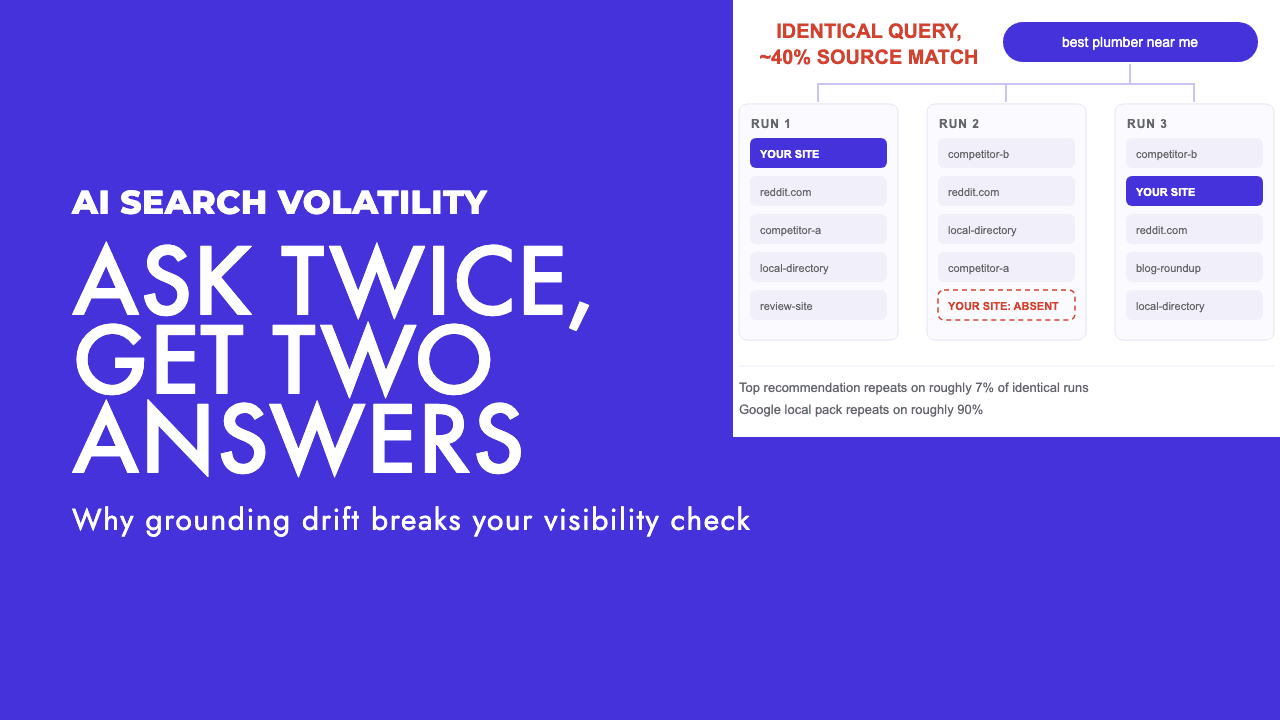
Write out five ways a buyer would actually ask for what you sell. Not keyword strings, full sentences: "best commercial cleaning company in Limassol", "who should I hire to deep clean an office", "commercial cleaners near me with good reviews", and so on. Run all five through ChatGPT, Gemini and Perplexity, and record whether you are named, cited, or absent in each. Run them more than once, because AI answers drift between runs and a single pass will mislead you.
One out of five means you are a source, not an answer. Five out of five means you own it. Everything in between tells you which phrasings you are losing and why.
Then close the gaps inside that category before you touch any other topic. That means covering the sub-questions properly, keeping brand facts consistent everywhere they appear, and structuring pages so a model can extract a clean claim without guessing. We covered the page-level mechanics in our guide on structuring content so LLMs cite you.
The citations that carry recommendations are mostly not on your site
This is the part businesses resist, and it is the reason on-site work alone stalls.
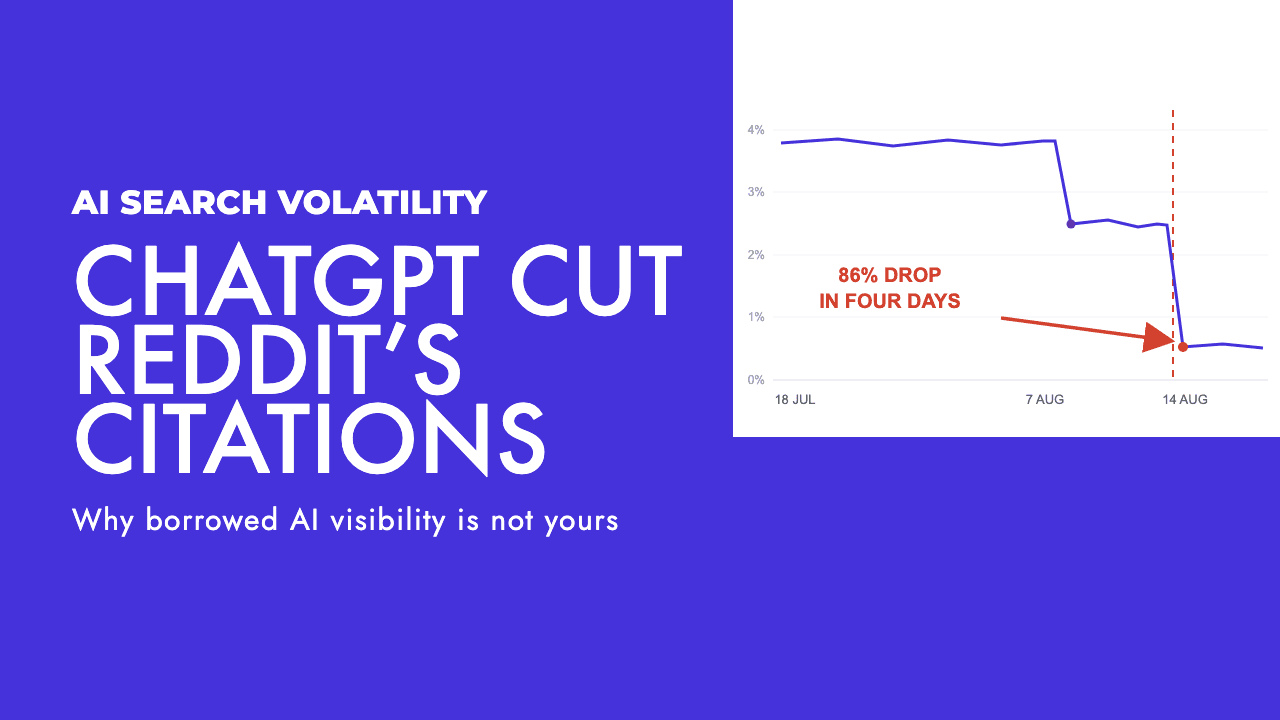
Across 30 million sources cited by ChatGPT, AI Mode, Gemini, Perplexity and AI Overviews, the most cited domains are third-party platforms, with Reddit, YouTube and LinkedIn at the top of the list, and brands that show up consistently across trusted third-party sites are more likely to be cited (Search Engine Land). Engines lean on off-property signals to work out who you are and whether you are credible enough to name, which is why entity work outside your own site is now part of AI visibility rather than a brand nicety (Search Engine Land). It is also a rented position: Reddit itself lost most of its ChatGPT citation share in four days in August, so third-party presence is a lever, not a foundation.
Practically, inside your chosen category: get into the roundups and comparison pages buyers already read, keep your listings and profiles factually identical, and be genuinely present where your customers discuss the problem. Our post on Reddit SEO covers the community side of that without the spammy version.
None of this is a new discipline. Google's own position, restated through 2026, is that preparing for AI features is still SEO, and we agree with them more than the GEO tooling market does (Google Search Central). We unpacked that argument in Google says AEO and GEO are still SEO.
Set the bar by your industry
The research also found the effect is uneven across sectors, which should change how patient you are.
Finance and real estate showed a positive relationship between citation breadth and expansion, so citations there work as a reasonable early signal that a new category is opening up. Legal and healthcare showed negative mention associations that persisted even at full prompt coverage, meaning citations in those verticals prove very little on their own.
If you are in a regulated or high-stakes vertical, the world of insurance SEO and crypto SEO as much as legal and healthcare, treat a citation as noise until it turns into a repeat named recommendation. If you are in a lower-stakes commercial category, you can use citations as an early read on whether an adjacent topic is worth committing to.
What to do this quarter
Four things, in order.
- Split your reporting. Track named recommendations on buying-intent prompts separately from citations. If your tool only gives you one blended number, run the five-variant test manually once a month and log it in a sheet. Our SEO KPI dashboard template is a reasonable starting point if you do not already have a format for it.
- Name one category. The one where you have the most real experience and the clearest commercial upside. Write it down. Everything else is on hold.
- Get to five out of five inside it. Fix the phrasings you lose before publishing anything outside the category.
- Work the off-property side. Third-party coverage, profiles, community presence and consistent brand facts inside that same category. Topic-specific, not generic.
The temptation will be to keep publishing widely because it feels like progress and the citation count goes up. It is the wrong number.
The bottom line
AI engines are generous with citations and stingy with recommendations. Citations go to whoever explained it well. Recommendations go to whoever the model has seen own the category, repeatedly, across phrasings, mostly through sources that are not your own website.
For most businesses the fix is subtraction rather than addition. Pick the category you can genuinely win, go deep enough that every reasonable phrasing of the question returns your name, and leave the adjacent topics until that is true.
If you want a second opinion on which category you are closest to owning, our AI search optimisation service starts there, or you can request a free SEO review and we will tell you what we see.