
For eighteen months the SEO industry has treated AI Overviews and AI Mode as two separate problems. Two surfaces, two behaviours, two sets of advice. That framing died in the last week of August, and it died from both ends at once.
On the front end, Google started expanding AI Overviews into full AI Mode answers without anyone clicking anything. On the back end, Search Console finished rolling out a report that refuses to tell you which of the two you appeared in. Same week. Probably not a coincidence.
What changed on the results page
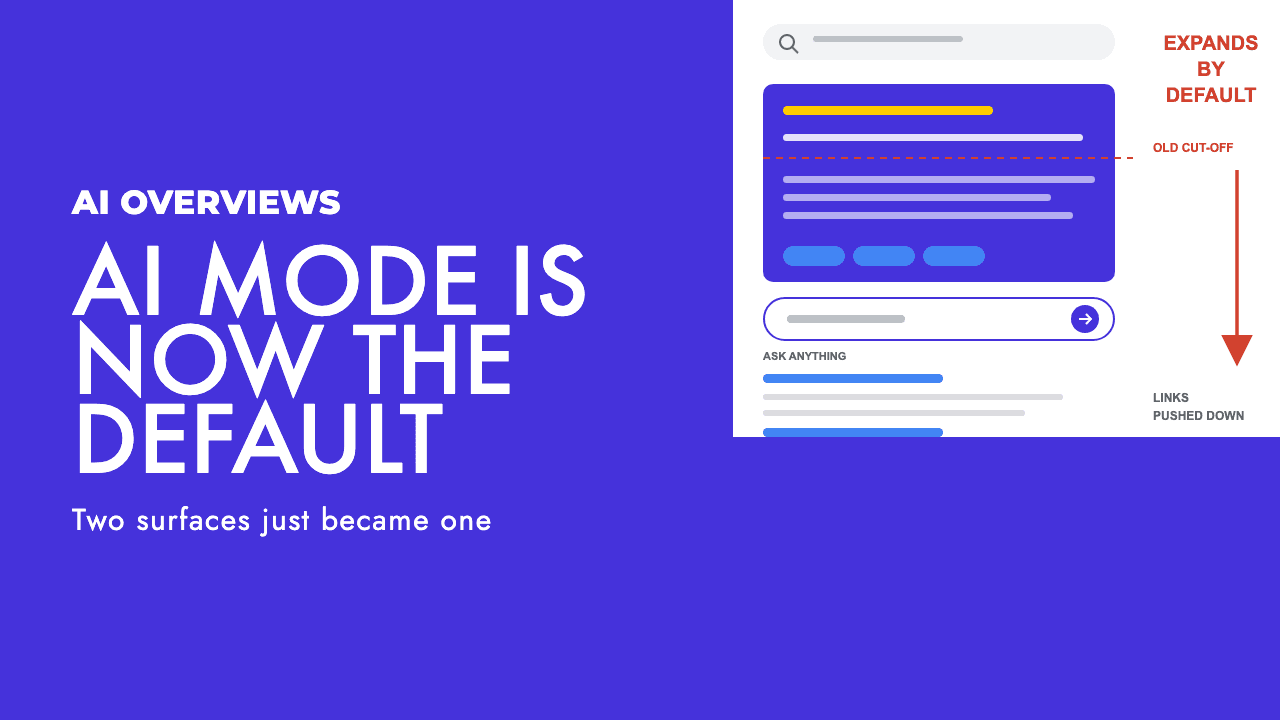
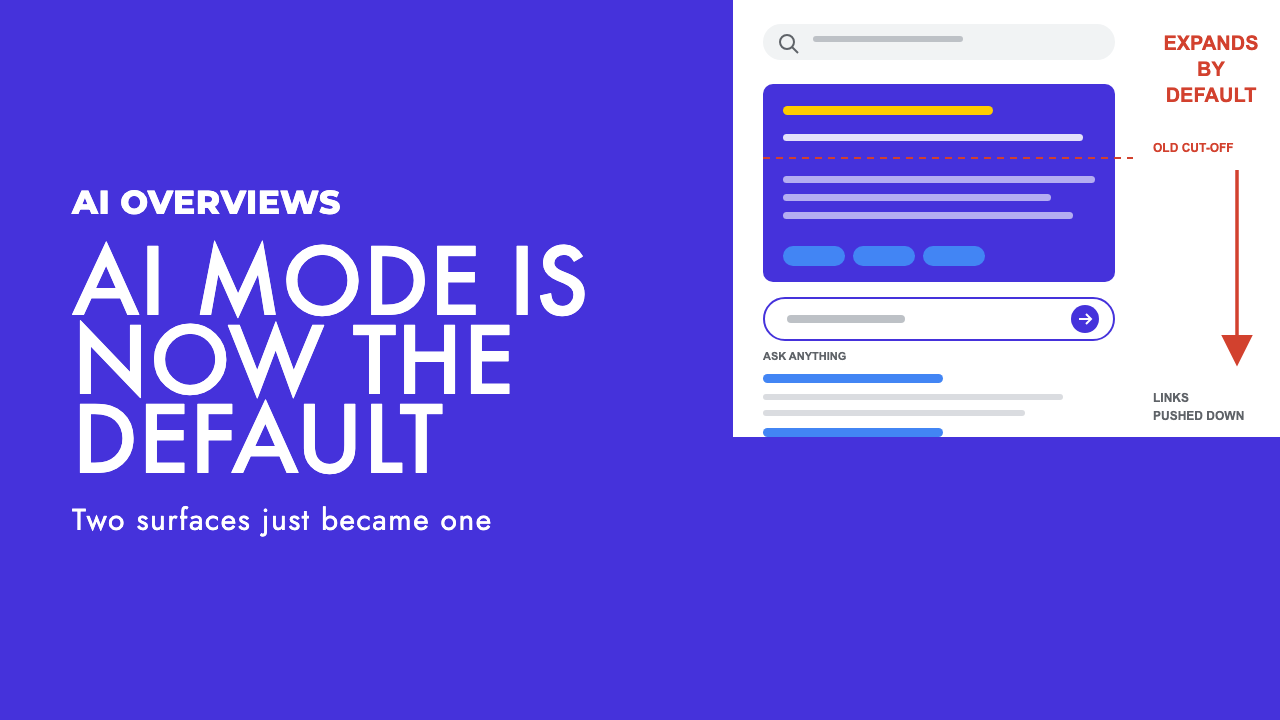
Chris Long spotted it on 27 August: an AI Overview loading fully expanded, with the "Ask anything" follow-up box already open, no "Show more" click required. Search Engine Roundtable confirmed it the next day and got a statement out of Google.
Google's line is that AI Overviews "may dynamically expand for topics where our systems determine it's most useful". In other words, Google decides per query whether you get a summary box or a conversation.
Android Authority noted the obvious consequence: the organic results get pushed much further down the page. There is one small mercy built in. If you start scrolling before the expansion finishes, Google stops expanding so it does not yank your reading position.
The "Show more" button was the last piece of friction between a search result and a chat session. It is now optional, and Google picks when.
What changed in your reporting, four days later
On 31 August, Google's generative AI performance reports finished rolling out to every site worldwide.
Read the documentation for that report and the design decision jumps out. Google's own help page says the report covers impressions from AI Overviews and AI Mode. Not AI Overviews, then AI Mode. Both, added together, in one number.
There are no clicks in it. No CTR. No queries. No position. Just impressions, split by page, country, device and date.
So on Thursday Google blurred the line between the two surfaces for users, and by Monday it had blurred the same line in the only first-party data you have about either of them.
Our take: the low adoption argument is finished
Here is the opinion part, flagged as opinion.
For most of this year the reassuring counterargument to AI Mode has been adoption. Hardly anyone taps the AI Mode tab, so why build a strategy around a surface nobody chooses. We have heard some version of that in a lot of client calls, and until recently it was a reasonable thing to believe.
It does not survive this change. Google does not need users to choose AI Mode if it can deliver an AI Mode answer inside the results page they already asked for. Distribution beats adoption every time, and Google owns the distribution.
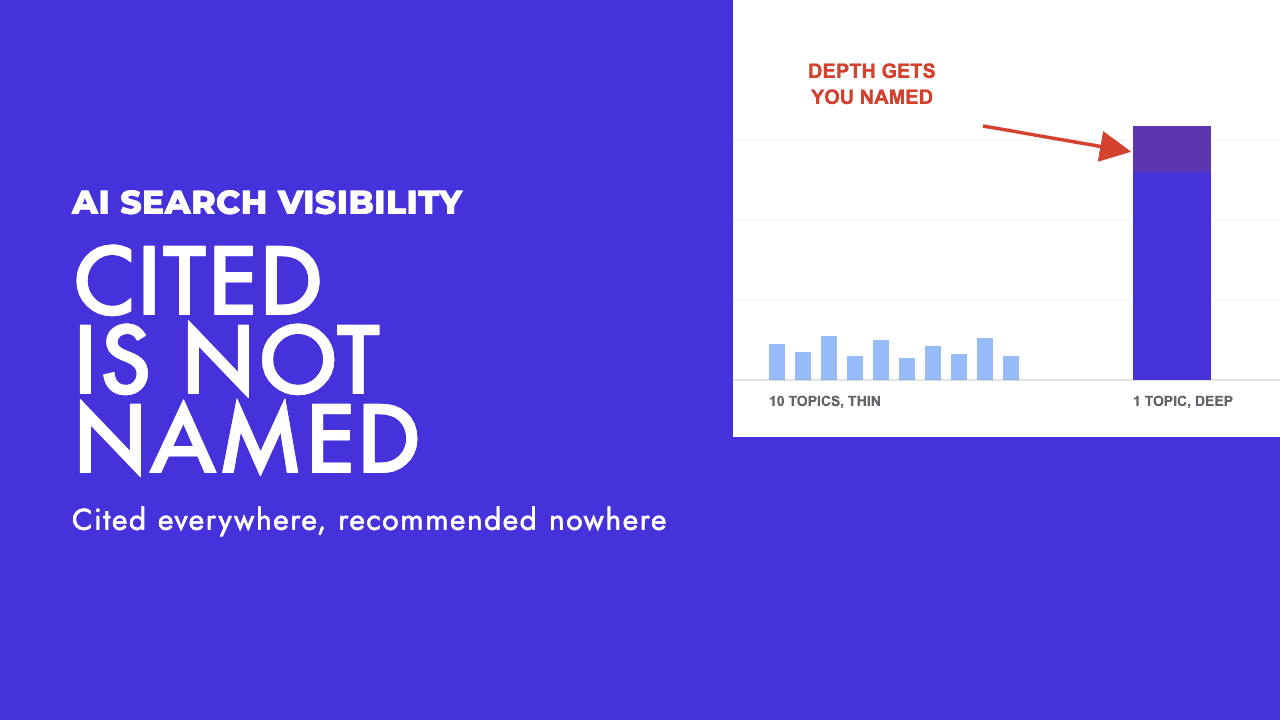
The second thing worth saying plainly: the unit of optimisation is no longer the answer. It is the conversation. When the follow-up box loads open by default, a meaningful share of sessions will not end at the first response. They will branch into "what about pricing", "which one is better for a small business", "is that available in Cyprus". Being cited in turn one buys you nothing if you are absent from turns two and three, which is where the decision actually gets made. We wrote about the mechanics of that branching in query fan-out, and this change makes that piece considerably more relevant than when we published it.
The vanity metric forming right now
Watch this one carefully, because it is going to fool people over the next two quarters.
Bigger AI answers cite more sources. Expanded AI Overviews pull in more links than collapsed ones, and the generative AI report counts impressions. So a lot of sites are about to see their generative AI impressions climb through autumn for a reason that has nothing to do with anything they did.
There is no clicks column in that report to sanity check it against. That is a near perfect setup for a metric that looks like progress and is not. We have watched the same pattern play out in ordinary Search Console data, where impressions climb while clicks stay flat, and at least there you can see both lines. Here you get one line and have to guess.
If an agency shows you a rising generative AI impressions chart this quarter and calls it a win, ask what happened to sessions and enquiries over the same period.
What we are telling clients to do
Check your own money queries by hand, logged out. Not two hundred keywords. The ten or fifteen that produce revenue. Note which ones expand into a full AI answer and which still return a conventional results page. That split is now the most useful map you have, and no tool will hand it to you.
Write for the second question, not just the first. For every commercial page, ask what a person would type into that follow-up box. Pricing, comparisons, eligibility, timelines, objections. Answer those directly on the page rather than burying them in a sales narrative. This is the practical core of our AI Mode playbook and it matters more now than when we wrote it.
Stop reporting AI Overviews and AI Mode as separate lines. You cannot separate them any more. Report one generative visibility figure, be honest that it is impressions only, and put it next to conversions rather than next to itself last month.
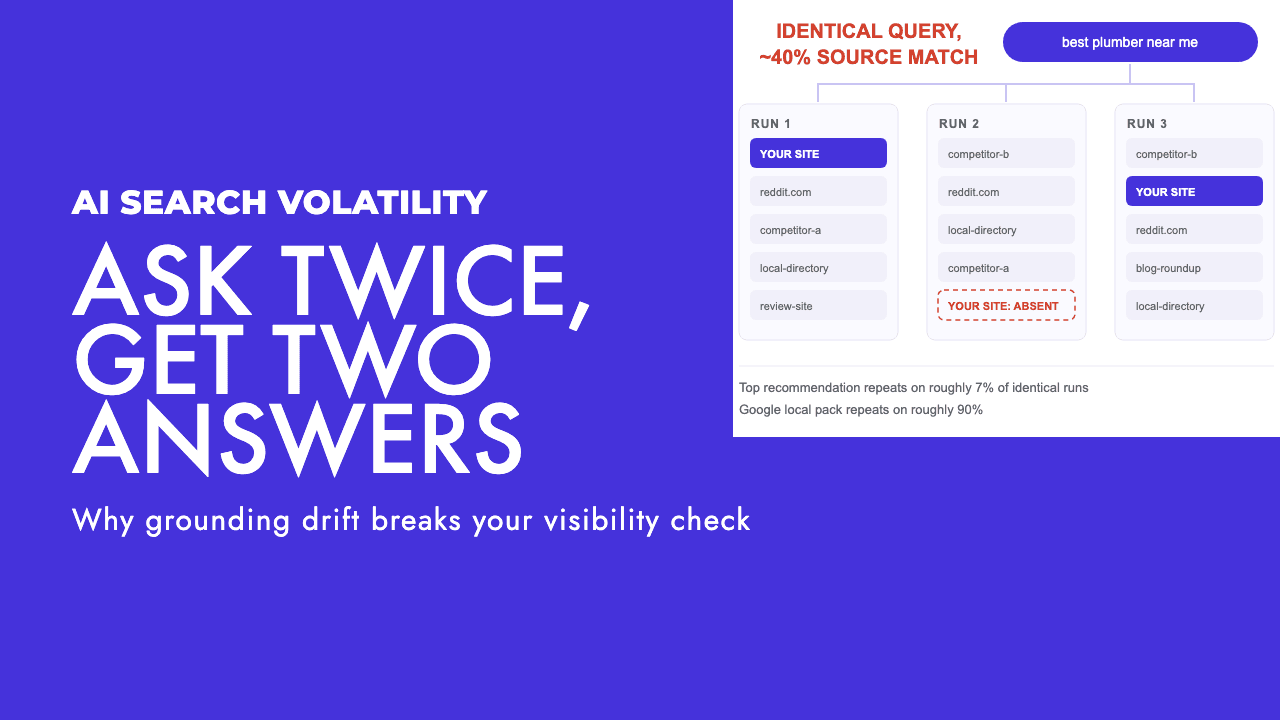
Treat the expansion as volatility, not a ranking change. The same query can produce a compact box for one person and a full page conversation for another. If enquiries dip and your positions have not moved, the shape of the page may have changed rather than your ranking. That is a different diagnosis and a different fix.
What this does not change
Two honest caveats.
Expansion appears to favour informational and definitional queries. Chris Long's example was a term definition. Local and transactional intent, the "dentist in Limassol" and "book a table tonight" end of search, still tends to return a conventional results page with a map pack. If that is where your revenue comes from, this is a watching brief rather than an emergency.
And opting out remains a bad idea for almost everyone. Google's Search Console control still removes you from both surfaces without touching your normal rankings, and we have argued before that flipping it makes you invisible exactly where attention is moving. Nothing this week changes that view. If anything, a surface that now expands on its own is a worse one to disappear from.
The short version
Google merged AI Overviews and AI Mode in the interface and in the reporting inside five days. The two-surface mental model is done, and so is the argument that AI Mode is too niche to plan for.
The lost clicks were never the low-value ones, as the research on AI Overviews showed earlier this year. Now the surface taking them is bigger and Google decides when it opens. The response is not panic, it is a shift in what you optimise for: be the source that survives a follow-up question, not just the one that gets summarised.
If you want a read on which of your commercial queries are already expanding and what sits inside those answers, that is the first thing we look at in AI search optimisation work, and it is part of our free SEO review.