
Every week someone forwards me the same stat as a reason to move budget out of SEO. AI search traffic converts 23 times better than Google organic. Therefore, the argument goes, stop worrying about rankings and pour everything into getting cited by ChatGPT.
The stat is real. The conclusion drawn from it is not.
Where the 23x number actually came from
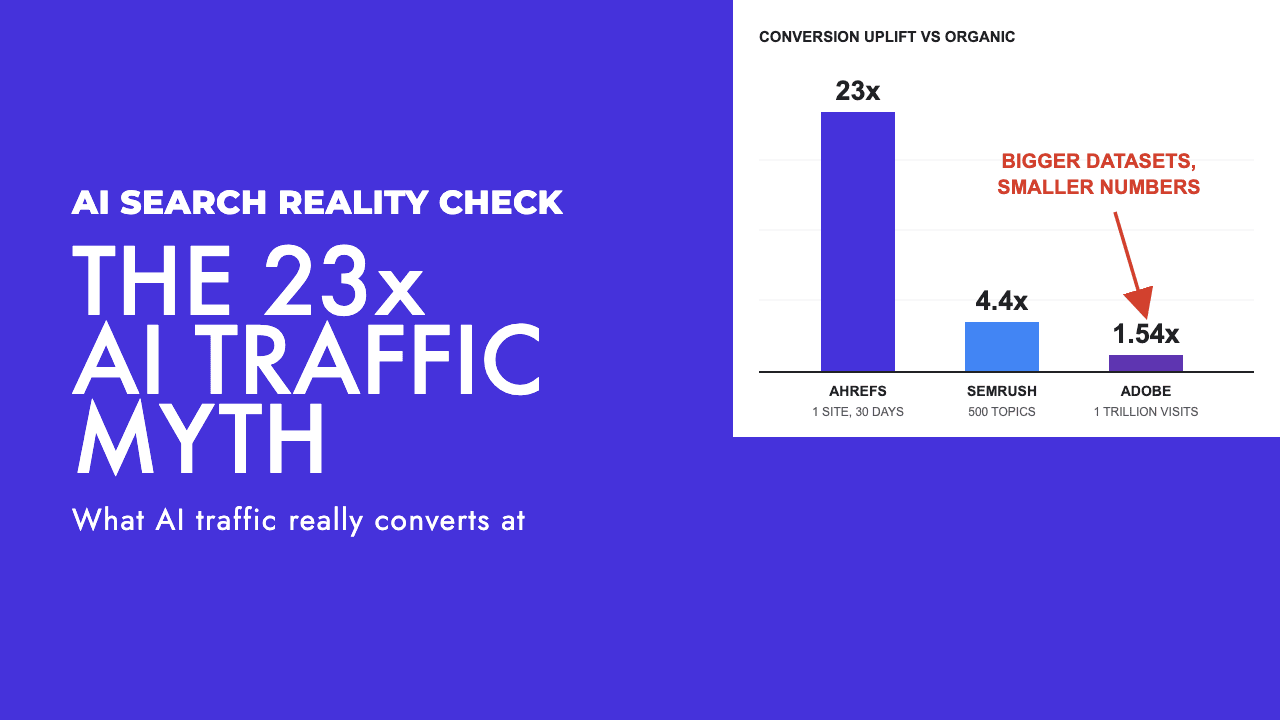
It came from Ahrefs, in June 2025. They looked at 30 days of their own website data and found that AI search visitors made up 0.5% of their traffic but drove 12.1% of their signups. Divide one by the other and you get roughly 23x.
To their credit, Ahrefs hedged it heavily in the same post. Patrick Stox noted that AI search users click links far less often than traditional search users. Ryan Law put it more bluntly, saying these click-through rates are "probably the highest they'll ever be" as the novelty wears off. They also said they were working on a larger study across many sites, because one site is one site.
None of that survived the trip to LinkedIn. The caveats got stripped, the multiplier got a graphic, and a year later it is being quoted in strategy decks as settled fact.
The bigger datasets say something much less dramatic
Adobe Analytics tracks over a trillion visits to US retail sites. In their May 2026 data, traffic from AI sources converted 54% better than traffic from non-AI sources.
Not 23 times better. About one and a half times better.
Semrush's July 2025 study of 500-plus digital marketing topics landed on 4.4x, framed as the value of an AI search visitor relative to an organic one based on conversion rate. Visibility Labs went further and analysed twelve months of GA4 data from 94 seven and eight-figure ecommerce brands, comparing 9.46 million non-branded organic sessions against 135,000 ChatGPT referral sessions. ChatGPT converted at 1.81% versus 1.39%, a 31% edge.
Then they did the thing almost nobody does and looked at revenue rather than conversion count. Average order values from ChatGPT were lower, so the traffic came out only 10.3% more valuable than non-branded organic.
Ten percent. That is the number at the end of the chain, from the largest ecommerce-specific study on the table.
So the honest range across serious datasets is somewhere between "slightly better" and "a few times better," depending heavily on what you sell and how you count a conversion. The single-site outlier is the one that went viral.
The detail almost nobody quotes
Here is the part of the Adobe data I find far more interesting than the headline. A year before that 54% figure, AI-referred traffic to those same retail sites was converting at half the rate of everything else.
That is a channel that went from underperforming to outperforming in twelve months. The direction of travel matters more than any snapshot multiplier, and it tells you the behaviour is still settling. Anyone presenting a 2025 number as a stable planning assumption in late 2026 is guessing.
Why the multiplier is misleading even when it is arithmetically correct
Three things break the comparison.
You are comparing a stage to a whole funnel. By the time an AI assistant sends someone to your site, it has already done the researching, the comparing and the shortlisting. That visitor is at the bottom of the funnel by definition. Organic search includes everyone: the person who typed a definition query, the person checking your opening hours, the student doing homework. Of course the pre-filtered segment converts better. That is what pre-filtering does.
The denominator is tiny. In the Ahrefs case, 0.5% of traffic. A 23x conversion rate applied to half a percent of your visitors is still a small number of conversions. We see this constantly when we segment client analytics: the AI channel looks spectacular in percentage terms and modest in absolute terms. For a Cyprus SME doing a few thousand sessions a month, 23x on twenty visitors is one extra enquiry. Worth having. Not worth restructuring your marketing around.
Attribution is genuinely broken here. Plenty of people research in ChatGPT, then type your brand name into Google, then arrive as branded organic or direct. That visit gets credited to the wrong channel. The Visibility Labs study makes the same caveat about its own GA4 data. Which means the measured AI segment is both undercounted and skewed towards the most decisive users, the ones who clicked the citation immediately. You are measuring the tip of something, not the thing.
Our take
The 23x stat is being used to justify a budget shift that the underlying data does not support, and it is being used mainly by people selling GEO tools.
What we actually believe, having spent the past two years watching this play out across client sites: AI referrals are a real and improving channel, they are worth measuring properly, and they are not a separate discipline you fund separately. Google has said as much itself, that answer engine optimisation and generative engine optimisation are still just SEO. We wrote about why Google keeps insisting AEO and GEO are still SEO, and nothing since has changed our mind.
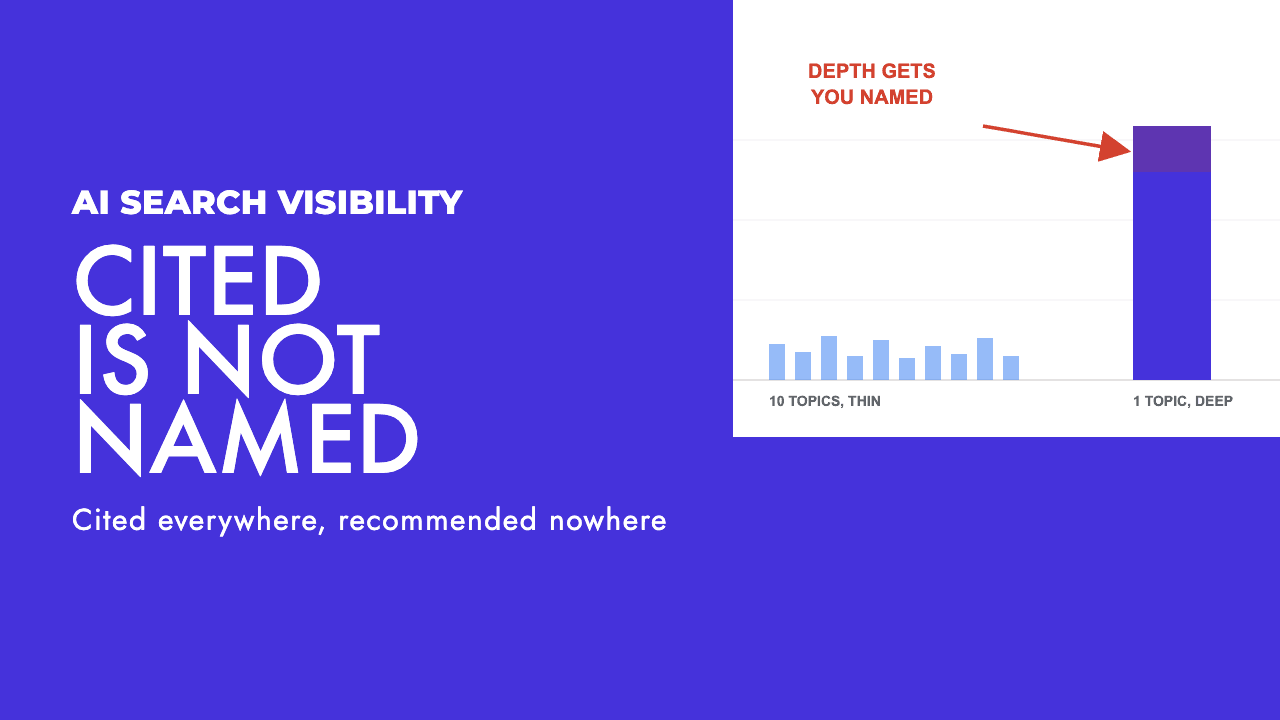
The work that gets you cited by an AI assistant (clear structure, genuine depth, a page that actually answers the question, a brand the model has encountered enough times to trust) is the same work that earns rankings. Splitting your budget between "SEO" and "GEO" mostly means paying twice for one job.
Where the two do diverge, it is in measurement, not in production. Citations and rankings have genuinely come apart, so the reporting needs to change even when the work does not.
What to do instead
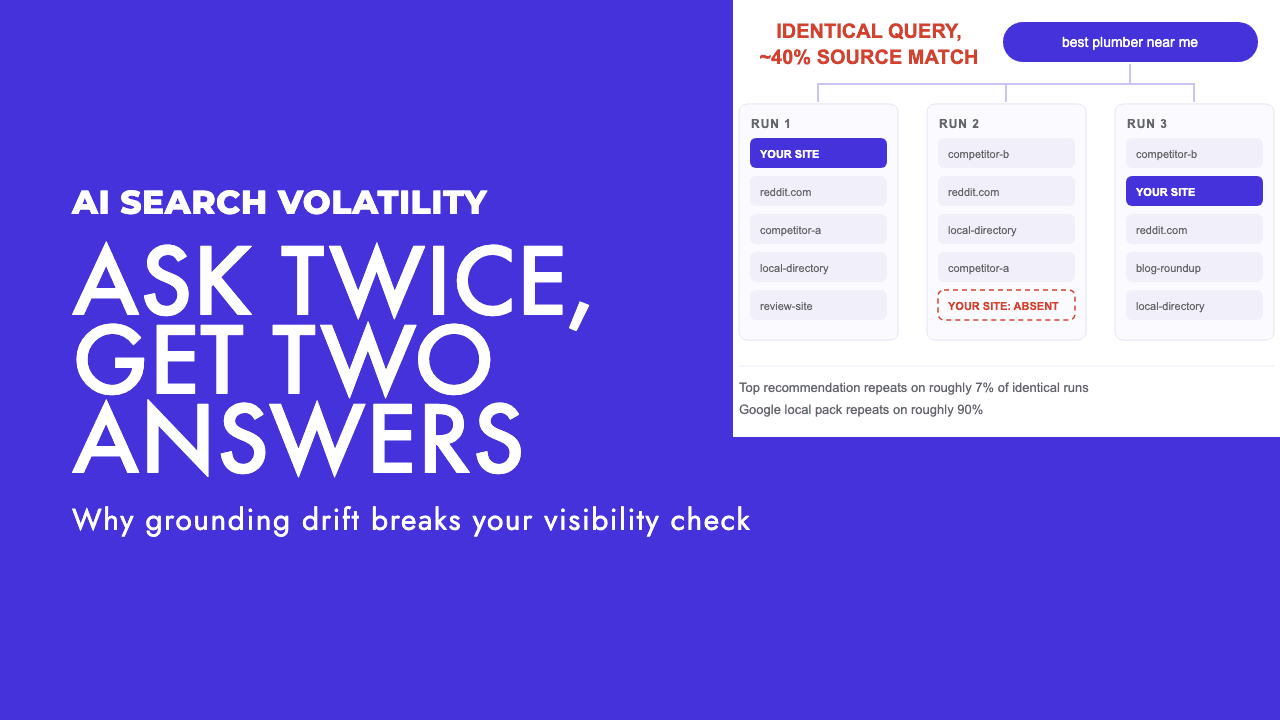
Segment AI referrals, then judge them on absolute conversions. Set up a channel group in GA4 for ChatGPT, Perplexity, Copilot, Gemini and Claude referrers. Look at the raw count of conversions, not the rate. The rate will flatter you. The count tells you whether it matters yet. And if you are checking whether the assistants actually cite you, run the prompt more than once, because the same AI question gives a different answer every time.
Watch branded search as the real leading indicator. If your AI visibility is growing, branded queries and direct traffic should follow within a couple of months. That lift is where most of the value is hiding, and it is the number a business owner should care about.
Do not build a parallel content programme. Build depth on the pages that answer decision-stage questions, because those are the ones AI assistants pull from when someone is close to buying. Our guide to measuring AI search visibility covers how to check whether it is working without paying for another dashboard.
Size the opportunity before you fund it. For a US ecommerce brand at real scale, a 54% conversion edge on a fast-growing channel is a serious line item. For a local business in Limassol or Nicosia, it is a rounding error today and probably a real channel in eighteen months. Both are true. Budget accordingly.
The uncomfortable summary
AI traffic converts better than organic. That much is settled across every dataset worth reading. The size of the edge is closer to "meaningfully better" than "twenty-three times better," and the channel is still small enough that the edge does not yet move most businesses' numbers.
Treat it as a growing channel you should measure and feed, not a discovered arbitrage. The people telling you it is an arbitrage are usually selling the shovel.
If you want an outside read on where your site actually stands in AI search before you commit budget to it, our AI search optimisation service starts with exactly that assessment, or you can grab a free SEO review and we will tell you straight.
Sources: Ahrefs on AI search traffic conversions, Search Engine Land on ChatGPT versus non-branded organic conversions, Visibility Labs' 94-brand ecommerce study, now hosted by 180 Marketing, Semrush's AI search traffic study, Adobe Analytics AI traffic data via Digital Commerce 360.