
"AI search visibility" barely existed as a phrase eighteen months ago. Today it is a software category, and a wall of tools has appeared almost overnight to track it, score it, and sell it back to you on a monthly plan.
Here is the problem nobody selling those dashboards wants to lead with. Being visible in an AI answer is not the same as getting traffic from it. Pew Research tracked nearly 69,000 real Google searches and found that when an AI summary appeared, people clicked a normal result in just 8 percent of visits, against 15 percent when there was no summary (Pew Research Center). Plenty of visibility. Far fewer people through the door.
So this is our take on the metric everyone is suddenly chasing. What AI search visibility actually is, what it is worth, and how to measure it without handing over a card number.
What AI search visibility actually means
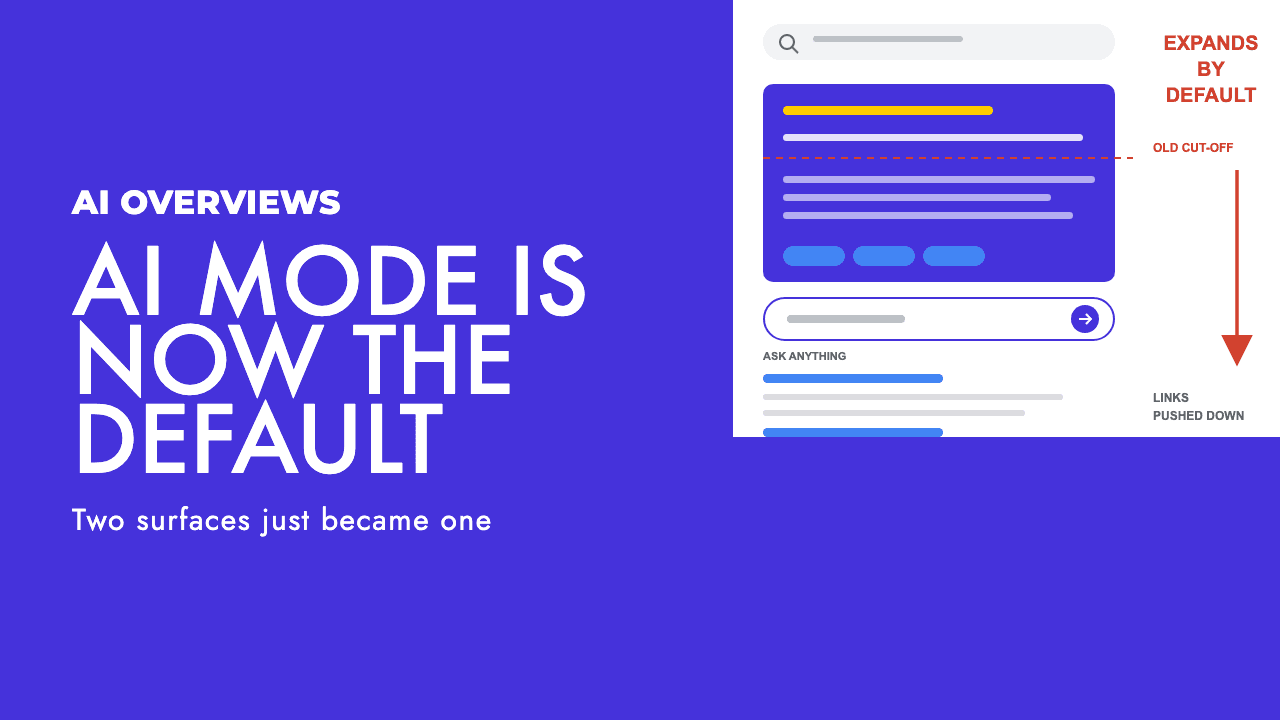
AI search visibility is how often your brand or your content shows up inside an AI-generated answer, whether that is a Google AI Overview, a ChatGPT response, a Perplexity answer, or a Gemini summary.
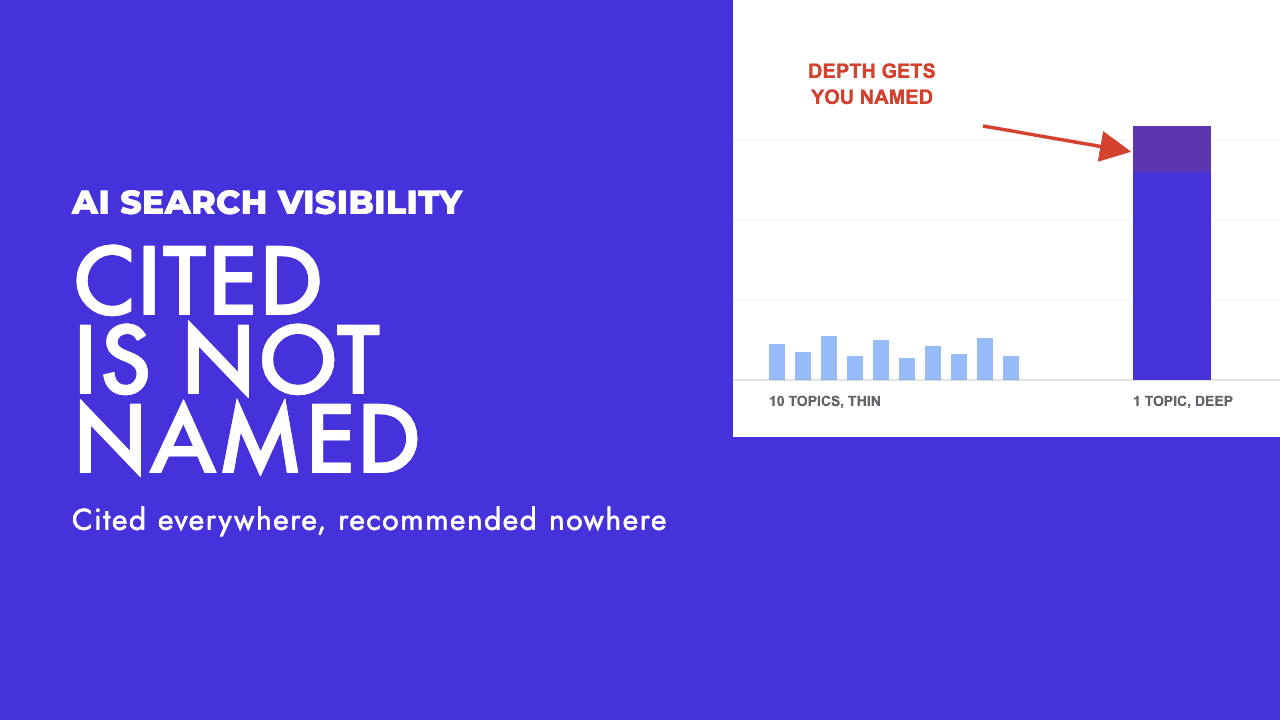
It is deliberately broader than rankings. Classic SEO visibility was a position number: you are third for a keyword, or you are not on page one. AI visibility is messier. You can be cited as a source, named in the text without a link, paraphrased without attribution, or quoted word for word. All four count as "showing up," and only one of them reliably sends a click. Semrush's ghost citations study found that in almost 62 percent of cases an AI platform used a page as a source link without ever naming the brand in the answer (Semrush), a pattern we dug into in our post on ghost citations.
That breadth is exactly why it is hard to pin down, and exactly why a market of tools has rushed in to put a single number on it. The honest version is that AI search visibility is a family of things, not one metric, and treating it as one number is where most people go wrong.
This is the natural next layer on top of answer engine optimization and generative engine optimization. AEO and GEO are how you earn the visibility. AI search visibility is the scoreboard people now want for it.
Visibility is not traffic, and the data shows it
The most important thing to understand about AI search visibility is that it has quietly broken the old link between being seen and being visited.
Open almost any Search Console account and find a page sitting around position 60 for a busy query. Google shows it constantly, on the fringes of relevance, and nobody clicks, because nobody scrolls that far and the answer they wanted was already up top. AI answers push that pattern to the whole results page. SparkToro's 2026 clickstream study put the share of US Google searches ending without any click at 68 percent for the first four months of the year (via Search Engine Land).
That is the same force we wrote about in the great decoupling, where impressions climb while clicks stay flat. AI search visibility is that decoupling taken to its logical end. In an AI answer there often is no blue link to click at all. The model reads your page, uses it, and serves the answer in its own words. You provided the visibility. The traffic stayed with the platform.
We are not saying visibility is worthless. We are saying it is a leading indicator, not a result. A brand that gets named in ChatGPT answers builds familiarity, and familiarity shows up later as direct visits, branded searches, and people who already trust you by the time they land. But if you are reporting AI visibility as if it were traffic, you are reporting a number that does not pay invoices.
The tools selling you a single score
Search the term and you will see who owns the SERP for it. When we pulled SERP data for "ai search visibility," the top results were not articles. They were products. Profound ranks first. Rankability owns the adjacent "AI visibility tracking" query. Microsoft has muscled in with its ads product. The page is wall to wall software.
There is nothing wrong with those tools, and some are genuinely useful for sampling how often a model name-checks you across a set of prompts. But understand what they are and are not.
What they do well: run a fixed set of prompts against ChatGPT, Perplexity, Gemini and the rest on a schedule, then tell you how often your brand appears and who appears alongside you. That share-of-voice view has real value, and it is the same logic behind Perplexity rank tracking.
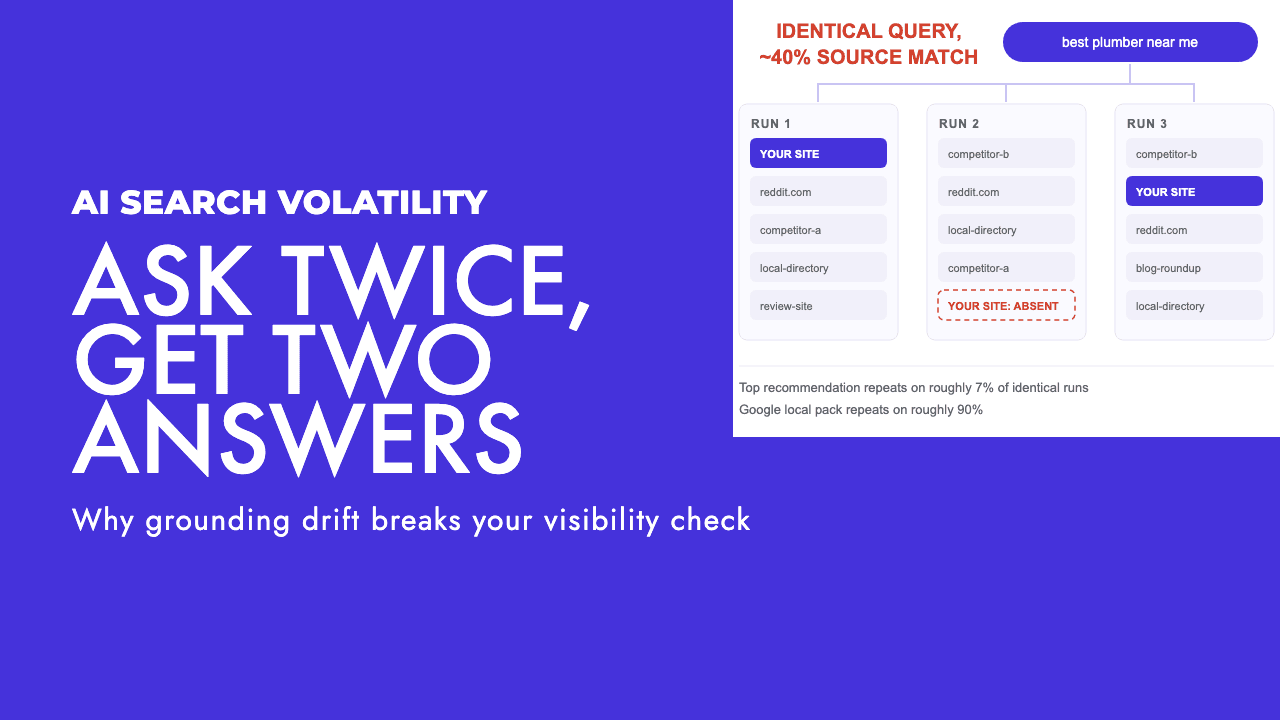
Where we are skeptical: any single "visibility score" out of 100. AI answers are non-deterministic, personalised, and change with the prompt wording. A clean composite number hides all of that variance and gives a false sense of precision. Treat the score as a trend line, never as a fact.
How to measure AI search visibility without paying for it
You can get most of the signal for free if you know where to look. Here is the stack we actually use.
Google Search Console, read differently. Google's own guidance on AI features tells site owners there are no special optimisations for AI Overviews and to measure performance in Search Console, so that is where we start. Since we first wrote this, Google has added a dedicated generative AI performance report, rolled out to all sites worldwide on 31 August 2026. It shows impressions inside AI Overviews, AI Mode and Discover's AI features by page, country, device and date, and no clicks or queries at all (Search Engine Journal). So it confirms you appeared. The standard Performance report still tells you the truth about the consequence. Sort your pages by impressions and look for the ones where impressions are high and clicks are near zero. That gap is your AI visibility tax in plain numbers, and we walk through the new report in our look at AI Overviews data in Search Console.
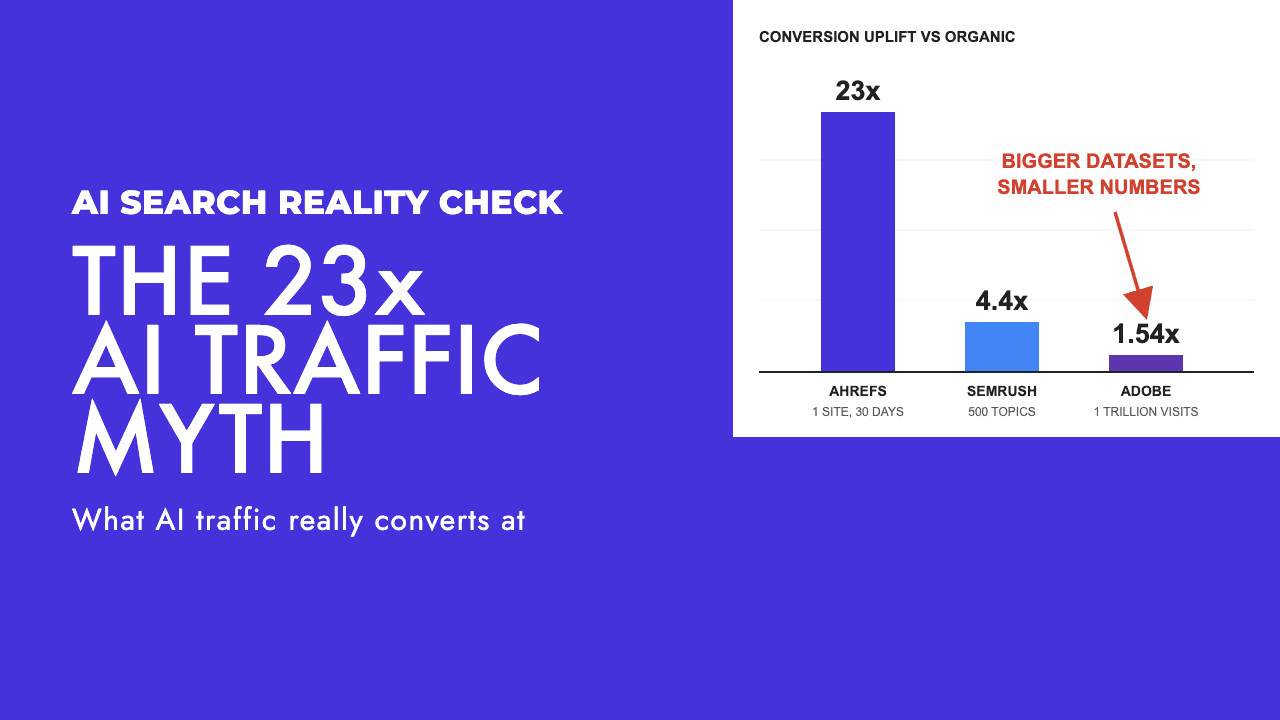
Referral traffic in GA4. Set up a segment or a channel for traffic from chatgpt.com, perplexity.ai, gemini.google.com and copilot.microsoft.com. The volume is still small for most sites, but it is real, it converts well because the user arrived pre-qualified, and it is the cleanest proof that visibility turned into a visit. Very few of the sites we audit have this set up, which tells you how few people are actually doing it. That is the opportunity.
Manual prompt testing. Once a month, ask the major models the ten questions your best customers actually ask. Note whether you appear, whether you are cited or just paraphrased, and who shows up instead of you. It is unglamorous and it is the single most honest read you will get. Keep the log somewhere repeatable, and if you want a format to copy, our downloadable SEO worksheets include one you can adapt.
Brand and direct trends. Watch branded search volume and direct traffic over quarters. If your AI visibility is doing its job, this is where it surfaces, weeks or months after the answer appeared.
That four-part view costs nothing and tells you more than most paid scores, because it ends in traffic and revenue rather than an abstract number.
The Cyprus angle, and why early still wins
Here is a pattern from our own market. In Cyprus, almost nobody is asking about AI search visibility yet. The phrases that are everywhere in US marketing barely come up in local client briefs.
It would be easy to read that as "no demand, ignore it." We read it the opposite way. The Cypriot market has not started building for AI search optimisation yet, which means almost nobody local is competing for the citations. The businesses that get cited in AI answers before their competitors even know the metric exists will own the category when local demand catches up, and it will.
This is the same lesson the US data teaches, one market ahead. Visibility compounds. The brands that show up in answers early become the default the models reach for later. If you operate in Cyprus, our Cyprus SEO work is built around exactly this kind of early position.
Our honest take
AI search visibility is a real and rising thing, and you should be measuring it. But measure it for what it is: an early signal that your content is feeding the answers people now read instead of clicking, not a traffic number you can bank.
Do not pay for a single score before you have read your own Search Console and GA4, because they already tell you most of the story for free. Spend your energy on being the source worth citing, through genuine expertise, a content strategy with a point of view, and structure the models can actually parse, which is the whole point of AI search optimization in the first place.
Visibility without traffic is not a failure. It is the new top of the funnel. Treat it that way, measure the whole chain down to revenue, and you will know whether all those impressions are quietly building a brand or just running up a number on someone's dashboard.
Want to know where you actually stand in AI answers today? Our free SEO review now includes a read on your AI search visibility, using your own data, not a black-box score.