
Google Images turned 25 on July 14, 2026. Google marked the occasion by making it slightly less necessary.
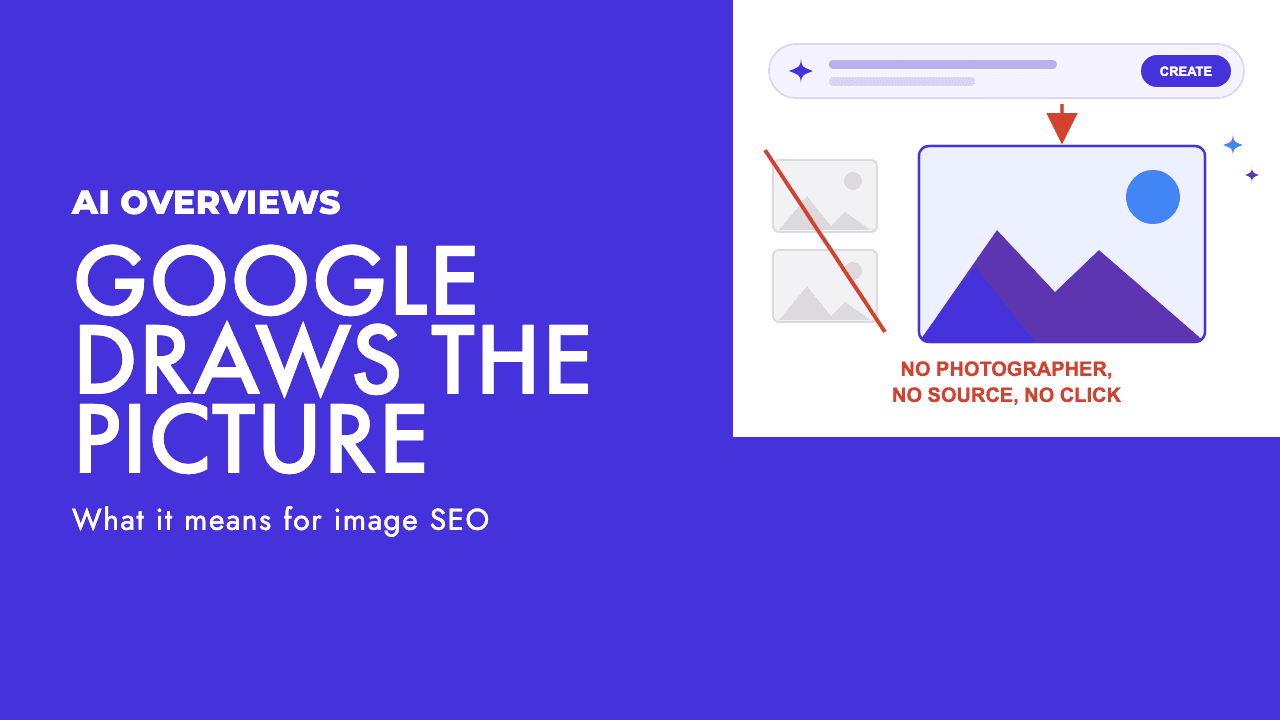
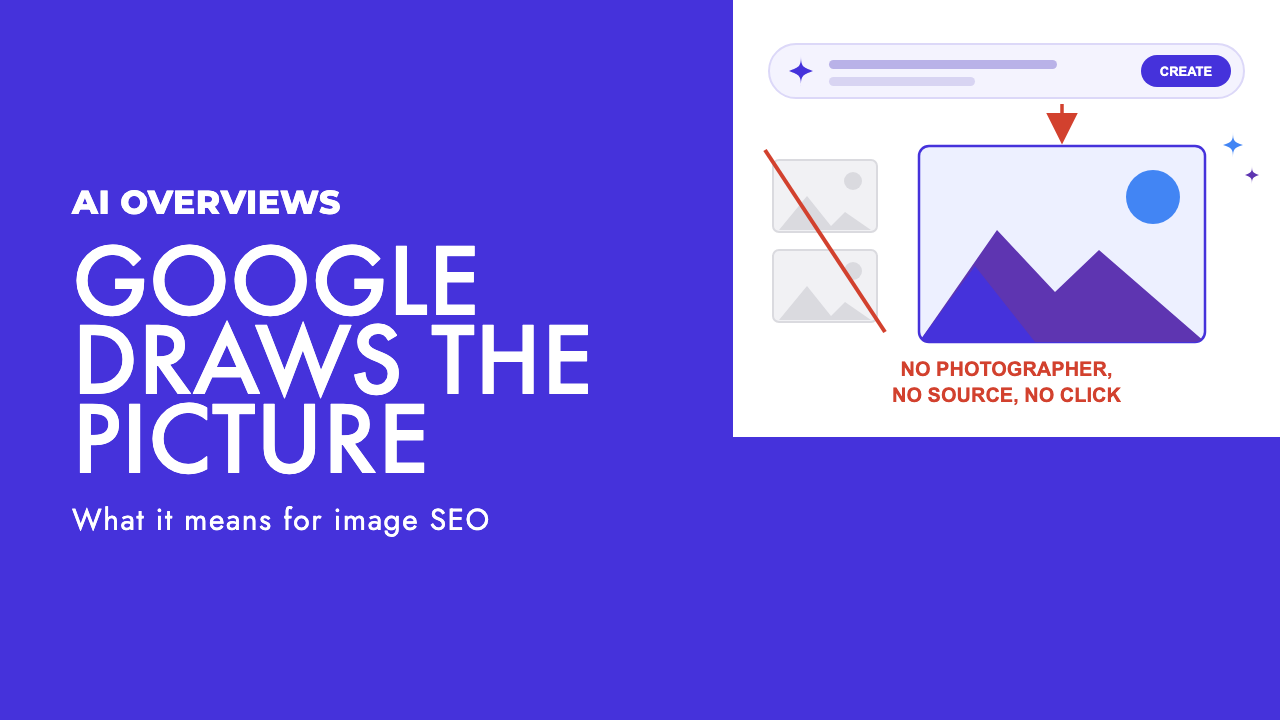
That day Google announced image generation inside AI Overviews, powered by its Nano Banana model, rolling out in English across every region that already supports image creation in AI Mode. Type a prompt, get a custom image, built from scratch, right there in the results.
No photographer. No source site. No click.
What Google actually shipped
Two things landed together: a redesigned Google Images experience on desktop, and generation inside AI Overviews itself.
Google framed it as a natural next step in a 25 year arc, from finding a photo on the web in 2001, through Lens in 2018 and Circle to Search in 2024, to creating one inside Search in 2026. That framing is doing a lot of work. "Finding" and "creating" are not neighbouring points on a line. One sends people to a website. The other does not.
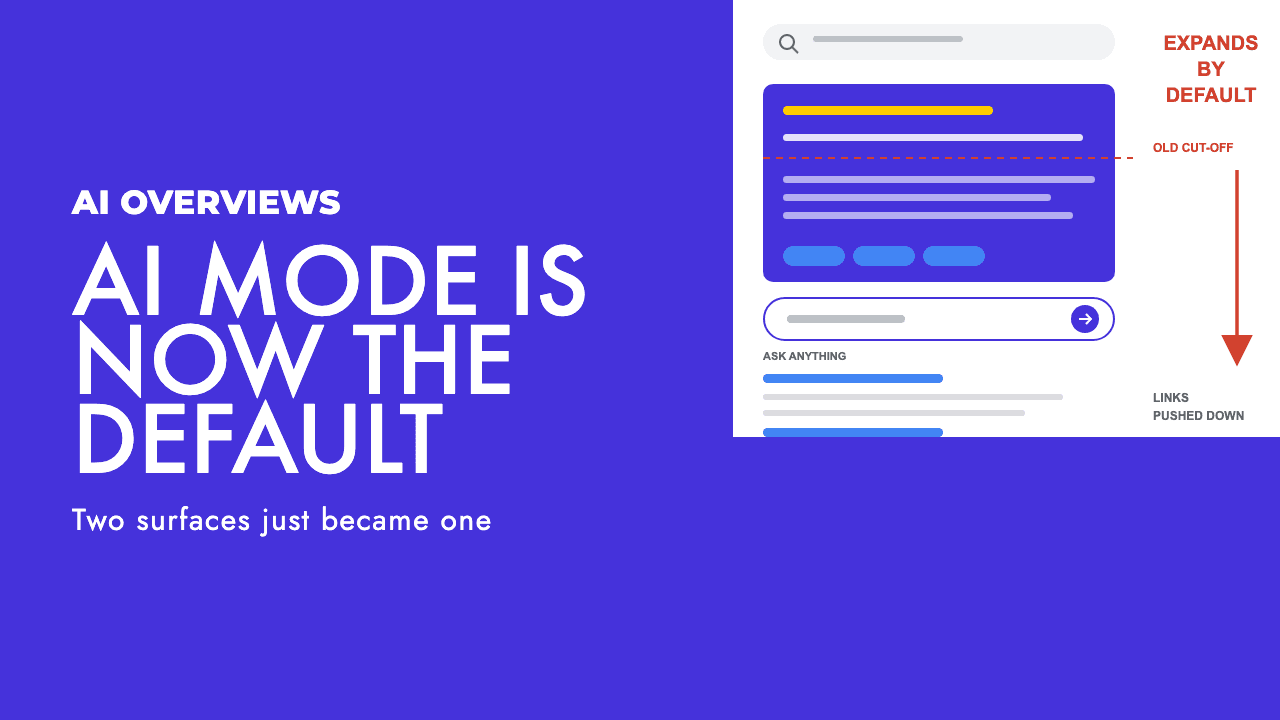
The generation surface is the same one that has been eating clicks for two years. Ahrefs research measured the click-through loss for the top organic result at 34.5% in April 2025 and 58% by February 2026 when an AI Overview sits above it. Adding a creative tool to that surface gives people one more reason to treat Search as the destination rather than the doorway.
Image traffic was already the quiet casualty
Most businesses never took image search seriously, so they never noticed it eroding.
Google moved image results behind a side panel years ago, then made Lens the default visual entry point on mobile. Image referral traffic has been drifting down since long before AI Overviews existed. The stock photo and illustration market has been under separate pressure from generative models since 2023.
So generated images in AI Overviews are not the start of anything. They are the point where an already weakened channel stops being a channel at all for a whole class of queries.
The queries at risk are the generic ones. "Modern kitchen with an island." "Diagram of a heat pump." "Team meeting photo." Anything where the user wants a representative picture rather than a specific one. A model that has already generated more than five billion images is very good at representative.
Our take: this kills the generic, not the specific
Here is the distinction that matters, and most of the commentary is missing it.
A generated image can show you what a thing looks like in general. It cannot show you what your thing looks like in particular.
It cannot show your restaurant's actual dining room, the actual villa in Paphos with the actual sea view, the actual dental clinic reception a nervous patient wants to see before booking. It cannot show the real before and after of a job your team did. It cannot show a product from an angle that reveals the stitching, the finish, the thing a buyer is squinting for before spending money.
We see this constantly with client sites. The images that earn attention are almost never the pretty generic ones. They are the specific, verifiable, slightly imperfect ones that prove something exists and that someone was there. Those images were always the more valuable asset. Now they are the only kind with a defensible future.
The uncomfortable corollary: if your site's visual layer is stock photography and AI-generated filler, you have been contributing nothing a model cannot now manufacture on demand. That was true before July 14. It is just no longer deniable.
There is also a real grievance sitting under this, and it deserves saying plainly. Google trained the capability on the open web's images and then shipped a feature that competes with the people who made them, without attribution and without a link. You can accept the strategic reality and still think that is a bad deal for the web.
What to actually do
Audit what your images are actually for. Split them into two piles: decorative and evidentiary. Decorative images are now worthless as a search asset, so stop spending on them. Evidentiary images (your premises, your work, your products, your team) are the pile that matters. Invest there.
Shoot original, and make the originality legible. Real photography with real context beats a rendered approximation for any query where trust is involved. Keep EXIF data intact, use descriptive filenames, write alt text that describes what is genuinely in the frame rather than stuffing a keyword into it. This is also basic accessibility work, which is worth doing regardless.
Use ImageObject and Product schema properly. If you want a machine to understand that your image depicts a specific real thing rather than a generic concept, tell it. Mark up images with creator, licence, and caption. Product images belong inside proper Product markup, and our free schema generator covers the common types if you are building it by hand. This is the same logic behind structuring content so LLMs cite you, applied to the visual layer.
Lean harder into local and physical proof. A generated image cannot fake a real location. For Cyprus businesses especially, where trade often runs on knowing the actual place, geotagged original photography across your site and your Google Business Profile is a moat a model cannot cross. We covered the wider version of this in our take on local SEO in AI search.
Check whether you are being cited, not just ranked. Position tracking will not tell you if an AI Overview answered the visual question without you. The generative AI performance reporting Google added to Search Console is the place to start, and since 31 August 2026 it has been available to every site worldwide rather than a test group. We walked through it in our guide to the AI Overviews report.
Think twice before opting out in a panic. Google's blocking controls let you keep pages out of AI features, but the trade is real and mostly bad for small businesses. We laid out the reasoning in should you opt out of AI Overviews and AI Mode. Nothing about image generation changes that maths, and neither does Google now expanding some AI Overviews into full AI Mode answers on its own.
The bottom line
Google has been climbing the value ladder for a decade, from linking to the answer, to writing the answer, to building the tool, and now to drawing the picture. Each rung takes a slice of the generic and leaves the specific alone.
Image generation in AI Overviews is not the death of visual search. It is the end of generic visuals as a reason for anyone to visit your site. The businesses that will be fine are the ones whose pictures prove something: a real place, a real product, a real piece of work.
If you want a straight read on how exposed your site is to this, that is the kind of thing our AI search optimization work covers. Or take a free SEO review and we will tell you where you stand.
Sources: Search Engine Land, "Google AI Overviews will let you create images"; PPC Land, "Google brings image generation into AI Overviews as Google Images turns 25"; Google Search Central, "Introducing Search Generative AI performance reports in Search Console".