

For about two years, anyone selling you "AI search optimization" had one unbeatable pitch: nobody could see inside the black box, so any story about how to win was as good as any other. That pitch just got a lot harder to make. Between mid-May and early June 2026, Google did two things that pull the curtain back. It published an official guide that flatly debunks most of the GEO tricks people have been paying for, then started showing AI Overviews and AI Mode impressions inside Search Console.

Treat these as one story, not two. Google handed SEOs a scoreboard for AI search and a reality check in the same breath. If you run a business in Cyprus, the USA, or anywhere else watching AI eat into your search traffic, both matter. Here is what each one actually says, and what we would do with it.
What the new Search Console report shows
Google rolled out a Search Generative AI performance report on June 3, 2026. It gives you a dedicated view of how often your links appear inside generative AI features on Search: AI Overviews, AI Mode, and the AI features inside Discover.
The data is broken down by page, country, device, and date, with granularity down to the hour. For the first time you can open a Google-owned tool and see, in black and white, that your site is showing up inside the AI answers, not just under them. That is genuinely new. Until now you were inferring AI visibility from third-party trackers and guesswork.
It went to a subset of sites first while Google tested it. That phase is over: as of 31 August 2026 the report is live for every site worldwide, so if you have a Search Console property, you have it.
So far, so good. Then you read the limitations, and the report gets a lot more interesting.
The gap that matters more than the report
Here is the headline most coverage buries: the report shows impressions and nothing else. No clicks, no click-through rate, no query data.
Sit with that for a second. You can see that you appeared inside an AI Overview. You cannot see whether anyone clicked, what they searched to trigger it, or whether that appearance sent you a single visitor. Google's help page for the report is explicit that it counts impressions and nothing else. You can see that you showed up, not whether it was worth anything.
It gets thinner. Every link inside a single AI Overview shares one position value in Search Console, so you cannot tell a prominent citation from a buried one. And the newest data is preliminary, marked with a dotted line, because it is still settling.
We have written before about how AI features break the old link between being seen and being clicked. The decoupling of impressions and clicks is the defining SEO problem of this era, and we covered it in detail in the great decoupling. This new report does not solve that problem. If anything it sharpens it, because it gives you a clean count of a number (AI impressions) that has the loosest possible relationship to revenue.
Our take: the AI Overviews report is a vanity metric with real uses, as long as you never confuse the two. It is excellent for answering "is Google citing my content in AI answers at all, and on which pages." It is useless for answering "is that making me money." Watch it for presence and trend. Do not put it in a board deck as a success metric, and do not let an agency wave rising AI impressions at you as proof anything is working. Impressions you cannot tie to clicks are a direction, not a result.
The reality check most people skipped
A few weeks before the report, on May 15, Google had published the more important document: an official guide on optimising for generative AI features. It is worth reading in full, because it takes a flamethrower to the GEO playbook that vendors have been selling since 2024.
Google explicitly says you do not need these things to show up in AI search:
- llms.txt or other "special" files and markup. Google may index many file types, but they get no special treatment in AI features. We tested this ourselves and reached the same conclusion in our piece on whether llms.txt is a real standard or SEO theater.
- Chunking your content into tiny pieces. Google's systems can read a page covering several topics and surface the relevant part. You do not need to atomise everything.
- Rewriting your copy in some special "AI-friendly" way. The systems understand synonyms and meaning. You do not need a separate voice for the robots.
- Chasing inauthentic mentions across the web. Manufacturing brand mentions to game the models is, in Google's words, not as helpful as it might seem.
The through-line is blunt: AEO and GEO are not new disciplines. In Google's own words, optimising for generative AI search "is optimizing for the search experience, and thus still SEO," and that matches what we see across client sites every week. We picked the guide apart line by line in Google says AEO and GEO are still SEO. The work that earns AI citations is the same work that earned rankings: genuine expertise, content with a point of view, a site that is crawlable and indexable, and trust built over time.
We have argued this for a while. If you want the longer version, we laid out the relationship in GEO vs SEO and what answer engine optimization actually means in our AEO explainer. Google has now said the quiet part out loud.
What this means if you run a business, not an SEO team
You do not need to learn a new acronym this quarter. That is the practical upshot, and it should save you money.
If a vendor is pitching you a "GEO package" built around llms.txt files, content chunking, AI-specific rewrites, or buying mentions, you can now point at Google's own documentation and ask why they are charging you for things Google says do not work. If you want the file anyway, you can generate an llms.txt file for free, so it should never appear as a line item on an invoice. That conversation alone is worth having this month.
What actually moves the needle has not changed:
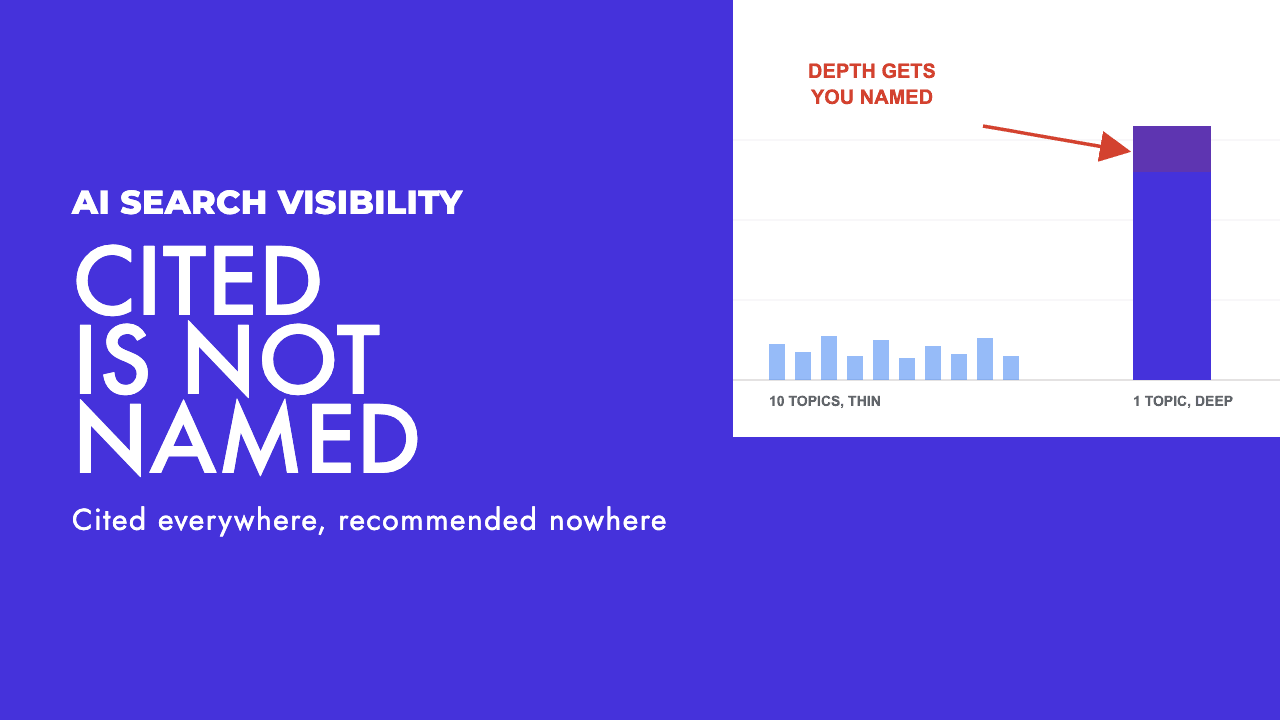
- Be the non-commodity source. Google's guide keeps returning to content with a unique point of view. Generic, recycled information does not get cited because the model already has a hundred versions of it. First-hand experience, real numbers from your own work, and an actual opinion are what stand out. This is exactly why we publish insight, not data dumps, and it is what our content strategy work is built around.
- Get the fundamentals right. A page has to be indexed and eligible for a normal snippet before it can appear in an AI feature. If your technical SEO is shaky, no amount of AI tactics rescues it.
- Use the new report for what it is good at. Check which of your pages Google is citing in AI answers, and treat that as a signal of which topics you have earned authority on. Then double down on those topics with better content, not with markup tricks.
If you want a clearer picture of where AI Overviews are eating your clicks and what is worth doing about it, we went deep on that in getting into Google AI Overviews in 2026.
The honest bottom line
May and June 2026 were good months for anyone who hates snake oil. Google gave you a way to confirm you are showing up in AI answers, and in the same breath told you that most of the special AI optimization tactics are unnecessary. The measurement is still half-built (impressions without clicks is a frustrating place to start), but the direction is clear and welcome.
The businesses that win AI search are not the ones with the cleverest llms.txt file. They are the ones publishing content a real expert would put their name to, on a site Google can actually crawl. That was true before this report shipped, and the report is the closest thing to proof Google has ever handed us.
Update, September 2026
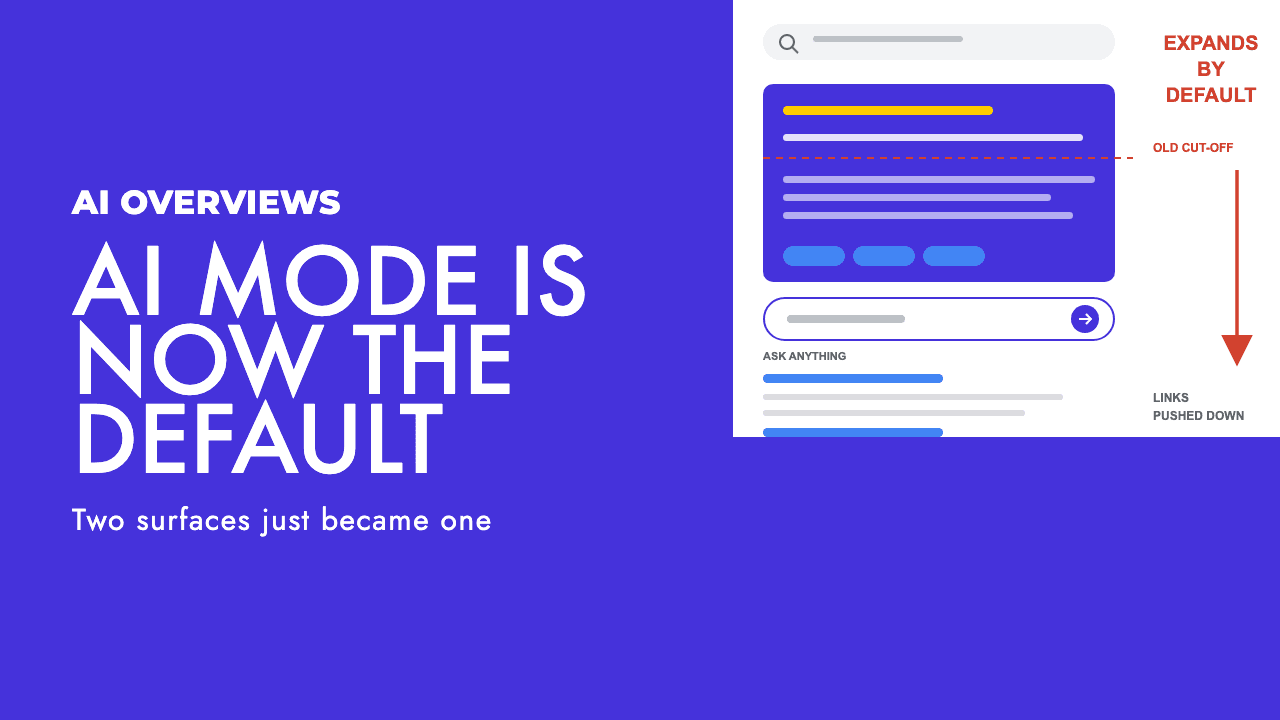
Two things have moved since June. The report and the opt-out control finished rolling out to all websites worldwide on 31 August 2026 (Search Engine Land), so the "subset of sites" caveat above no longer applies. A few days earlier, Google began expanding some AI Overviews into full AI Mode answers automatically, with the follow-up box already open (Search Engine Roundtable). Bigger answers cite more sources, so expect generative AI impressions to climb this autumn for reasons that have nothing to do with your work, and read them accordingly. We covered both changes together in AI Overviews and AI Mode becoming the same thing.
If you would rather spend your budget on what works instead of what is fashionable, a free SEO review is a sensible place to start, and if you are based locally, our Cyprus SEO team does this work every week.