
On July 16, most of the coverage called it an antitrust win. The European Commission adopted two binding decisions under the Digital Markets Act ordering Google to share its search data with rival search engines and AI chatbots, and to open Android so people can pick a different assistant to run voice commands and act across their apps.
If you run a business, do not file this under regulation. File it under search visibility. The moat around Google's index, the thing that made "rank on Google" the whole game, is being pried open by law. And because the DMA is EU law, Cyprus and the rest of Europe live inside this change first.
What the order actually requires
Two things, on two timelines.
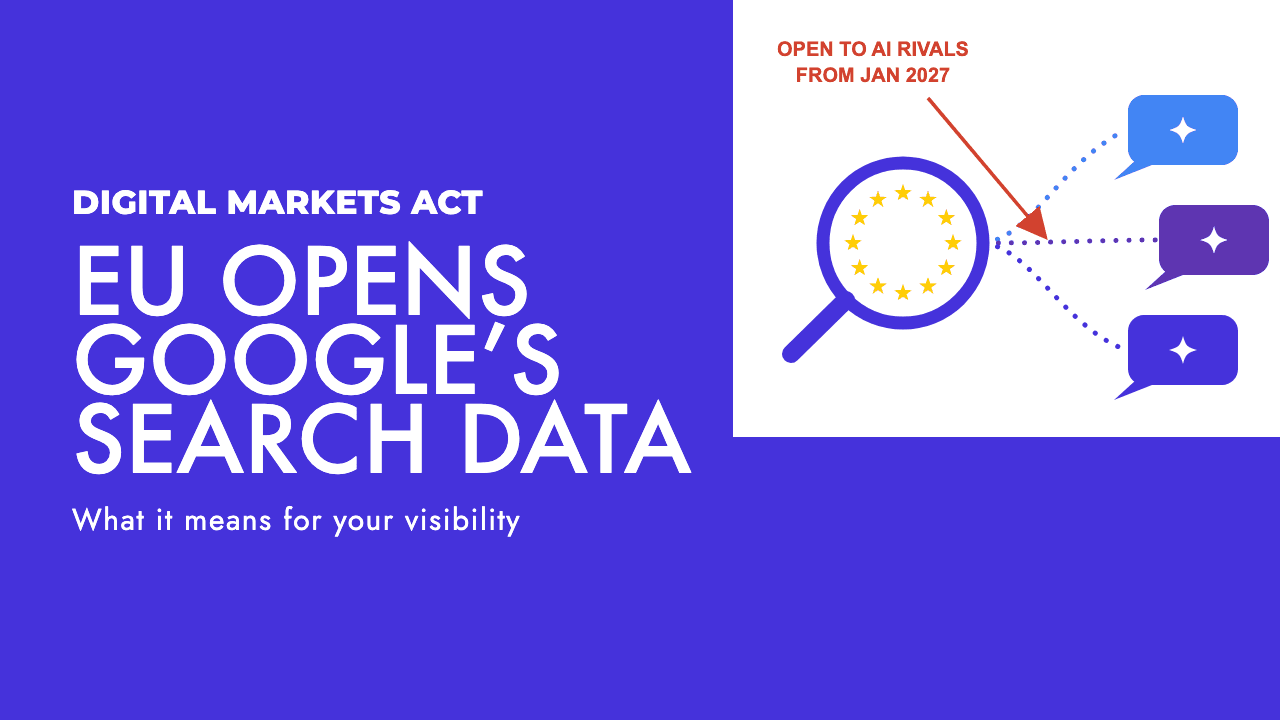
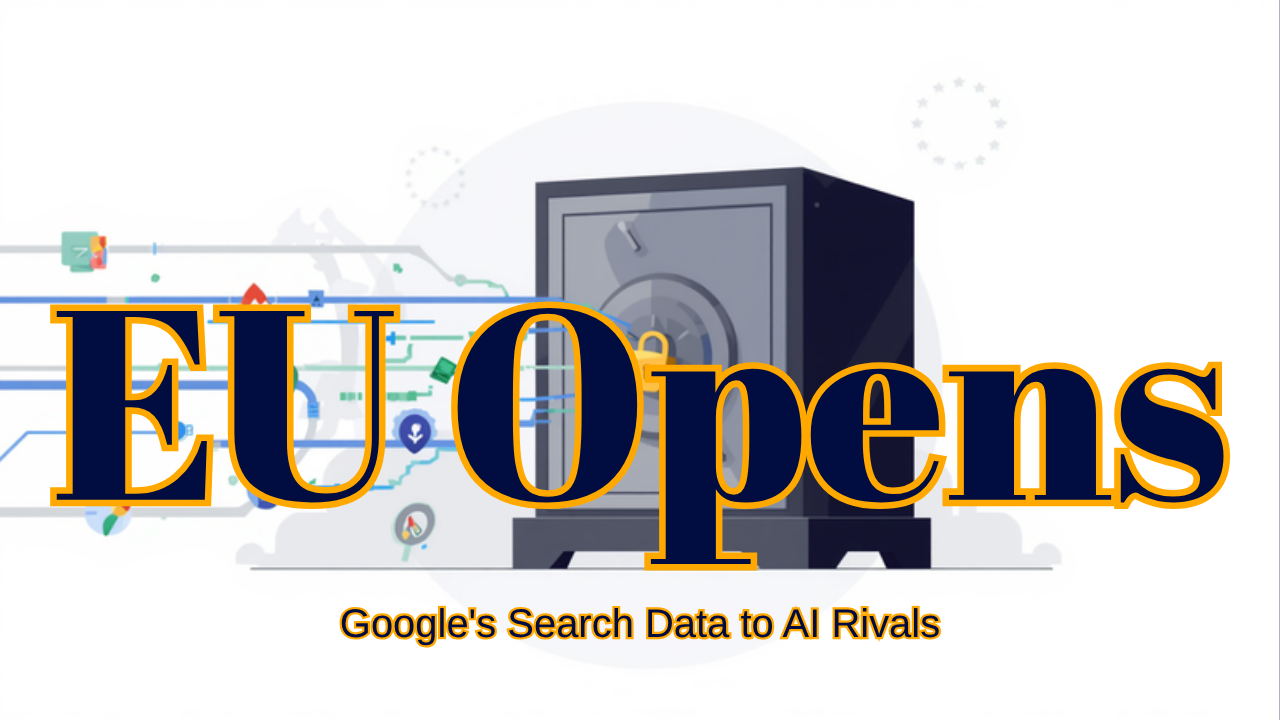
Search data sharing. Google must start giving eligible competing search engines and AI chatbots access to anonymised search data from January 2027. The Commission was explicit that the data will be anonymised. The point is to let rivals build products that answer questions as well as Google does, without having to rebuild two decades of query data from scratch.
Android access. Google must open the Android features that assistants depend on, from voice activation to the ability to carry out tasks across apps. In practice that means an Android user will be able to summon ChatGPT, Gemini, Perplexity or another assistant by voice, the way "Hey Google" works today, and have it draft an email or pull a flight number out of an inbox. Those changes are expected to reach users from July 2027.
EU tech chief Henna Virkkunen framed the goal plainly: the Commission wants "emerging alternatives to Google Search" so EU users "can enjoy greater choice of services." Google's Kent Walker pushed back, calling the measures a risk to "user privacy, device security, and national security" and disputing that the shared data would be properly anonymised. (Euronews)
Why this is a visibility story, not a legal one
Here is the part the antitrust headlines skip.
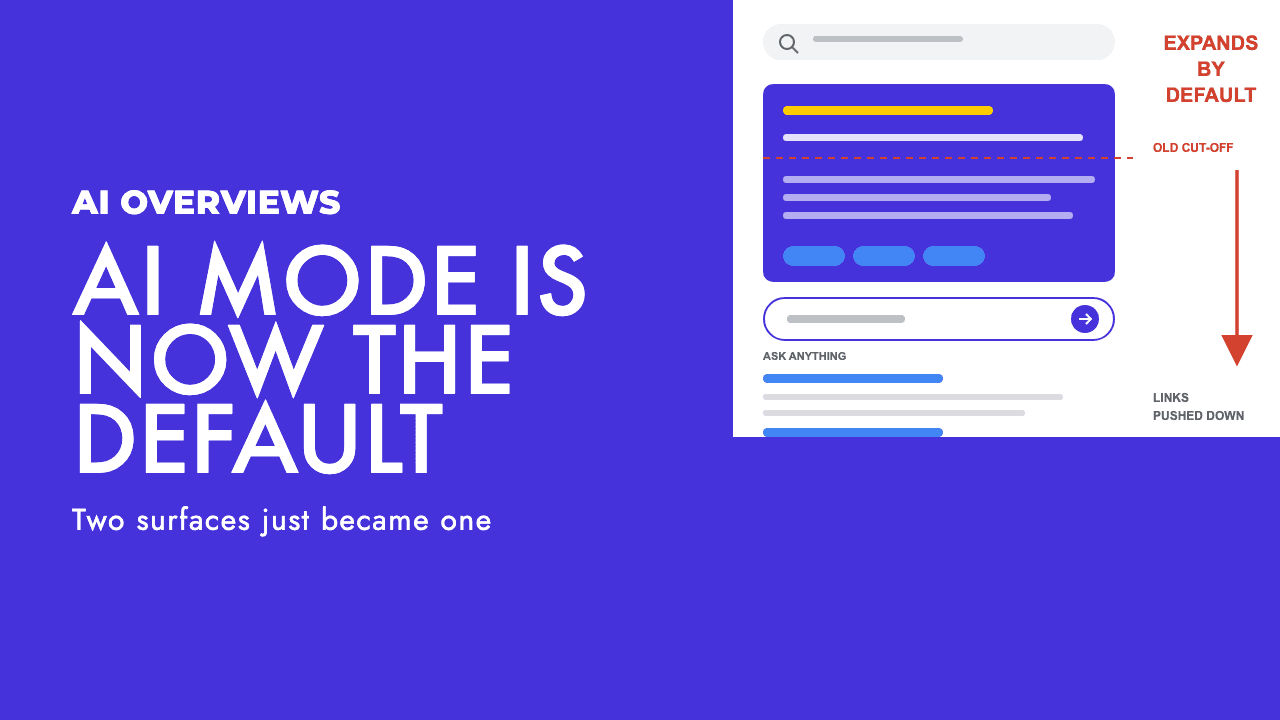
For years, the reason you optimised for Google above everything else was simple: Google had the index and the data, and everyone else was playing catch-up. That advantage is exactly what the Commission is now redistributing. When rival assistants can draw on Google-grade search data and act natively on the phone in your pocket, the answer layer between a person and your website gets more crowded, not less.
We already see the direction of travel. Previsible's 2026 AI Traffic Study, which looked at 6.77 million LLM-driven sessions across 166 sites, found that ChatGPT alone accounts for the overwhelming majority of trackable AI referral traffic, while noting that AI discovery inside Google's own results almost certainly drives more than all the standalone platforms combined. (Search Engine Land) The clicks and the discovery are already splitting across different surfaces. The DMA pours fuel on that split by handing rivals the raw material and the phone real estate to compete harder.
So the question stops being "where do I rank on Google" and becomes "which of the half dozen assistants my customer might ask is going to name me."
Our take: the answer layer is fragmenting, and chasing each surface is a trap
The instinct, when a new surface opens, is to optimise for it specifically. Optimise for ChatGPT. Then for Gemini. Then for whatever Android assistant a customer picks by default next year. That instinct will burn your time and budget.
These assistants are not independent islands. They increasingly pull from the same well: the open web, structured content, and, after January 2027, a shared pool of anonymised Google search data. Optimise the source once, cleanly, and you show up across surfaces you never touched. Chase each surface separately and you are painting a fence that keeps getting longer.
We say this constantly to clients who ask us to "do GEO for ChatGPT." There is no ChatGPT-only lever worth pulling. The lever is source-level authority: content an assistant can read, trust, and quote without hedging. That is the same thing Google's own systems reward, which is why we keep arguing that GEO and SEO are not two disciplines. The DMA order makes that argument concrete. When every assistant is drinking from a shared source, the winner is the business whose source is the clearest.
What to actually do before 2027
You have a runway. January and July 2027 are the compliance dates, but the buying behaviour is shifting now. Spend the runway on things that pay off no matter which assistant wins.
Make your facts machine-checkable and consistent. An assistant will not confidently recommend a business whose own pages disagree about what it does, where it operates, or what it charges. Same name, same claims, same numbers everywhere. This sounds boring. It is the single most valuable thing most businesses ignore.
Write content an assistant can lift without risk. Direct answers near the top, clear headings, definitions stated plainly, claims you can stand behind. We broke down the mechanics of this in our guide to structuring content so LLMs cite you. None of it is exotic. It is just written for a reader who quotes you to someone else. Pointing assistants at your best pages with an llms.txt file costs an afternoon.
Build entity presence beyond your own site. Assistants triangulate. They trust a business that shows up consistently across your site, your profiles, reputable directories, and third-party coverage. If your only footprint is your homepage, you are easy to skip.
Stop optimising per assistant. Audit the source, not the surface. If a claim is right and legible on your site, it travels. That is where AI search optimisation work should concentrate, not on gaming any one chatbot.
Cyprus and the EU are the test lab
There is an odd advantage here for the businesses we support in Cyprus and the wider EU. Because the DMA is European law, this fragmentation of the assistant layer arrives here on a defined schedule while much of the world watches. US businesses are getting a preview of AI-first search through AI Overviews and AI Mode, as we covered when AI Mode started heading to Europe. The DMA order is the next layer: not just Google's AI answering, but a field of rivals armed with Google's data. Google is already running EEA-specific rules elsewhere, as its site reputation policy split shows. For anyone selling into several countries at once, it is also a reason to tidy up SEO across multiple European markets while the surfaces are still settling.
The businesses that treat 2026 as prep time, cleaning up their facts and their content while the surfaces are still settling, will be the ones assistants can name in 2027 without hesitating. The ones waiting for a rulebook will be optimising for a map that has already been redrawn.
If you want a straight read on whether your content is legible to the assistants that are about to multiply, our free SEO review is a sensible first look. The order changed the rules of who gets to answer. It did not change who deserves to be the answer.
Update, September 2026
A week after this post went up, the Commission followed the orders with money. On 23 July it issued Google's first fine under the DMA, €890 million in total: €460 million for favouring its own Shopping, Hotels and Flights results over rivals, and €430 million for stopping app developers steering users to cheaper payment options. Google was given 60 days to fix the conduct or face periodic penalties of up to 5 percent of worldwide turnover, and disputed the findings without confirming an appeal. Price comparison sites across Germany, Italy and Sweden are now lining up damages claims on the back of it. The January and July 2027 dates for data sharing and Android access have not moved.
Sources: Euronews: EU orders Google to share search data, open Android to AI rivals | Euronews: Brussels slaps €890m fine on Google | US News: EU forces Google to share search data and open Android to rival AI companies | Search Engine Land: ChatGPT commands 92% of AI referral traffic