
For twenty years the deal with Google was that an algorithm decided who deserved to be seen. Google is now quietly building a second lane where the user decides instead, and it has said it intends to feed that choice back into ranking.
That is a bigger change than the feature it arrived in, and almost nobody outside publishing is paying attention to it.
What Google actually announced
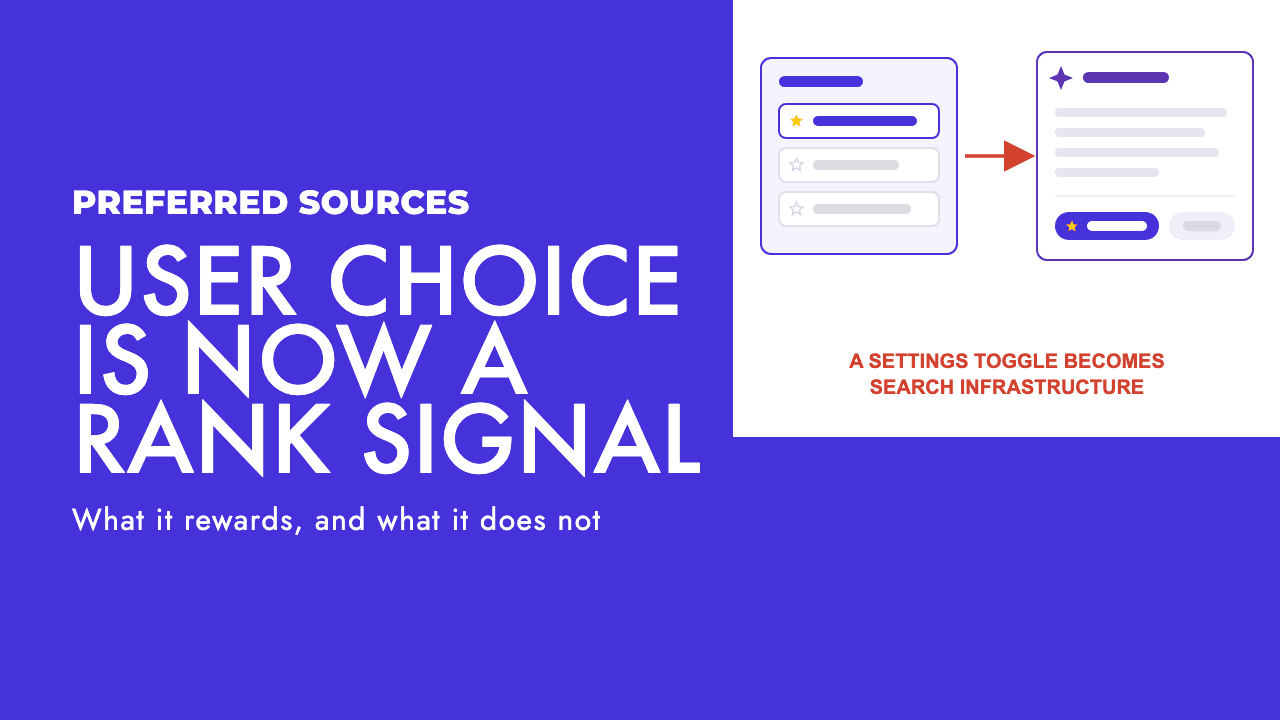
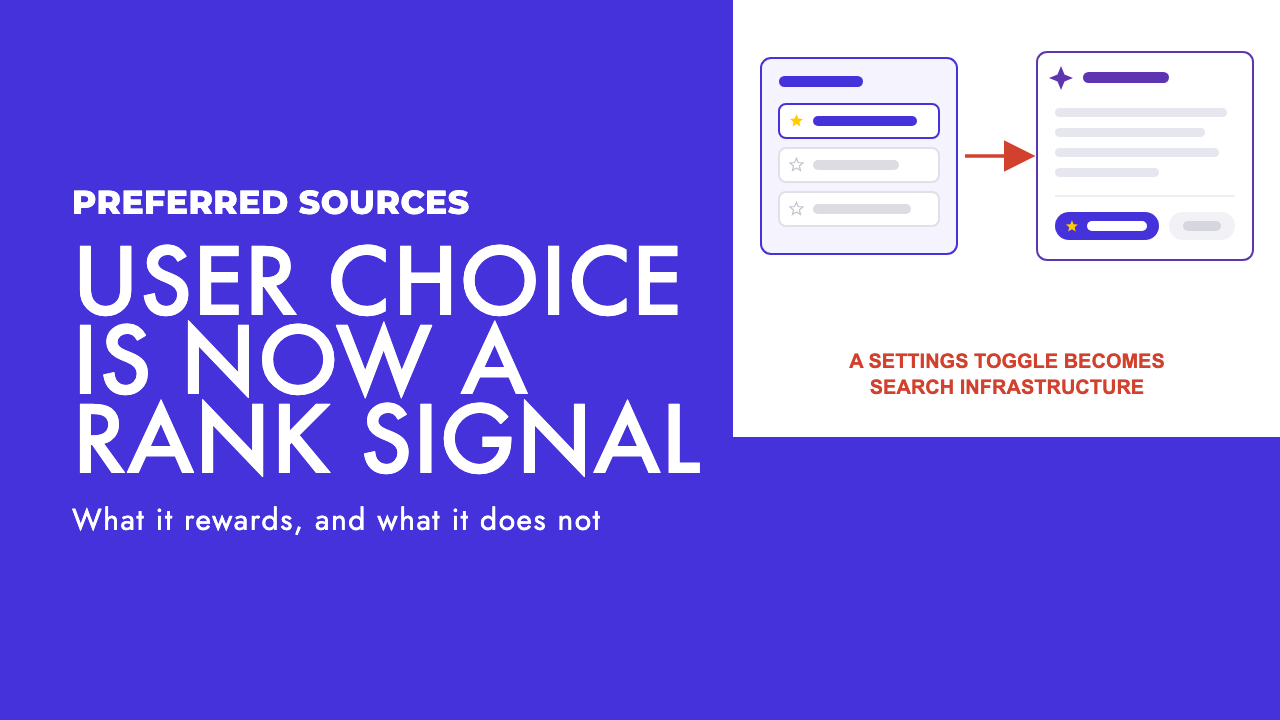
On 27 May, Google extended Preferred Sources into AI Overviews and AI Mode. If a reader has starred your site, and your page gets cited inside an AI answer, that link now carries a visible "Preferred" badge. Google shipped a Preferred Sources carousel and a "Highly Cited" label alongside it (Search Engine Land).
Right now the badge only appears when a starred source happens to already be in the answer. The important part is what Google said comes next: it is working on using Preferred Sources as a ranking signal across its AI features, so that the sources you picked show up more often (9to5Google).
Read that slowly. A settings toggle at google.com/preferences/source becomes an input to what gets retrieved and cited. That is not a personalisation skin on top of the results. That is the user editing the index they see.
The feature has been creeping outward for a year. It launched in the US and India in August 2025 (Google), went global in English at the end of 2025, opened up to all supported languages on 30 April 2026 (9to5Google), and reached the AI surfaces in May.
The number Google led with is smaller than it sounds
Google's headline stat was that people have selected more than 345,000 unique sources, and that users are roughly twice as likely to click a link carrying the Preferred label.
Both numbers deserve a second look.
345,000 unique sources sounds substantial until you hold it against a product serving billions of people. It is not a mass behaviour. It is a small, deliberate, quite engaged group of users doing something most people will never open a settings page to do.
And the 2x click figure is almost certainly measuring the wrong thing. People star sites they already read and already trust. Of course they click them more. That is a selection effect dressed up as a feature benefit. It tells you very little about what would happen if the badge were shown to someone who had never heard of you.
We are not saying the feature is meaningless. We are saying the honest version of the claim is narrower than the headline, and building a strategy on the headline is how agencies end up selling work that does nothing.
Our take: this rewards the sites that least need rewarding
Here is the uncomfortable structure of it.
Preferred Sources requires an existing audience. Someone has to already know your name, already want more of you, and care enough to go into Google's settings and say so. That is a loyalty mechanism, and loyalty is downstream of the discovery that AI answers have been eating.
Now put that next to who has been losing. Chartbeat data cited by PPC Land found small publishers lost around 60% of their search traffic over two years, medium publishers 47%, and large publishers only 22% (PPC Land).
So the remedy on offer runs on exactly the asset the damage destroyed. If you are big and already known, starring is easy to ask for and easy to get. If you are small and lost most of your discovery, you are being handed a tool that only works once you have solved the problem it was meant to solve.
Google's Search Profiles, launched on 4 June, has the same shape. It gives publishers and creators a claimable profile that feeds Discover follows, and eligibility starts with having "a sizable following on at least one major social or video platform" (Google). Again: bring your own audience.
Our position is that this is Google hedging. AI answers broke the discovery loop that made the open web fundable, and rather than reopen it, Google is adding an opt-in layer where the people who still care about specific sources can preserve their own access. That is a reasonable product decision. It is not a traffic recovery plan, and it should not be sold to clients as one.
Why it still matters if you are not a publisher
Direct answer: ignore the feature, take the signal seriously.
If you run a dental practice in Nicosia or a B2B software company in Austin, nobody is going to star you in Google settings. Running a campaign to beg for it would be a waste of a quarter. Skip it.
But the direction of travel is the thing worth reading. Google is adding weight to being chosen by name. Deliberate human preference is being converted into machine-readable input. That is the same underlying currency that decides whether ChatGPT recommends you from memory before it searches anything, which we wrote about in how ChatGPT answers without searching.
Two different systems, same requirement. Somebody has to know your name and reach for it on purpose.
That is a demand generation problem wearing an SEO costume. It does not get solved by another round of on-page tweaks, and it is why the great decoupling has been so hard for businesses to fix with the tools they already had. Impressions are given to you. Being asked for is earned somewhere else.
What we would actually do about it
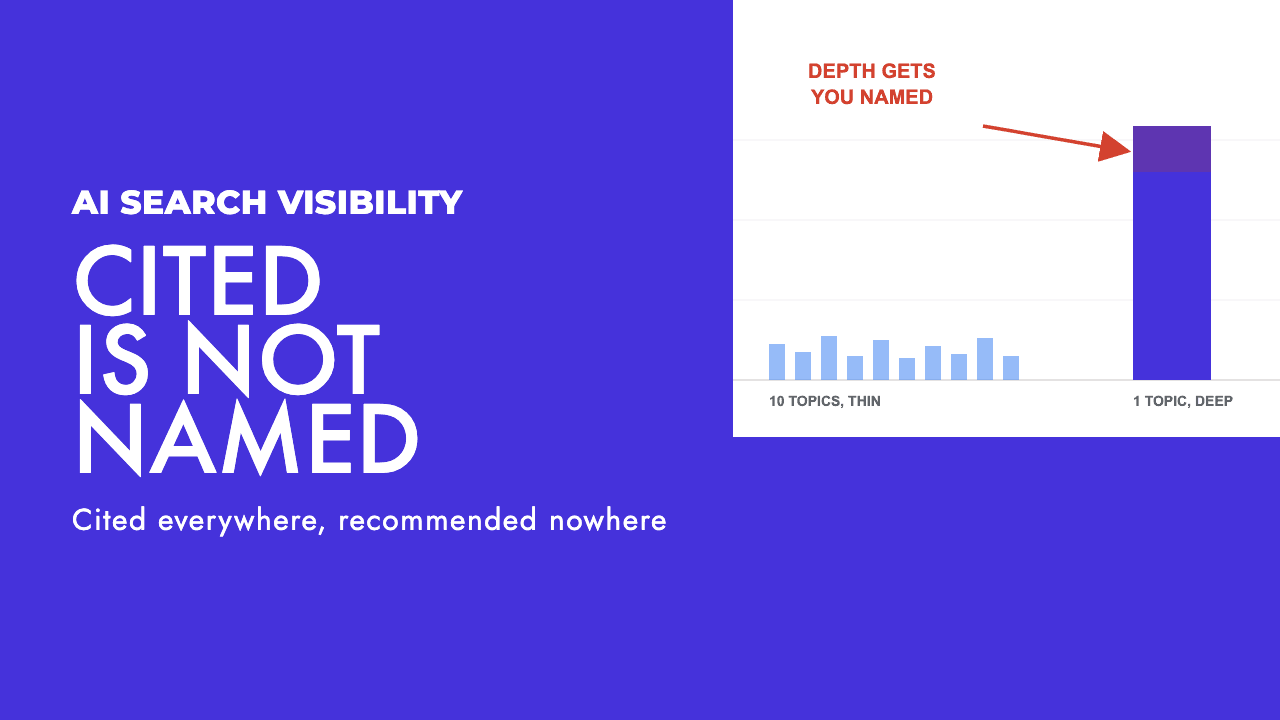
Stop measuring visibility as one number. Ranked, cited, named and chosen are four different states, and they are drifting apart. A page can rank, get cited, never get named, and never get remembered. Track them separately or you will misread your own progress.
Build something that carries a name. Not a blog post about a topic, a thing people can refer to. A tool, a recurring piece of research, a genuinely opinionated position. Anonymous helpful content is the easiest thing in the world for an AI answer to absorb without attribution, and we covered that failure mode in ghost citations.
Go where preference actually forms. People decide who they trust in communities, in inboxes, in podcasts, in comment threads. Reddit is doing a disproportionate amount of that work right now for both discovery and AI retrieval, which is why we keep coming back to Reddit as a search surface and why we run Reddit marketing as its own service.
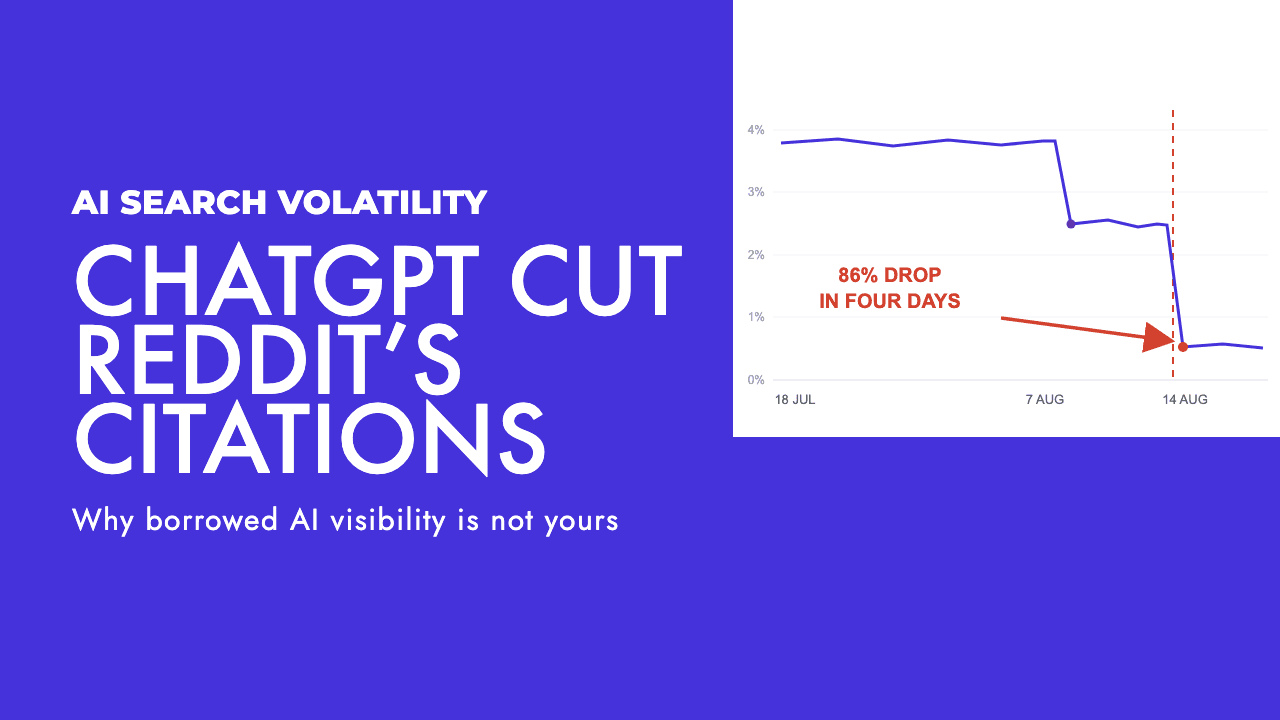
Own a direct channel. Email list, WhatsApp, whatever fits your market. Every one of these platform features is Google renting you access to an audience on revocable terms, the same rented visibility problem that hit brands leaning on Reddit for ChatGPT citations. A list is the version you keep.
Do not buy the badge as a KPI. If someone offers you a "Preferred Sources optimisation" package, that is a settings toggle in somebody else's browser. There is nothing to optimise.
Cyprus and the US are on different clocks
For US businesses this is live now, in the surfaces your customers use, in the language they use. Preferred Sources has been available there the longest and Search Profiles launched US-first. If you are in a category with informed repeat buyers, some of your competitors will accumulate starred status by default.
For Cyprus the feature reached Greek only recently, through the April language expansion, and adoption in a market this size will be thin for a while. That is not a reason to dismiss it. It is a reason to spend the time on the underlying asset instead, which is brand recall in a small market where word of mouth still moves faster than any algorithm. Being the firm people name is more achievable in Cyprus than almost anywhere, and it pays into every surface at once.
The short version
Google is turning a user preference into a ranking input. The feature itself is niche, the adoption numbers are modest, and the click figure Google quoted is flattered by who does the starring.
The signal underneath is not niche at all. Search is adding weight to being chosen on purpose, at exactly the moment AI answers stopped handing out discovery for free. That rewards businesses with a name and quietly penalises the ones relying on being found by accident.
Nothing about that is fixed with a plugin. It is fixed by being worth asking for, which is slower, harder, and the only version that survives the next feature launch.
If you want help working out which of those four states your business is actually in, that is what our AI search optimisation and content strategy work is for, and a free SEO review is a reasonable place to start.