
Here is a fact that quietly breaks most of the GEO advice you have read this year: when you ask ChatGPT a question, it usually does not search the web at all.
A study from the agency Nectiv, published in October 2025, analysed more than 8,500 ChatGPT prompts across nine industries and found the model ran a live web search on only about 31 percent of them (Search Engine Land). The other roughly two-thirds were answered straight from the model, no browsing, no citations, no links for you to earn. It just knew the answer, or thought it did.
That single number should change how you think about AI visibility. Because almost every "get cited by ChatGPT" playbook is optimising for the 31 percent, and staying completely silent about the 69.
The two games hiding inside "AI search"
There are actually two separate ways a brand shows up in an AI answer, and they have almost nothing to do with each other.
The retrieval game. The model runs a live search, reads a few pages, and quotes or links the ones it finds useful. This is the world of citations, fresh content, and comparison pages. When people talk about GEO, this is usually what they mean. We covered the mechanics of it in our guide on structuring content so LLMs cite you, and later in what ChatGPT actually reads when it does search.
The memory game. No search happens. The model answers from what it already absorbed during training, drawing on the patterns baked into its parameters. Researchers call this parametric knowledge: information encoded directly into the model's weights, not fetched at question time (Outpace SEO). When ChatGPT names three project management tools without searching, it is reciting from memory. Your brand is either in that memory or it is not.
Most businesses are pouring effort into the first game and ignoring the second, when the data says the second is where two out of three answers actually come from.
Why the split matters more than it sounds
You cannot earn a citation on a query where no search runs. There is no retrieval step to win. If someone asks "what are the best SEO agencies in Cyprus" and the model answers from memory, no amount of clever on-page schema helps you in that specific answer. You are competing on whether the model has formed a strong enough association between your brand and that category during training.
And the split is not random. It tracks intent in ways you can actually use.
The Nectiv data found ChatGPT searched most often on local intent, roughly 59 percent of the time, and least on categories like credit cards (18 percent) and fashion (19 percent). That makes intuitive sense. Local facts go stale fast, so the model reaches for fresh data. Broad category knowledge ("best running shoe brands") is stable, so it answers from memory.
For a local business in Cyprus or a service company in the USA, that 59 percent is genuinely good news. Local queries are the ones most likely to trigger a live search, which means the retrieval game is winnable for you in a way it is not for a fashion label. Pair this with what we wrote about local SEO in the age of AI search and the picture gets practical fast. It is also the clearest argument for spending on local search visibility before anything else.
How brands end up in the memory in the first place
Here is the uncomfortable part. You do not optimise your way into a model's parametric memory the way you optimise a landing page. It is slower, messier, and mostly happens off your own website.
Training data is drawn from huge web corpora: Common Crawl, Wikipedia, forums, review sites, books, editorial coverage. A brand that appears frequently, consistently, and across a range of credible independent sources gets encoded as a strong entity. A brand that only exists on its own domain, with a handful of backlinks, barely registers.
The citation research points the same way. Peec AI's analysis of 30 million sources cited across ChatGPT, AI Mode, Gemini, Perplexity and AI Overviews found the most cited domains were Reddit, YouTube, LinkedIn, Wikipedia and Forbes, third-party platforms rather than brand sites, and that brands appearing consistently across trusted third-party platforms were more likely to be cited (Search Engine Land). The model trusts what other people say about you more than what you say about yourself. Training memory works the same way, just with a lag.
So the levers for the memory game look a lot less like traditional SEO and a lot more like PR and reputation:
- Get mentioned in places the crawlers actually ingest. Industry publications, Reddit threads, review platforms, Wikipedia-grade reference sites. Consistency of naming matters. Be the same entity everywhere.
- Show up in comparison and "best of" content you do not own. Third-party listicles and roundups are training gold because they explicitly link your brand to a category.
- Be patient. Models train on snapshots. What you seed today shows up when the next model version trains, not tomorrow. This is a compounding asset, not a campaign.
None of that is new to anyone who did digital PR a decade ago. What is new is the payoff. The same coverage that used to be "nice for brand" is now the thing that decides whether an AI mentions you when it answers from memory.
Our take: stop treating GEO as one thing
The honest practitioner read is that "GEO" got flattened into a single checklist too quickly, and most of that checklist only touches the retrieval game. We see it constantly. A business does the schema, writes the comparison page, adds an llms.txt file, then wonders why ChatGPT still recommends three competitors when someone asks for a shortlist. The answer is that the shortlist query never triggered a search. It came from memory, and the business was never in the memory to begin with.
So split your effort deliberately.
For the retrieval game, keep doing the work that earns citations: genuinely useful, fresh, comparative content that answers the question directly, especially on local and specific queries where the model is most likely to search. This is the faster-moving half and it is where a smaller or newer site can win quickly.
For the memory game, treat it as reputation building with a long fuse. Earned mentions, independent coverage, consistent presence across the sites that make up training data. This is slower and less measurable, but it is the half that shows up on the two-thirds of prompts where no search happens.
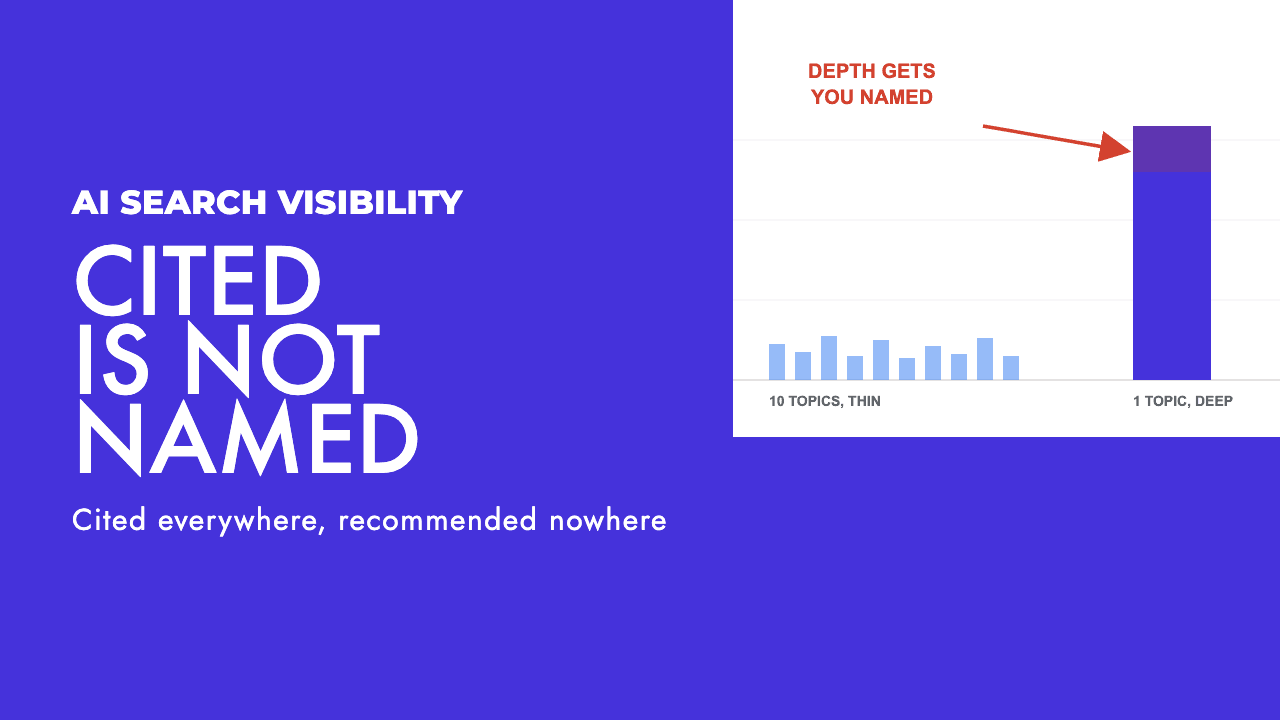
The mistake is doing only the first because it is easier to measure. The opportunity, for businesses in Cyprus and the USA who are willing to think in quarters rather than weeks, is that hardly anyone is deliberately playing the second game yet. The memory game also rewards depth over breadth, which we unpacked in AI cites you anywhere but only recommends you where you go deep.
Update, September 2026
The one-third figure has held up, and the intent split has sharpened. Semrush's clickstream analysis put web search at 34.5 percent of ChatGPT queries in February 2026, down from 46 percent in late 2024, with the share sliding every month from November through February (Semrush). A smaller August 2026 test of 100 prompts across 10 countries found ChatGPT searched on 86.5 percent of commercial prompts and 0.9 percent of informational ones, with categories like science, history and definitions never triggering a search at all (Cloro). So the all-prompt average is the wrong number to plan against. If your buyers ask commercial questions, the retrieval game is very much on. If they ask explanatory ones, you are in the memory game whether you like it or not.
If you want a straight assessment of where your brand stands in both, that is exactly what our AI search optimisation work digs into, and you can start with a free SEO review to see the gaps.
The web search is only a third of the story. Make sure you are not optimising for it exclusively.