This post is a visual explanation of the findings in: Solly JE et al. “Structural gray matter differences in Problematic Usage of the Internet: a systematic review and meta-analysis” (Molecular Psychiatry, 2022). DOI: https://doi.org/10.1038/s41380-021-01315-7
It summarizes research results (not medical advice) and focuses on structural MRI gray matter findings.
At a glance (the headline findings)
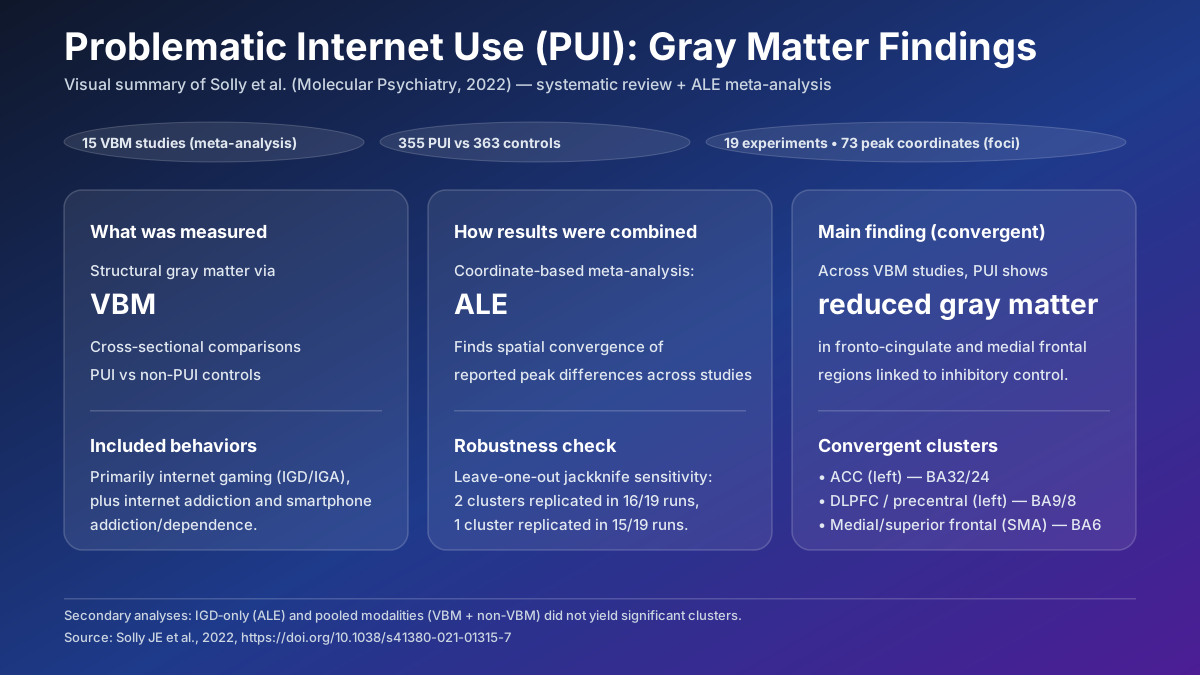
What the authors found (convergent across VBM studies):
- Reduced gray matter in (1) anterior cingulate cortex (ACC), (2) dorsolateral prefrontal cortex (DLPFC) / precentral region, and (3) medial/superior frontal (SMA/BA6).
- Secondary ALE analyses (IGD-only; and pooled methods beyond VBM) reported no significant clusters.
What “Problematic Usage of the Internet (PUI)” means in this paper
PUI is used as a broad umbrella: problematic online behavior that involves loss of control + negative consequences. The paper lists examples such as general surfing, gaming, gambling, buying/shopping, pornography use, and social networking.
In the included neuroimaging literature, internet gaming dominates, with some studies on internet addiction and smartphone addiction/dependence.
How the authors turned many studies into one map
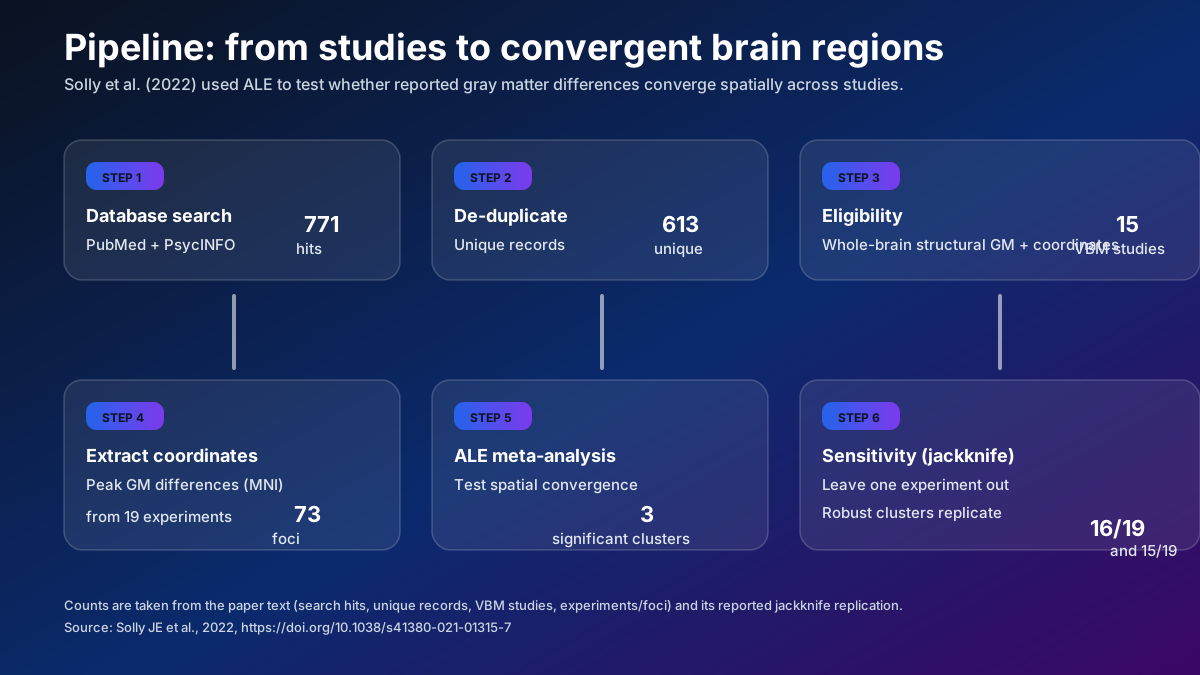
The meta-analysis is coordinate-based: it doesn’t pool raw MRI scans; it pools the reported peak coordinates (MNI space) from eligible whole-brain studies and tests whether those peaks converge more than expected by chance.
Who was studied (what the included VBM evidence looks like)
From the paper’s included VBM studies (15 studies in the main meta-analysis):
- Geography: mostly China (8/15) and South Korea (5/15), plus Germany (1/15) and Taiwan (1/15).
- Age: mostly youth/young adults.
- Gender: many samples were male-only (7/15) and the rest mixed (8/15).
- Comorbidity/diagnostic assessment (reported across the literature):
- 6 studies used a diagnostic interview to confirm PUI.
- 11 studies assessed mood/anxiety and ADHD/impulsivity with validated questionnaires.
- 0 studies reported a validated questionnaire for impulse control/gambling comorbidity.
- Controls varied: some studies used minimal-internet-use controls; others used regular users without PUI.
Findings across individual studies (systematic review)
Across individual studies, reported gray matter differences were spread across many regions (prefrontal, cingulate, insula, OFC, temporal regions, etc.). The meta-analysis step is important because it asks: what repeats across studies in the same locations?
| Study | Measure | PUI < control (lower gray matter) | PUI > control (higher gray matter) |
|---|---|---|---|
| Choi (2017) | GMD | L DLPFC | — |
| Han (2012) | GMV | B inferior temporal gyrus; R middle occipital; L inferior occipital; L fusiform | L thalamus; L angular gyrus |
| Horvath (2020) | GMV | L anterior insula; L inferior temporal; L parahippocampal | L supramarginal gyrus |
| Jin (2016) | GMV | B DLPFC; B OFC; B ACC; R SMA | — |
| Ko (2015) | GMD | B amygdala | — |
| Lee, Namkoong (2018) | GMV | R ACC; R SMA; L ventrolateral PFC; L inferior parietal; L anterior temporal | — |
| Lee, Park (2018) | CTh | R SMA; L frontal eye field; L posterior cingulate; L superior parietal | — |
| Lin (2015) | GMD | B inferior frontal; L insula; R precuneus; L cingulate; R hippocampus | — |
| Seok & Sohn (2018) | GMV | B middle frontal gyrus | L caudate |
| Sun (2014) | GMV | L precentral gyrus | R inferior temporal; R middle temporal; R parahippocampal |
| C. Wang (2021) | GMV | L superior frontal; L SMA | — |
| S. Wang (2018) | CTh | B banks STS; R precuneus; R precentral; R inferior parietal; L middle temporal | B insula; R inferior temporal |
| Y. Wang (2016) | GMV | R superior frontal; R inferior frontal; B medial frontal; R middle occipital; L ACC; B thalamus | — |
| Z. Wang (2018) | CTh + CV | L inferior parietal; L postcentral; L precentral; L lateral OFC; B cuneus; R middle temporal; B superior parietal; R lateral occipital; L superior temporal; R supramarginal; R banks STS | R isthmus of cingulate gyrus |
| Weng (2013) | GMV | B insula; R OFC; R SMA | — |
| Yoon (2017) | GMV | — | B hippocampus/amygdala; R precuneus |
| Yuan (2011) | GMV | B DLPFC; B SMA; B OFC; B cerebellum; L rostral ACC | — |
| Zhou (2011) | GMD | L ACC; L posterior cingulate; L insula; L lingulate gyrus | — |
Abbreviations: ACC anterior cingulate cortex; BA Brodmann area; B bilateral; CTh cortical thickness; CV cortical volume; DLPFC dorsolateral prefrontal cortex; GMV gray matter volume; GMD gray matter density; L left; OFC orbitofrontal cortex; PFC prefrontal cortex; SMA supplementary motor area; STS superior temporal sulcus.
What consistently converged (meta-analysis findings)
The VBM + ALE meta-analysis reported three significant clusters, and the contributing experiments all pointed in the same direction: lower gray matter in PUI vs controls.
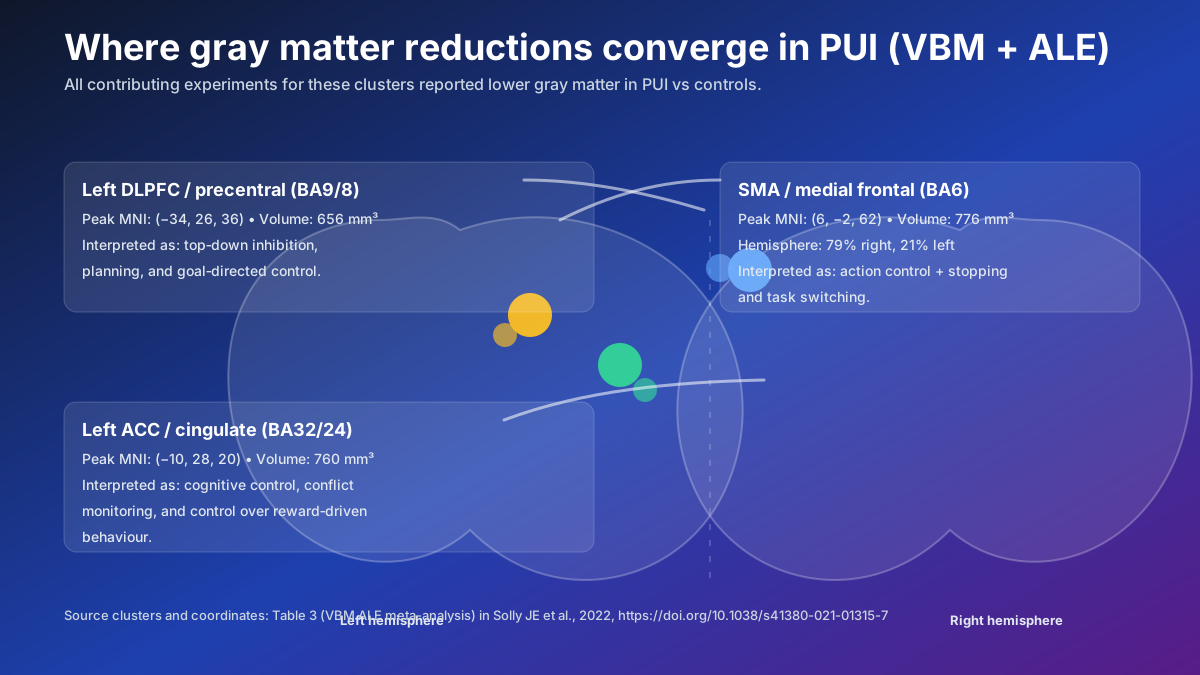
The three significant clusters (Table 3, simplified)
| Cluster (VBM ALE) | Peak MNI (x, y, z) | Main anatomical label | BA | Direction in contributing experiments |
|---|---|---|---|---|
| 1 | (6, −2, 62) | Medial/superior frontal (SMA/medial frontal gyrus) | BA6 | PUI < control |
| 2 | (−10, 28, 20) | Left ACC / cingulate gyrus | BA32/24 | PUI < control |
| 3 | (−34, 26, 36) | Left middle frontal / precentral (DLPFC region) | BA9/8 | PUI < control |
Robustness + what didn’t converge (secondary analyses)
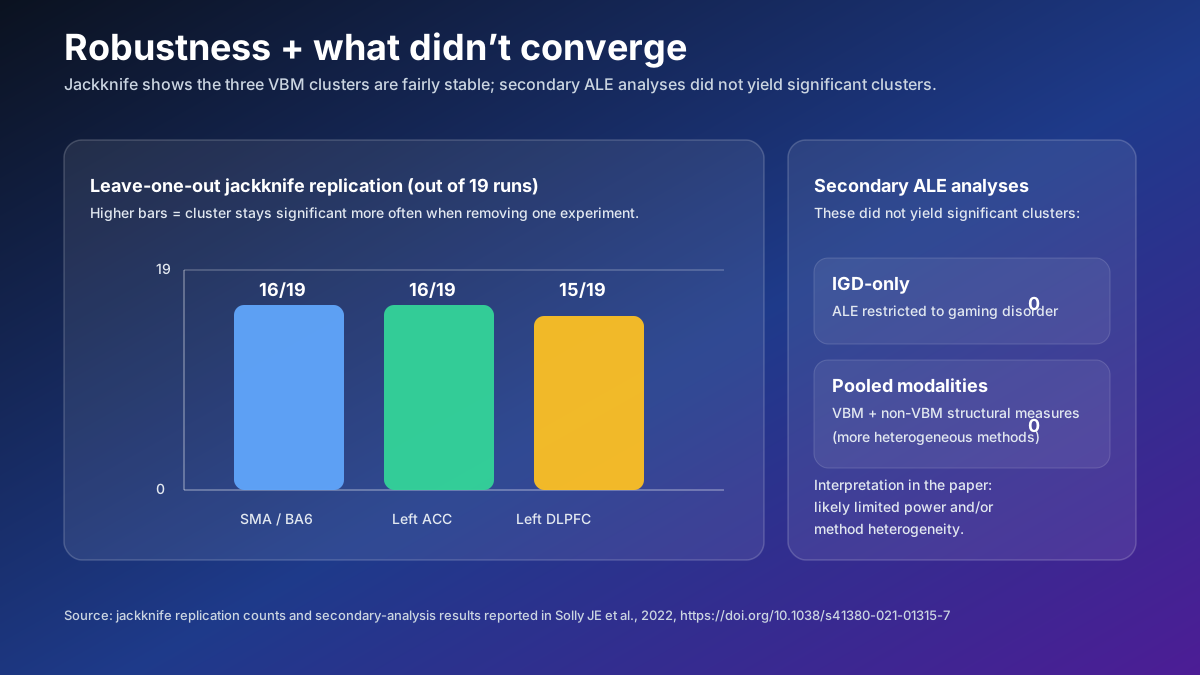
In plain terms:
- The “core” VBM clusters were fairly stable to leaving out one experiment at a time.
- When restricting to IGD only, or when pooling heterogeneous structural measures (VBM + non‑VBM), the ALE analyses returned no significant convergent clusters.
What the paper argues these regions mean (plain-English)
The authors emphasize that these areas are commonly linked to:
- Top-down inhibitory control (DLPFC, ACC): stopping, resisting urges, choosing long-term goals over short-term rewards.
- Action control / stopping and switching (SMA/medial frontal): motor planning and “braking” behavior.
They connect the findings to models like I-PACE (Interaction of Person–Affect–Cognition–Execution), where reduced executive/inhibitory control contributes to internet-use disorders.
Limitations (the ones that matter most for interpreting the visuals)
The paper highlights:
- Small number of eligible experiments per cluster, limiting subgroup analyses and moderator analyses.
- Heterogeneity in definitions, control groups, and methods (VBM vs cortical thickness/volume).
- Coordinate-based meta-analysis can’t include studies with only ROI analyses, and typically relies on studies reporting significant peaks.
- The analysis is cross-sectional: it can’t tell whether differences are causes, consequences, or correlates of PUI.
Bottom line
Across eligible VBM studies, the most reproducible structural finding is reduced gray matter in fronto‑cingulate and medial frontal regions (ACC, DLPFC/precentral, SMA/medial frontal). The rest of the literature reports many additional regions, but those patterns are less consistently aligned across studies.


%2015.jpeg&w=3840&q=75)