
A year ago Google AI Mode was a Labs experiment you had to opt into. Last week, at I/O, Google said it has passed one billion monthly users, with queries more than doubling every quarter (Google).
Very few things in search have moved like this in the last decade. Whatever you want to call the new surface, users are very clearly aware of it now, and they are using it.
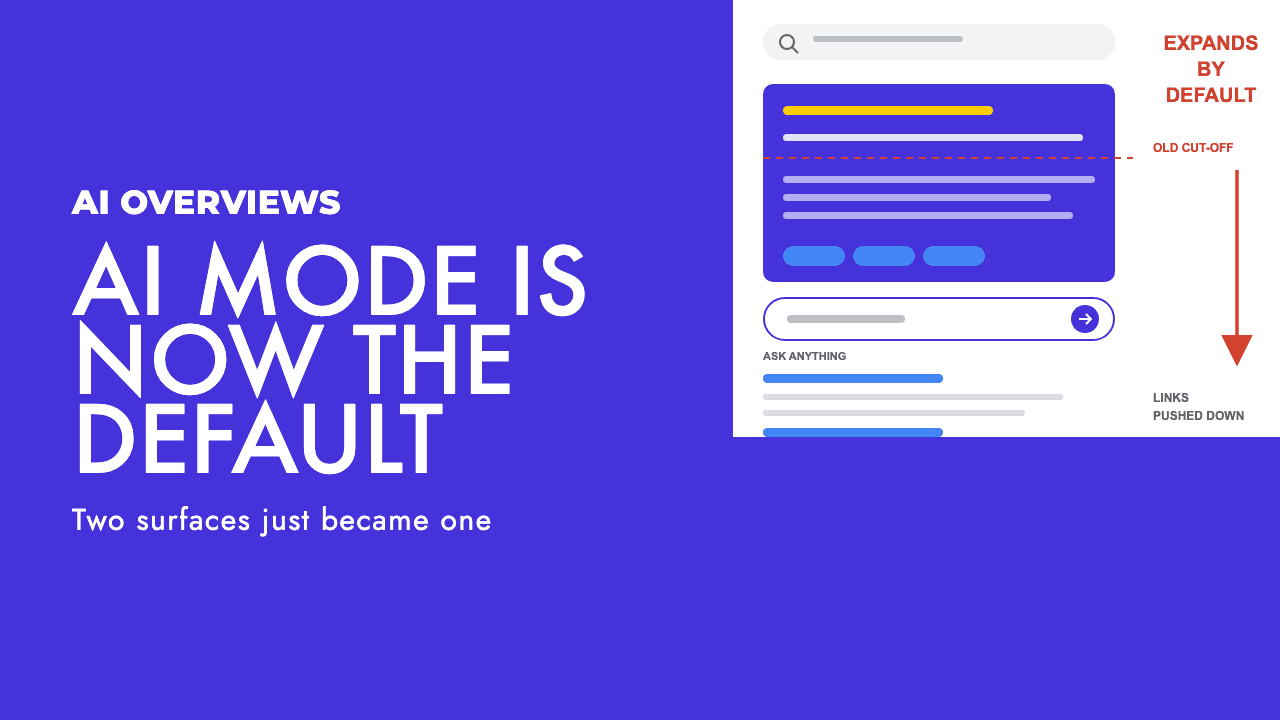
The frustrating part for most SEOs is that the playbook keeps shifting. AI Overviews stabilised in 2024. AI Mode is a different animal. It is a full conversational surface that runs a "query fan-out" behind the scenes, hits multiple sources, and synthesises an answer with citations. Classic ranking tactics still matter, but they are now table stakes. The work that actually wins citations sits on top.
Here is what we have learned shipping GEO work for clients across finance, legal, igaming, and local services since AI Mode rolled out broadly.
What Google AI Mode actually does (and why it breaks old SEO)
If you are still treating AI Mode like a fancier featured snippet, you will get outranked. The mechanics are different.
When a user enters a query in AI Mode, Google does not run one search. It fans the query out into multiple sub-queries, each targeting a different facet of the original intent. Google calls this query fan-out and described it plainly when it opened AI Mode to everyone in the US in May 2025. A UK search makes the pattern easy to see. A query like "best business bank account for a freelancer in the UK" becomes a basket of follow-ups: fees, deposit insurance, integrations, mobile features, customer reviews, eligibility. Each sub-query pulls candidate sources. The model then synthesises one answer with inline citations to a handful of those sources.
What this means in practice:
- You are not ranking for one keyword anymore. You are ranking for the cluster of sub-queries that Google generates from the seed query.
- Position 1 on the seed keyword does not guarantee a citation. We have seen clients ranking #1 organically get skipped in AI Mode because a deeper page elsewhere on their site (or a competitor's) answered the actual sub-question.
- The "10 blue links" mental model is dead for these queries. AI Mode often cites two or three sources. Everyone else is invisible.
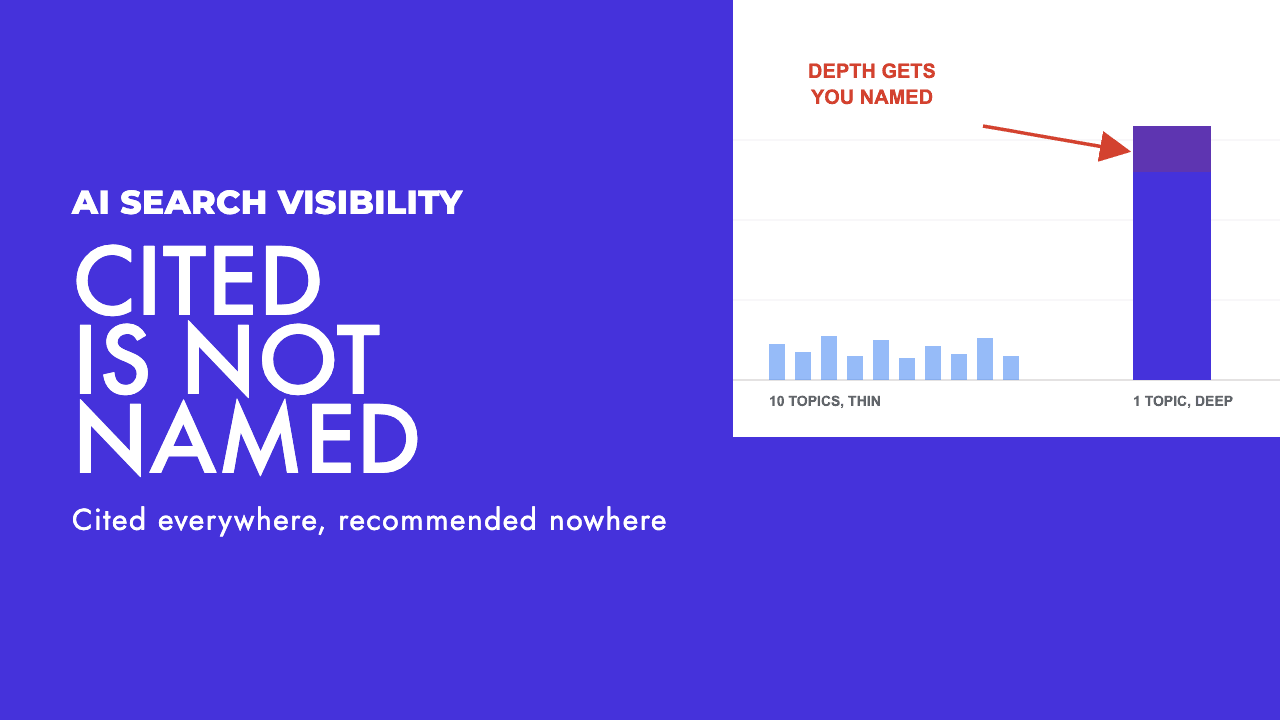
This is why generative engine optimization (GEO) keeps coming up as a distinct discipline. It overlaps heavily with SEO, but the unit of optimisation is the passage rather than the page. We went deeper on the mechanics in our query fan-out explainer.
The GEO signals we are actually seeing move the needle
We have been auditing AI Mode citations for our clients for the past six months, comparing pages that get cited against pages that should have been cited but were not. The patterns are consistent.
1. Passage-level answers beat page-level SEO
The pages that get cited in AI Mode almost always have a clean, self-contained passage that answers a specific sub-question in 40 to 80 words. Not a buried sentence inside a 2,000-word essay. Not a list bullet with no context. A standalone, quotable passage with the entity and the answer in the same paragraph.
We have a client in financial services who was getting almost no AI Overview citations despite ranking on page one for the parent term. We restructured one page to have explicit Q-and-A passages under H3 headings, each one a clean 50-word answer. Citations started appearing within two weeks. No new backlinks, no rewrites of the title tag, just the passage structure.
2. Entity clarity across your site
AI Mode leans heavily on entities. The system needs to know that you are talking about a specific company, product, location, or concept, and it needs that to match what is in its knowledge graph. Three things help:
- Consistent entity naming (do not call the same thing four different things across your site)
- Schema markup that ties pages to recognised entities via
sameAslinks to Wikidata, LinkedIn, Crunchbase, official directories - Internal links that use the entity name as the anchor
This is where the old E-E-A-T conversation actually pays off. Author bios, organization schema, location pages with verified data. None of it is glamorous. All of it matters more in AI Mode than it ever did in classic search.
3. Citations cluster around trustworthy originals
If you are paraphrasing what fifty other sites already said, you are providing no new information for the model to cite. You are interchangeable. The pages we see cited consistently are originals: proprietary data, first-hand testing, internal case studies, expert quotes that exist nowhere else.
This is why content farms are getting hammered. We have watched two competitors in the recruitment space drop almost entirely out of AI Mode citations over the last quarter, both running clear AI-generated rewrites of common industry guides, the kind of copy an AI content detector scores highly. The model can tell. Or at least, Google's ranking signals around the model can tell.
4. Freshness on trending topics
For evergreen topics, freshness matters less. For topics tied to a fast-moving subject like AI Mode itself, the cited pages are almost always updated within the last 90 days. We update our internal trend pieces monthly with a visible dateModified. It is a small thing. It seems to help.
The tactical GEO checklist we use with clients
This is the actual working checklist we run when we are optimising a page for AI Mode citations. It is not exhaustive. It is what works.
Content structure
- Lead each major section with a 40 to 80 word standalone answer that could be lifted verbatim.
- Put the most cite-worthy passage in the first third of the page.
- Use H2 and H3 headings that mirror likely sub-queries, not internal jargon.
- Include at least one piece of original data, original screenshot, or first-hand observation per major topic.
Technical and schema
ArticleorFAQPageschema where appropriate, with properauthoranddatePublishedfields.Organizationschema on the site root withsameAsto LinkedIn, Wikidata if applicable, and major industry directories.- Author pages with their own schema and
sameAslinks. llms.txtat the root for the bots that respect it, mirroring your sitemap priorities. It is not magic, but it costs nothing, and our llms.txt generator for AI assistants will write one for you.
Crawl access for AI bots
- Decide deliberately whether to allow GPTBot, ClaudeBot, PerplexityBot, and Google-Extended in your robots.txt. Blocking them does not help your SEO, and it does remove you from a growing set of citations. See our AI crawlers and robots.txt guide for the full breakdown.
Internal linking
- From every page, link to the canonical entity page for any product, location, or concept you reference.
- Use the entity name as the anchor. Not "click here." Not "learn more."
Measurement
- Track AI Mode and AI Overview citation share manually, weekly, for your top 20 commercial queries. There is no clean GSC report for this yet. We use a mix of Search Console, Perplexity's source listings, and manual checks. It is annoying. Do it anyway. (Update, September 2026: Search Console now has a generative AI performance report, rolled out to every site on 31 August. It shows impressions in AI Overviews and AI Mode, not which passage was cited, so the manual check still earns its keep. We covered what the report does and does not tell you.)
Where we disagree with the conventional wisdom
A lot of the GEO advice floating around right now is well-intentioned and wrong. A few of the takes we push back on:
"You need to write for the LLM, not the user." No. The pages we see cited are written for humans. They are clear, opinionated, and well-structured. Writing in a stilted "model-friendly" voice produces worse content that ranks worse and reads worse. The model is trained on human content. Write good human content.
"Length is dead, keep everything under 500 words." Also no. The pages we see cited are often long. What matters is that the answer passage is concentrated, not that the page is short. A 3,000 word guide with crisp answer passages every few hundred words does fine.
"Get on as many AI platforms as possible." Most of the third-party "GEO platforms" promising to syndicate your brand into AI answers are selling smoke. The platforms doing the citing (Google AI Mode, ChatGPT, Perplexity, Claude) are crawling the open web and their licensed sources. The work is on your own site. Spend the budget there.
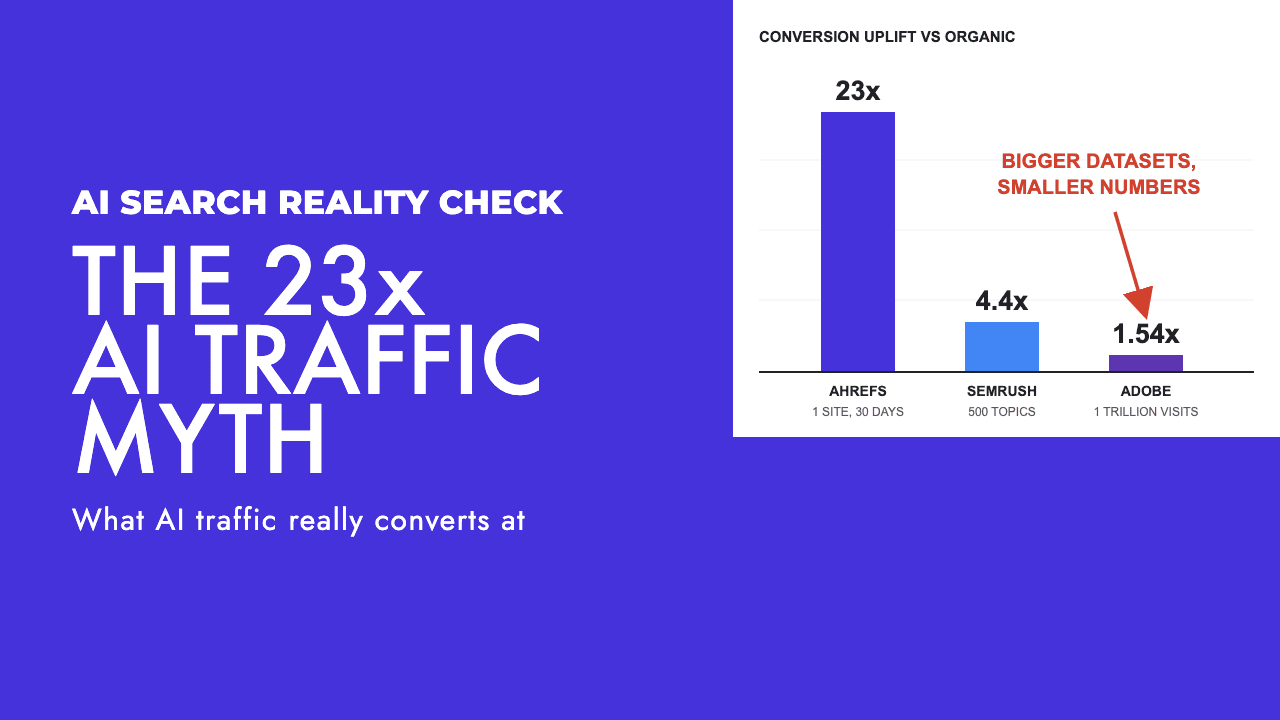
"AI Mode will kill organic traffic." This is the panic narrative, and it is partly true. Zero-click queries are up. But on commercial queries, where the user needs to actually transact, the citation often drives a higher quality click than a #3 organic position ever did. We have one client whose total AI Mode-attributed sessions are smaller than their organic, but the conversion rate is 4x higher. Our take, based on what we are seeing in the data, is that AI Mode redistributes traffic toward original, trustworthy sources. If you are one of those, this is the best moment SEO has had in years.
What we are doing with our own site
To put our money where our mouth is, here is what we are actively shipping on seoturtle.com this quarter, all driven by the GEO work above:
- Rewriting every services page to lead with a 60-word standalone answer to the obvious sub-query (for example, "what does an AI search optimization engagement actually include").
- Adding
OrganizationandPersonschema withsameAslinks across every page. - Publishing original, first-hand pieces like this one every two to three weeks, dated and sourced.
- Manual weekly tracking of AI Mode citations for our 20 commercial target queries.
We will write up what moved and what did not once the work has had a quarter to land.
Update, September 2026
The biggest independent look at AI Mode citations since this was written backs the passage argument, with one correction to our numbers. Pillarbase analysed 15.7 million AI Mode citations across 148 industries and found the passages that get reused most average about 117 words, lead with the answer in the first sentence around 80% of the time, and stand on their own without the surrounding page (Search Engine Land). That is longer than the 40 to 80 words we suggest above, so treat our range as a floor rather than a ceiling. The same study found 76% of the passages cited a hundred or more times came from pages ranking first, a useful counterweight to the idea that rankings stopped mattering. On the model side, Gemini 3.5 Flash became AI Mode's default at I/O, and in August Google added Gemini 3.7 Flash as an option for AI Pro and Ultra subscribers, so expect fan-out behaviour to keep shifting under you.
The bottom line
Google AI Mode is the biggest shift in search interface design since Google rolled out the knowledge panel. A billion people a month are already there. The ranking mechanics are different enough that pure 2023-era SEO is not sufficient.
The good news is that none of the GEO playbook is mysterious. Clean passages, entity clarity, original information, sensible schema. The same boring fundamentals SEO has always rewarded, applied at a tighter granularity. The teams that ship this work in 2026 are going to compound advantages for years. Google's own guidance on AI features says there is no special markup and nothing required beyond good SEO, which is true as far as it goes; the teams that read that as permission to wait are going to be late. We picked apart what the guide says and what it leaves out.
If you want help auditing where you sit in AI Mode for your commercial queries, drop us a line. We will run the citation analysis for free if your team is genuinely going to act on it.