
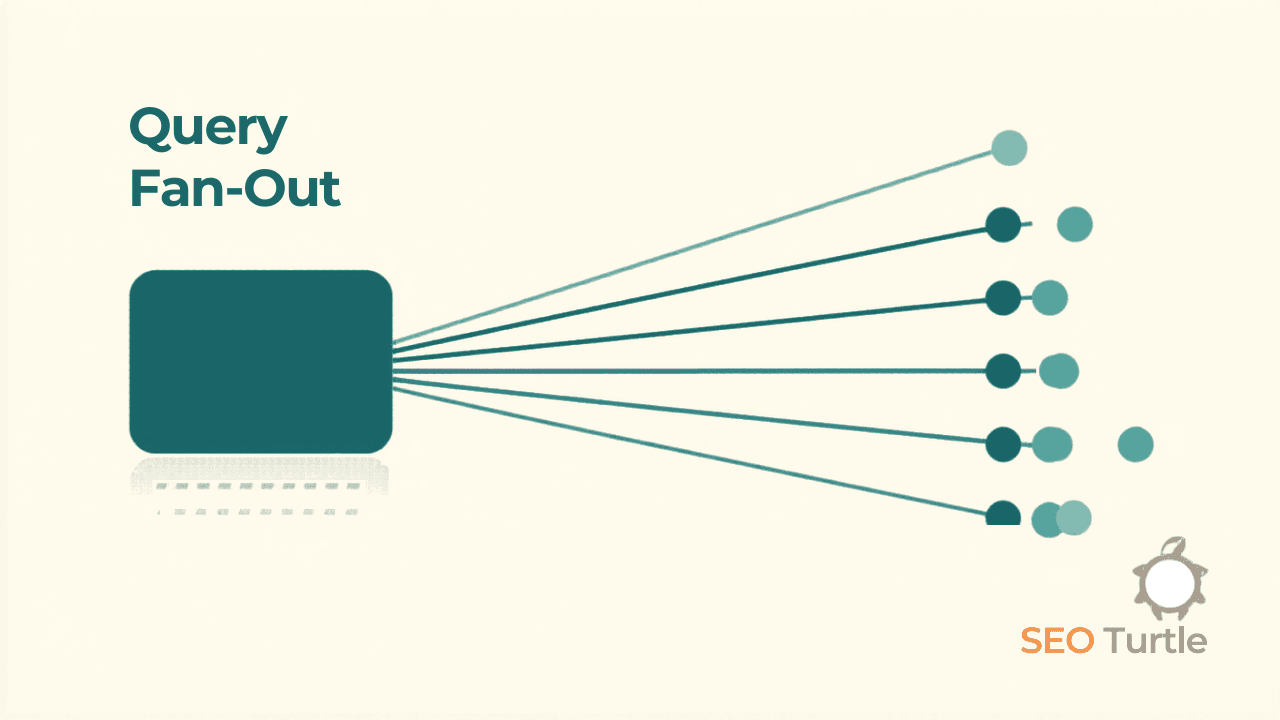
Type one question into Google AI Mode and Google does not run one search. It runs ten, sometimes more, all at once, behind a curtain you never see. It pulls passages from a different page for each, then hands you a single answer woven out of all of them. The industry has a name for this now, query fan-out, and it has become the buzzword of the year in search circles.
Most of what is written about it falls into one of two piles. The first is breathless: a brand new ranking surface, a brand new tool to buy, panic if you are not optimising for the hidden queries. The second is dismissive: nothing has changed, keep writing good content. As usual the truth sits in between, and we think the useful version of this conversation is the one nobody is having.
So here is ours. We looked at how the same behaviour already shows up in ordinary Search Console reporting, then separated what genuinely changes from what is just topical SEO wearing a new hat.
What query fan-out actually is
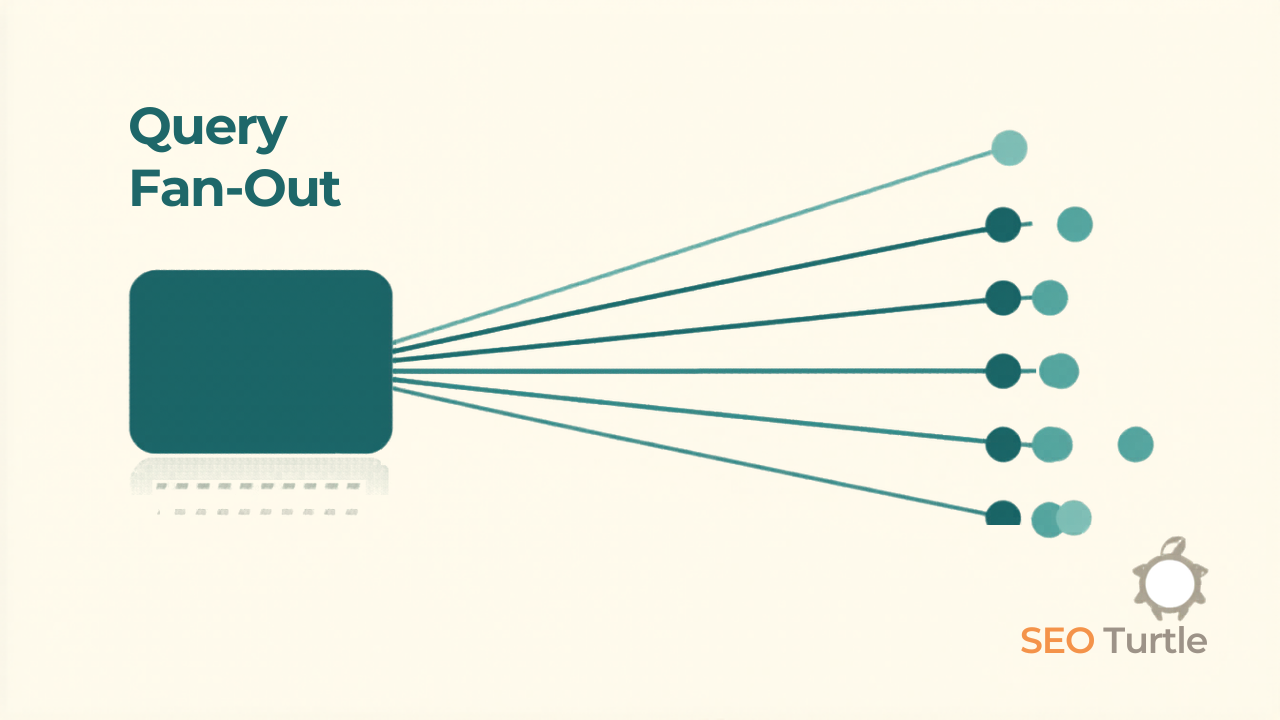
Query fan-out is the technique Google AI Mode uses to answer a question. Rather than matching your query against the index once, it breaks the question into a set of related sub-queries, runs them in parallel, and synthesises the results into one response. Google described it plainly when it launched AI Mode at I/O 2025, describing a technique that works by "breaking down your question into subtopics and issuing a multitude of queries simultaneously on your behalf," a detail laid out on the Google blog.
The simplest way to picture it: AI Mode does the keyword research for the user, automatically, in the half second before it answers. Ask it "is Cyprus a good base for a remote software business" and it does not look for that exact string. It fires off parallel searches for corporate tax rates, internet speeds, the non-dom regime, cost of living, time zone overlap with clients, and a handful more, then assembles the answer from whichever page best satisfies each thread.
The scale is the part that surprised people. Independent analysis by Seer Interactive found the average number of fan-out queries jumped from around six on the older model to roughly eleven once Gemini 3 was powering AI Mode, a rise of nearly 80 percent. Complex questions can trigger many more. One question you typed can quietly become a dozen Google never shows you.
You can see it in your own data
Here is the part that made this click for us. Open the Search Console performance report for any page that covers a topic thoroughly and look at the queries it earns impressions for. You will find a long tail of phrasings you never wrote it for, word for word: the same question with "best", "free", "tool", "checker" or "online" bolted on in different orders, and the same page surfacing for every one of them.
On our own site a single pair of pages on Perplexity rank tracking behaves exactly this way, showing up for dozens of near-identical phrasings of one question. We did not build a page for each. We built thorough pages on the topic, and the search system matched them against the whole cluster of ways people ask about it. That is the exact same behaviour as fan-out, just visible on the classic results side. The page that covers a subject with real depth gets pulled in for the related questions, not only the one it was titled for.
The honest caveat, and longtime readers will know we always include one: earning the impression across the cluster is step one. Showing up on page five for forty phrasings of a question pays nobody. It does not pay the bills until the depth is good enough to actually rank or get cited. Fan-out widens the net you are caught in. It does not promise you win.
Why this is mostly topical SEO with a new name
Here is the take we keep coming back to, and it is not the one the new wave of tools wants you to hear. Query fan-out is Google getting better at understanding that one question has many parts, rather than a fresh ranking lever you reach in and pull. The page that wins is the one that answers the whole question and its neighbours, not the one that guesses the secret sub-queries and stuffs them in.
We have lived through enough of these. This is the same lesson as the Helpful Content Update, the same lesson as topic clusters before it, the same lesson as semantic search before that. Cover the subject properly, for a real human who has the full question, and you are covered for the fan-out. The mechanism is new. The behaviour it rewards is the oldest advice in the book.
This is also, quietly, what Google has been saying all along. Its own guidance on AI features in Search is blunt that there is no special markup and no separate optimisation track, just useful, crawlable content and demonstrated expertise. When Google published its newer AI search guidance, Search Engine Journal noted it went as far as calling AEO and GEO "still SEO." We agree, with one honest amendment below, and we wrote up our own read of that guide separately.
Where it genuinely does change the work
Calling it "just SEO" would be lazy, though, so here is what actually shifts.
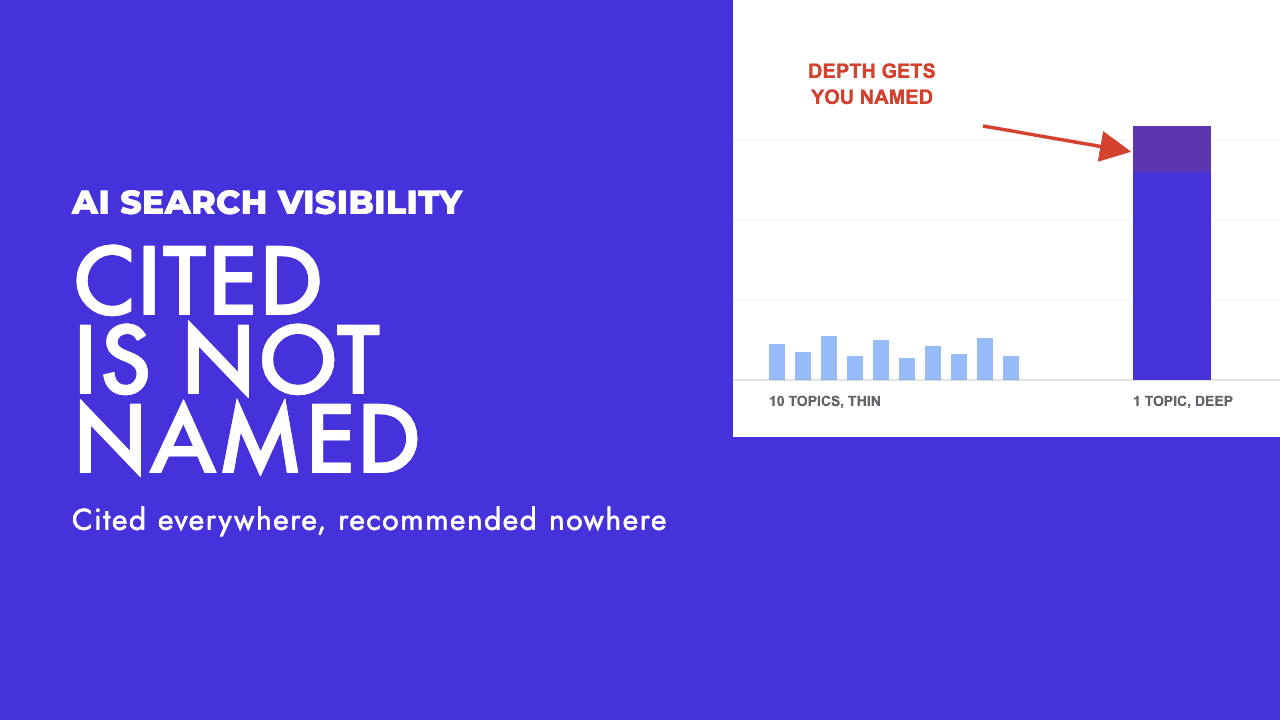
Breadth on a page now matters as much as depth. When the system is firing eleven sub-queries, a page that answers the headline question and four of the natural follow-ups is far more useful to it than five thin pages that each answer one. A "what is X" page that also covers how it works, what it costs, how it compares, and who it suits can satisfy several fan-out threads from one URL. This is the core of how we approach content strategy now, and it is the same shift we wrote about in our Google AI Mode playbook.
Passage-level clarity beats whole-page optimisation. Fan-out retrieves passages, not pages. A clean, self-contained two or three sentence answer under a clear subheading is what gets pulled into the response. Burying the answer in paragraph nine, after the throat-clearing, means the fan-out skips you. Lead each section with the answer, then expand. It helps the machine and it helps the reader, which is the only kind of optimisation we trust.
You are now competing for queries you cannot see. This is the uncomfortable bit. You will never get a tidy report of the sub-queries your page won or lost, because Google does not surface them. Anyone selling you a definitive "fan-out keyword list" is reverse-engineering and guessing. Useful as a prompt for ideas, dangerous as a checklist to chase. Build for the human's full intent and you cover the invisible queries by accident, which is the point.
What it means in our two markets
We work hardest in two very different places, Cyprus and the United States, and fan-out lands differently in each.
In a small market like Cyprus, fan-out is quietly good news. There are not enough searches to justify a separate page for every phrasing of "seo agency in cyprus," "seo services cyprus," and "best seo company in Limassol." There never were. One genuinely thorough, locally specific page can now surface across that whole cluster, which suits a market where the search volumes are thin but the buying intent is high. If you run a local business, the same logic from our local SEO work applies: depth and genuine local detail on a single strong page beats a thin page per keyword.
In the United States the calculus flips. The queries are bigger, the competition is brutal, and depth alone is table stakes. Here the win comes from being the most authoritative, most cited source on a topic, because fan-out pulls passages from pages it trusts. That is an E-E-A-T and digital PR problem as much as a content one, and it is most of what our AI search optimization work is about. Earning the citation matters more than ever, a thread we picked up in our piece on the great decoupling, because in AI Mode the citation is frequently all you get.
The one place we part company with the "nothing changed" crowd
Google says it is still SEO. Mostly true. But there is a real shift hiding in the framing, and brushing it off is how agencies get caught out.
When there were ten blue links, ranking fifth still earned clicks. In an AI Mode answer assembled from a fan-out, there is no fifth place. You are either in the synthesised answer or you are nowhere, and "nowhere" no longer even shows a list you might climb. The skills are the same. The tolerance for being merely good is not. Being the eighth-best page on a subject used to be a position. Increasingly it is invisibility. The sane response is to stop spreading effort thin across mediocre pages and concentrate it on being genuinely the best answer to a tight set of questions. We made the fuller version of this argument in GEO vs SEO and in our breakdown of what answer engine optimization actually is.
What to actually do this quarter
No tricks, just the work that follows from all of the above.
- Audit your money topics for coverage gaps. Take a page you care about, list the obvious follow-up questions a real person would have, and check whether the page answers them. Those follow-ups are your visible stand-in for the invisible fan-out. The templates we use on client work are free if you want a format for the audit.
- Lead every section with the answer. Direct, self-contained, quotable. Then expand. This single habit does more for fan-out visibility than any tool.
- Consolidate thin pages. Three weak pages on one topic compete with each other and satisfy fewer threads than one strong page. Merge them.
- Keep the fundamentals tight. If an AI crawler cannot render your page, none of this matters, because you are not in the retrieval pool at all. That is plain technical SEO, and it is still the floor everything else stands on.
- Measure citations, not just clicks. A blue-link rank tracker will not tell you whether you are quoted in AI answers. You need to watch the answers themselves, which we covered in our take on AI search market share.
Update, September 2026
The largest public dataset on AI Mode citations so far, 15.7 million of them across 148 industries analysed by Pillarbase, reads like a fan-out case study. One passage in the set was cited in answers to 483 different queries, and a single paragraph about building a free HOA website was pulled into 91 distinct questions (Search Engine Land). That is breadth on one page satisfying many threads, which is the whole argument above. The same study found the reused passages average about 117 words and lead with the answer in the first sentence roughly 80% of the time. Separately, Search Console's generative AI performance report reached every site on 31 August; it reports impressions in AI Overviews and AI Mode together and still does not show you the sub-queries, so the point about competing for queries you cannot see stands. Our piece on why AI Overviews cite pages that do not rank picks up the same thread.
The bottom line
Query fan-out is real, it is bigger than most people realise, and it is reshaping how Google decides which pages get seen. The rule it enforces is the oldest one in SEO, cover the subject properly for a real human, applied more strictly than ever and with far less mercy for the merely adequate.
If you want a straight read on whether your best pages are deep enough to win across the fan-out, or whether you are spreading yourself thin across pages that each answer half a question, that is exactly the kind of thing we untangle. Grab a free SEO review and we will show you where the gaps are.