
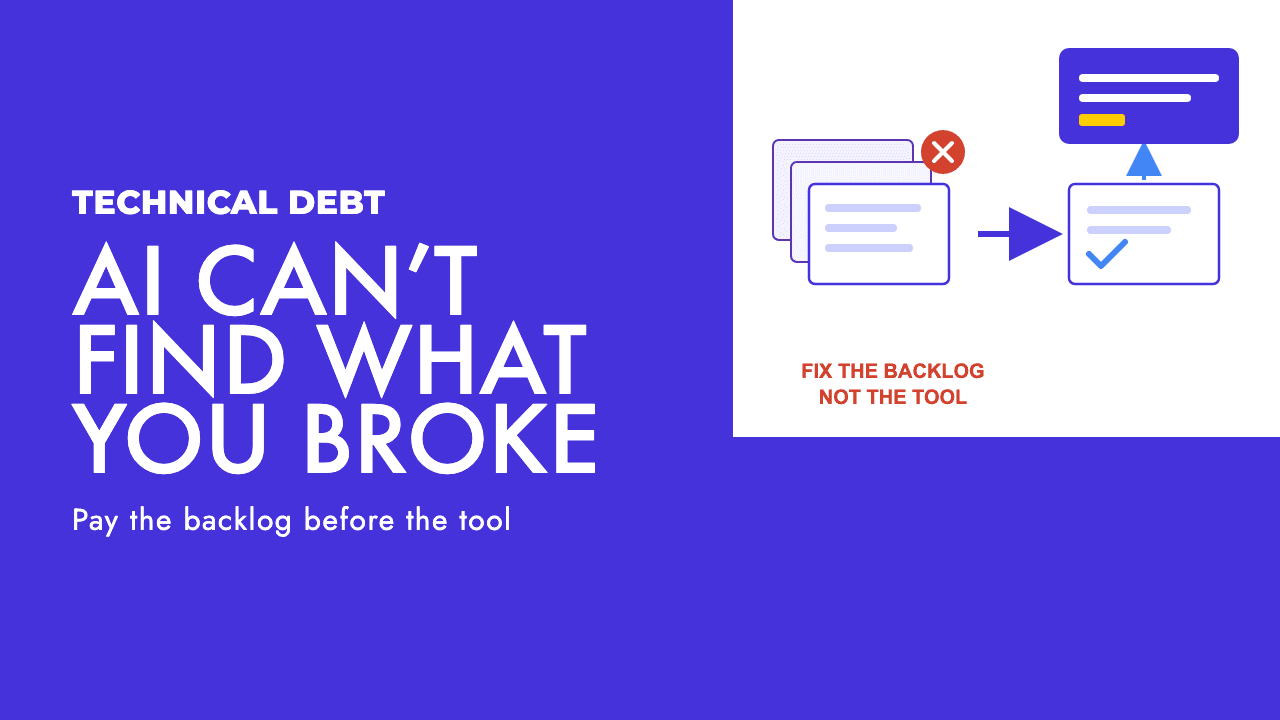
A business asks us why it never shows up in AI answers. We look at the site. There are three URLs for the same service, two of them still linked from the footer, one of them canonicalised to a page that was deleted in a redesign nobody documented.
That is not an AI problem. That is a 2019 problem that AI search finally started charging for.
The argument, stated plainly
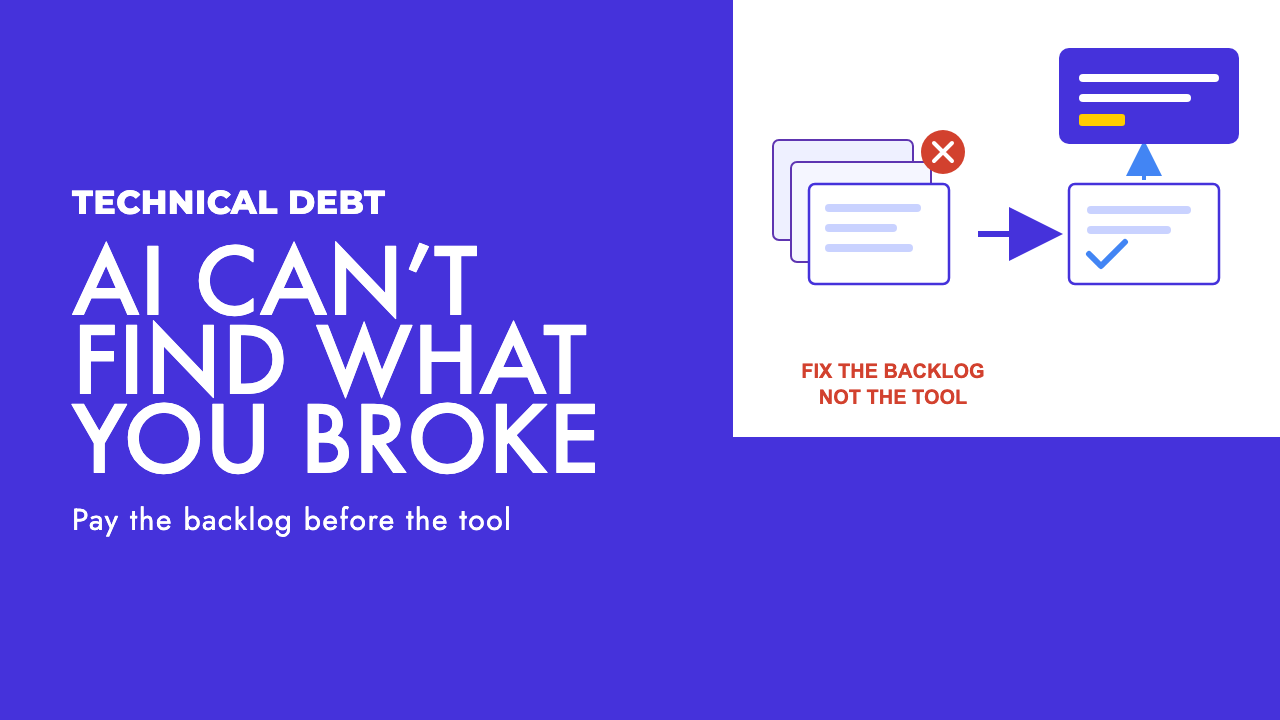
Carolyn Shelby made this case on Search Engine Land on 13 August 2026, and it is the most useful thing we have read about AI visibility all month. Her argument is that most of what gets sold as AI optimisation is really the repayment of long standing technical debt, not a new set of AI specific tactics (Search Engine Land).
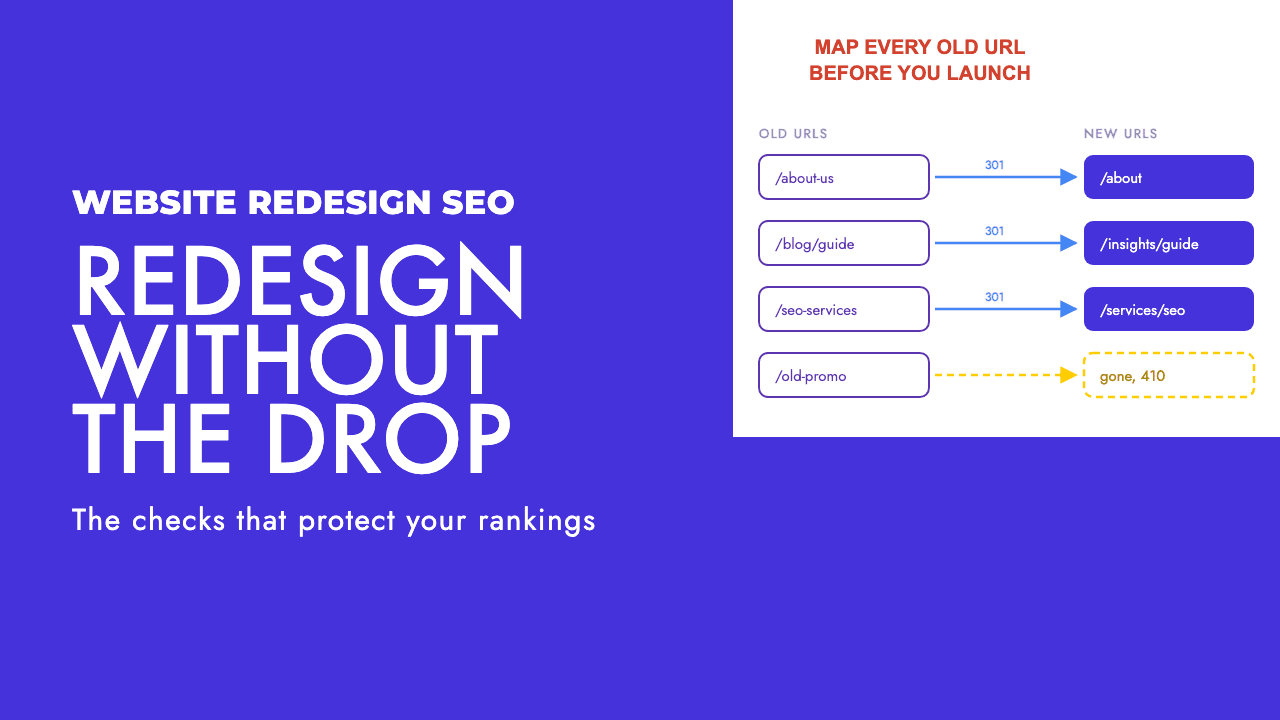
The debt she describes will be familiar to anyone who has inherited a site. Redesigns that spawned duplicate URLs and never consolidated them (the sort of thing our website redesign SEO checklist is there to prevent). Migrations that left redirect chains and conflicting canonicals in place. Five overlapping articles on the same topic because two teams published to separate keyword calendars. Pages that exist without a purpose but still collect internal links. JavaScript that made sense to a developer who left the company.
None of that is new. What is new is that it now costs you visibility in a surface your competitors are winning.
Google's own documentation agrees, and that is the tell
This is the part most businesses have not read. Google's developer documentation on its AI features is unusually blunt about what it takes to appear in AI Overviews and AI Mode.
There are "no additional requirements to appear in AI Overviews or AI Mode, nor other special optimizations necessary." A page needs to be indexed and eligible to appear with a snippet, meeting the ordinary Search technical requirements (Google Search Central).
Take that at face value and the conclusion is uncomfortable for the GEO tooling industry. If there is no separate entry requirement, then a site that is invisible in AI answers is usually failing the ordinary requirements, in a way that classic search used to paper over. There is no missing trick.
We have written before about Google telling SEOs that chunking content for AI is largely pointless. Same pattern. The industry invents a technique, Google says the technique is not the lever, and the actual lever turns out to be something less exciting.
Why AI search stopped forgiving what classic search forgave
Classic Google was remarkably generous. It had years of signals about your site, a link graph to lean on, and enough patience to render your JavaScript and eventually work out what your page was about. A messy site could still rank because ranking was a judgement about the whole page and the whole domain.
Retrieval for an AI answer is a different job. The system is assembling a response from passages, not awarding a position to a page. Three things change as a result.
Ambiguity gets resolved against you. If three URLs cover your main service and none is clearly the authoritative one, a retrieval system has no reason to prefer any of them. Classic search would pick one and rank it. AI retrieval can simply pick a competitor whose answer sits on one unambiguous page.
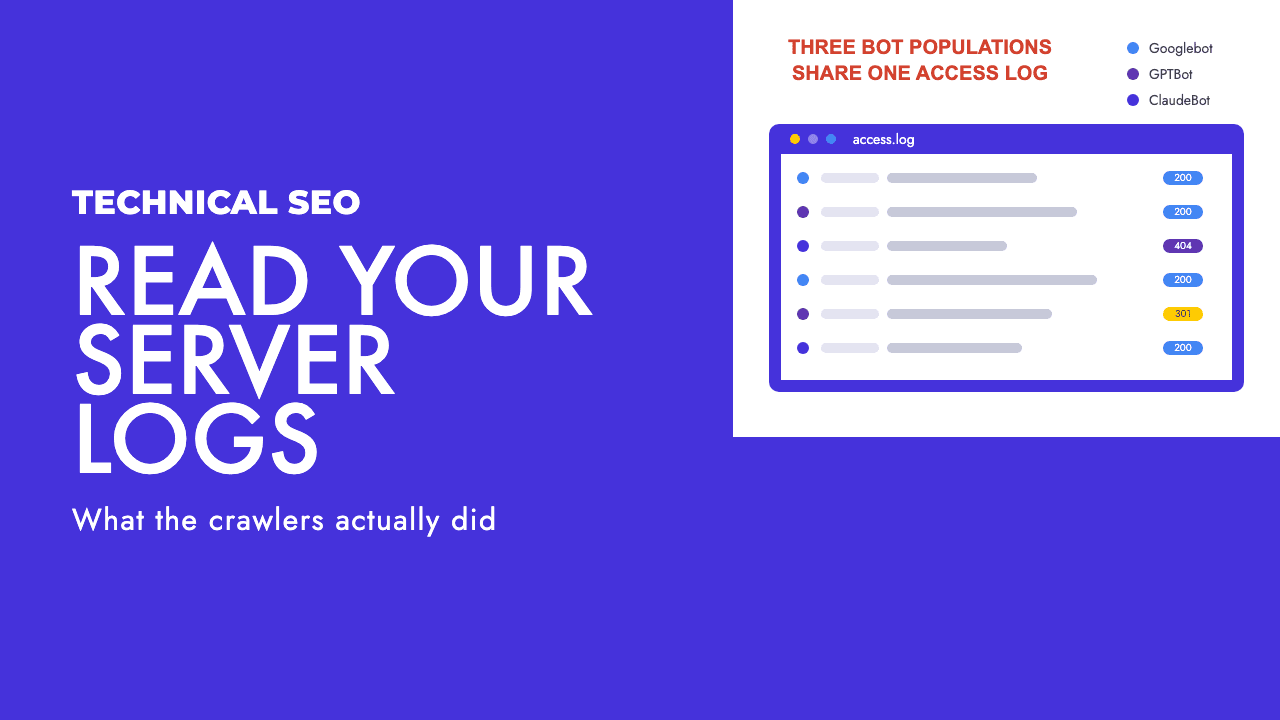
Content that is not in the HTML is content that does not exist. Google's own JavaScript guidance still recommends server-side or pre-rendering, precisely because "not all bots can run JavaScript" (Google Search Central). Googlebot renders. Most other crawlers hitting your site right now do not, and ChatGPT mostly reads a cached copy rather than your live page, so what is in the raw HTML is what it gets. If your pricing, your service detail or your FAQ answers only appear after a client-side fetch, or sit collapsed inside a tab that loads on click, you have quietly excluded yourself. Our JavaScript SEO guide covers the diagnosis in detail.
One query becomes many, so shallow pages get skipped. Query fan-out means a single question turns into a set of hidden sub-questions. Each one needs a passage that answers it directly. A page that circles a topic without answering anything cleanly loses on every sub-question, which is a large part of why AI Overviews now cite plenty of pages that do not rank on page one.
Our take: the backlog is the roadmap, and small sites should be delighted
Here is our opinion, and we hold it fairly strongly.
If you are a business owner deciding where to put next quarter's budget, do not start with an AI visibility tool. Start by asking your developer or agency for the technical SEO backlog that already exists. Everyone has one. It is usually a document somebody wrote after an audit, half-actioned, then abandoned because the items looked boring next to a content plan.
That backlog is your AI visibility roadmap. It costs less than a GEO subscription and it fixes the cause rather than measuring the symptom.
The genuinely good news is who this favours. Technical debt scales with how long a site has existed and how many teams have touched it. A Cyprus business with forty pages and one person managing the site can be structurally cleaner than a US enterprise competitor carrying four migrations and three CMS platforms. In classic search that cleanliness bought you very little, because authority and links decided the outcome. In retrieval it buys you a real shot, because clarity is doing more of the work.
We see this constantly. The sites that suddenly start appearing in AI answers are rarely the ones that bought a new tool. They are the ones that consolidated four articles into one, moved their answers into server-rendered HTML, and deleted a few hundred pages nobody could justify.
The five items worth doing first
In rough order of return, based on what actually moves things on client sites:
- Decide which URL owns each topic. One page per commercial intent. Consolidate the rest into it and redirect properly. If your own team cannot name the authoritative page for a service without asking someone, no retrieval system will guess correctly either.
- Get your answers into the initial HTML. Specifically the things people ask: what it costs, what is included, how long it takes, whether you cover their area. View source and search for the sentence. If it is not there, fix that before anything else. If you would rather not read source by hand, our one-click Chrome SEO audit surfaces the on-page basics for whichever URL you are on.
- Clean up the redirect and canonical mess. Chains, loops, canonicals pointing at redirected or removed URLs. Tedious, unglamorous, and the single most common thing we find on sites that have been through a redesign. Our redirect chain checker traces where a URL actually ends up, status code by status code.
- Cut pages that have no purpose. Not for a crawl budget argument, but because every thin near-duplicate you keep dilutes the page you actually want cited. Fewer, better pages is the whole play.
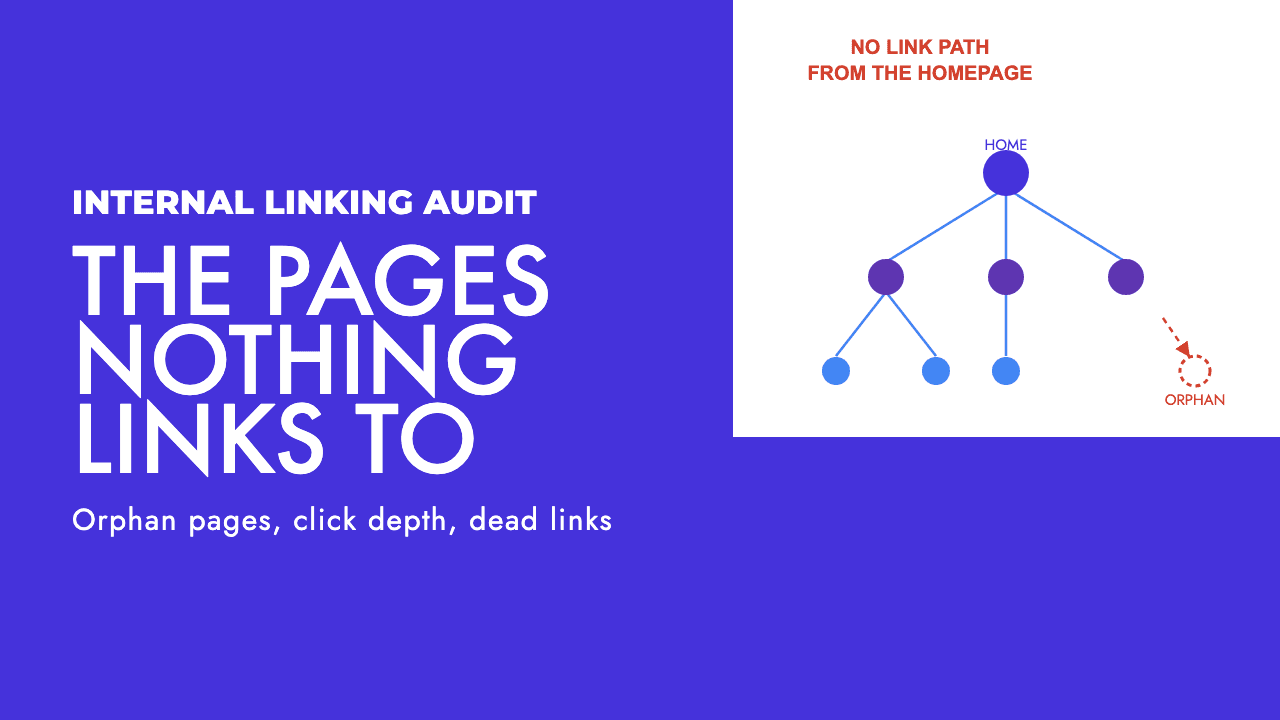
- Fix internal linking so the important pages are obvious. A page reachable only from a sitemap is a page nobody prioritised, and an internal linking audit will surface those orphans quickly. Link to your authoritative pages from your relevant content, in body copy, with descriptive anchors.
None of this is a secret. That is the point. Practical guidance on structuring the pages themselves is in our post on how to structure content so LLMs cite you.
Where we would push back on the pure debt framing
To be fair to the people selling AI-specific work, the debt argument can be taken too far, and we would not want to leave you with the impression that technical hygiene is the entire game.
Some of this really is new. How consistently your brand is described across the wider web now matters in a way it did not, because models build an impression of you from sources you do not control. Whether an AI engine mentions your name rather than silently borrowing your sentence is a separate outcome from being crawlable. Reviews, directories and third-party mentions feed that. So does simply being talked about.
The difference is ordering. Off-site brand work compounds slowly and cannot rescue a site whose service pages are duplicated and rendered client-side. Fix the retrieval basics first, then invest in how the wider web describes you. Doing it in the other order is how businesses end up with a tidy AI visibility dashboard and no customers arriving from it.
Start with an honest look at the site
The uncomfortable version of this article is that a lot of AI search anxiety is really unfinished work wearing a new label. That is a better position than it sounds, because unfinished work is fixable on a known budget and a known timeline.
If you want an outside read on what your site's backlog actually contains, a website audit is the fastest route, and our technical SEO work is mostly this exact list. If you would rather just see whether anything obvious is broken, the free SEO review will tell you.
Either way, check the old debt before you buy the new tool.