
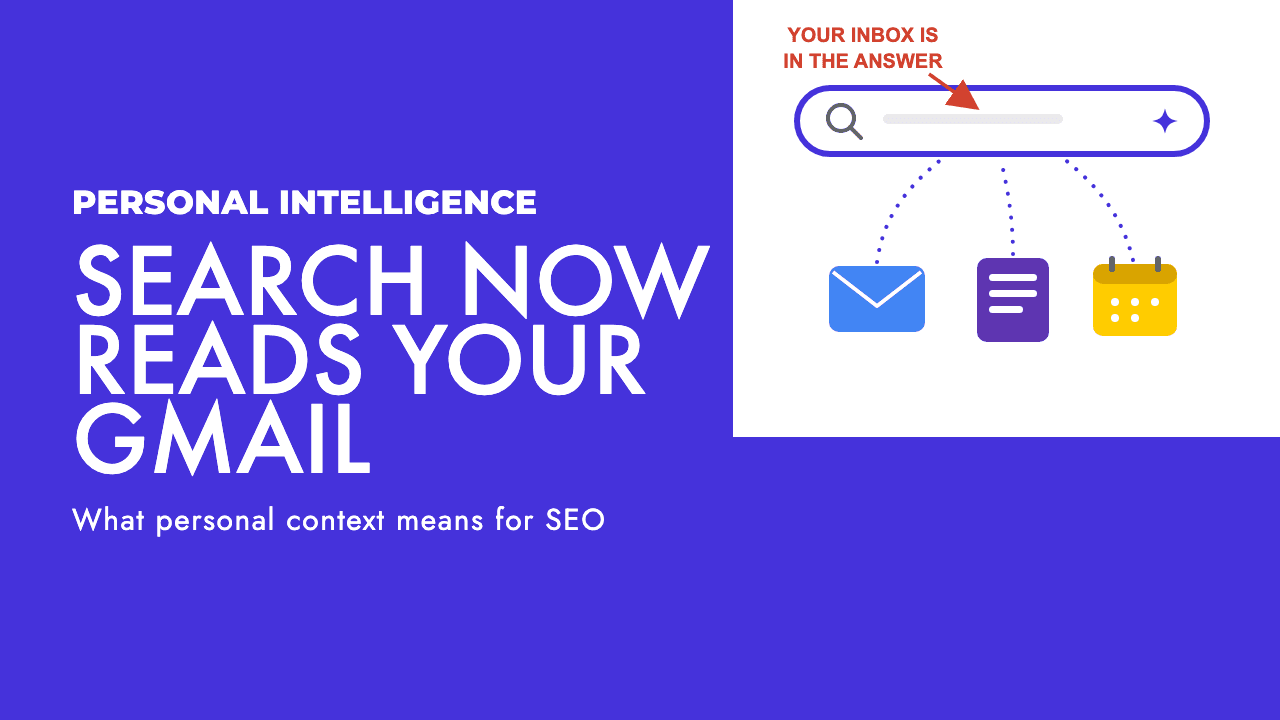
Two people can now type the exact same query into Google and get two different answers, not because of location or language, but because of what is sitting in their inbox. That is the part of Google's Personal Intelligence rollout that most businesses have not clocked yet.
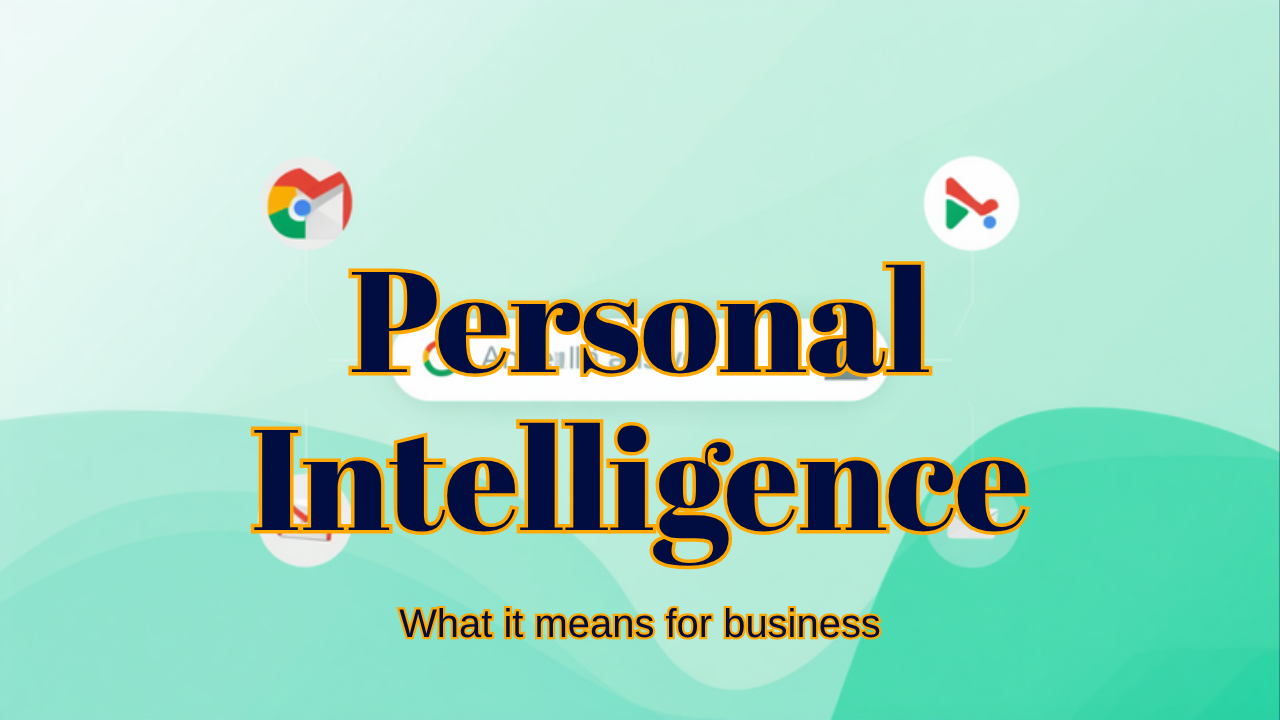
Personal Intelligence lets AI Mode connect to a searcher's Gmail and Google Photos and, since 15 July in the US, Google Calendar as well (Search Engine Journal). Google's own framing is that it "transforms Search into an experience that feels uniquely yours by connecting the dots across your Google apps" (Google blog). Ask AI Mode to plan a weekend and it can reach into a hotel booking sitting in your Gmail and photos from your last trip to build the itinerary.
It started in January 2026 as a US-only Labs experiment for Google AI Pro and Ultra subscribers, opened to free US users in March (Google blog), and at I/O in May went wide, rolling out across nearly 200 countries and territories in 98 languages with no subscription required (Google I/O 2026). So this is not a fringe test anymore. It is the direction Search is heading, and it changes the ground rules for how you get found.
What actually changed
The short version: Google is no longer only matching your content to a query. It is matching your content to a person.
For years the ranking question was "which page best answers this search." Personalisation adds a second question underneath it: "which answer best fits this specific searcher, given what Google already knows about them." Their past searches, the places they tapped in Maps, their booking confirmations, their photos. All of that becomes context the model can lean on.
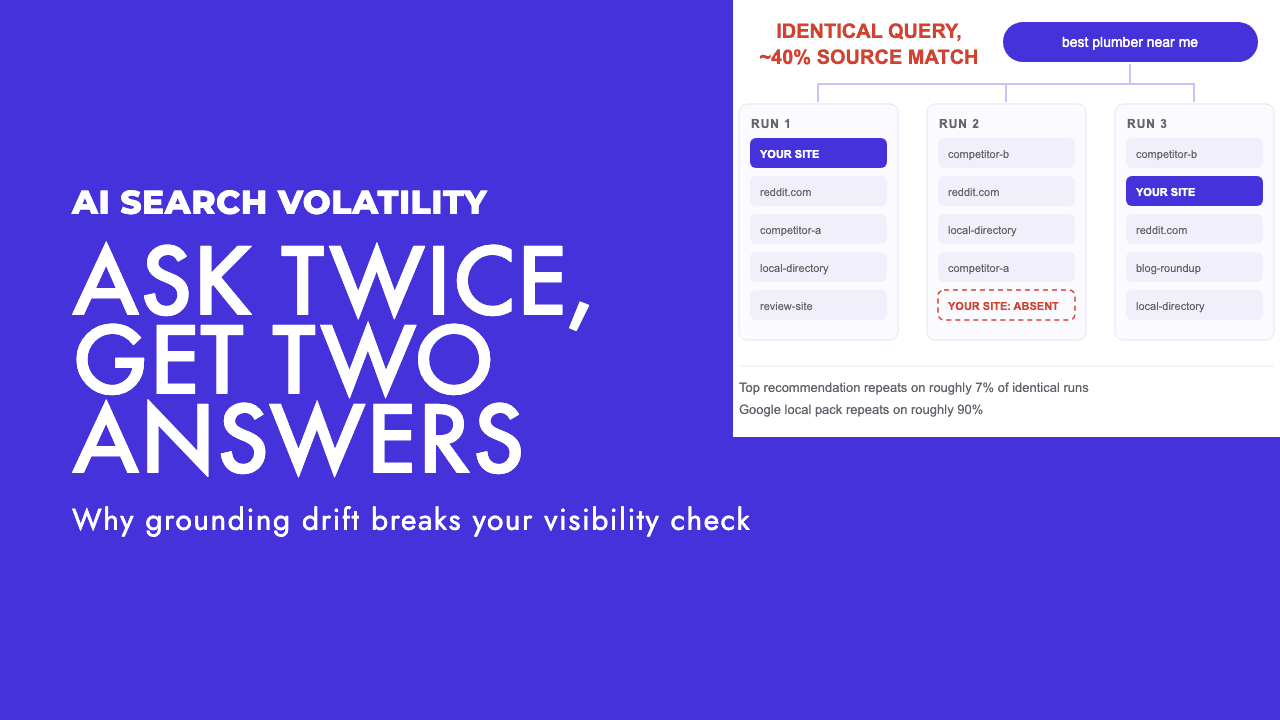
That means the SERP is splitting. There is still a baseline answer, the one a logged-out or non-personalised user sees. Then there is a personalised layer on top, tuned to the individual. You can influence the first directly. You cannot touch the second with anything on your own website.
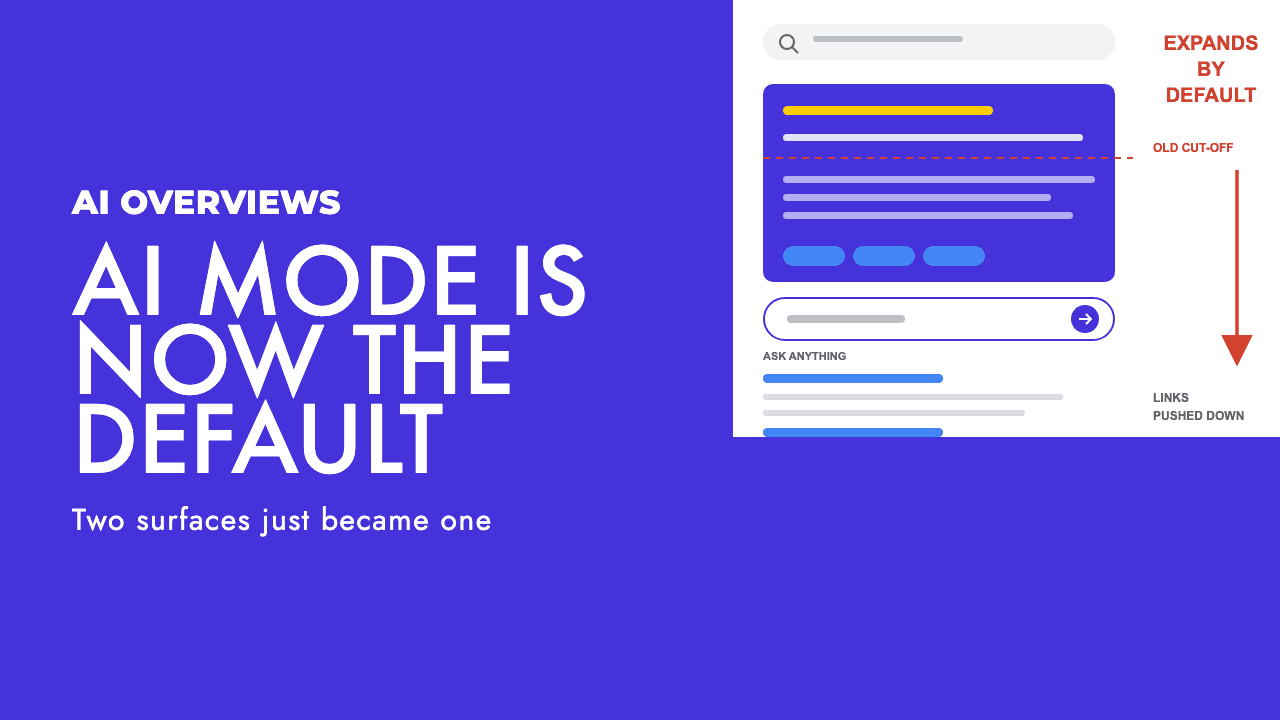
This is the same decoupling we wrote about in The Great Decoupling, taken a step further. Impressions and clicks already stopped moving together. Now two searchers with identical intent can see two different result sets, which makes any single "ranking" a much shakier thing to report on.
Our take: personalization turns relationships into a ranking signal
Here is the shift nobody is saying plainly. When Search can read a booking confirmation or a receipt in someone's Gmail, the brand already in that inbox gets a structural head start in that person's answers.
Think about what lands in a customer's inbox: order confirmations, receipts, newsletters, appointment reminders, shipping updates. If Google is connecting the dots across a user's apps, the businesses they have actually transacted with are now part of the context feeding their results. Being in the inbox becomes an input you cannot buy with a meta tag.
We see the early version of this constantly with client sites. Returning customers and email subscribers behave completely differently in search than cold traffic, and Personal Intelligence bakes that difference into the answer itself. First-party relationships, the thing plenty of SEOs treated as a "marketing" concern rather than a "search" one, just became a search concern.
Google is building the same idea from the other direction too, letting users star the sources they trust and saying it wants that choice to feed ranking, which we covered in Preferred Sources becoming a ranking signal.
The uncomfortable part for smaller businesses is that this compounds incumbency. The brands a person already uses get quietly reinforced every time they search. Take it as a reason to be deliberate about becoming one of those brands.
What you cannot do (so stop trying)
You cannot optimise for someone else's Gmail. There is no schema, no keyword, no on-page tweak that reaches into a stranger's personal context. Anyone selling you "Personal Intelligence optimisation" as a service is selling smoke.
You also cannot see it in your reporting the way you see normal rankings. Personalised answers are, by definition, different for every user, so no rank tracker will ever show you the "real" position for a personalised searcher. Chasing that number is a waste of time.
Accept those two limits and the actual strategy gets clearer.
What to do instead
Win the baseline answer, because it is still there. Personalisation sits on top of the organic and AI layer, it does not replace it. New users, logged-out users, and anyone who hasn't connected their apps still see the non-personalised result. That baseline is where the bulk of your addressable audience lives, and it is fully optimisable. This is exactly why Google keeps repeating that optimising for AI search is still SEO. The fundamentals still carry you.
Earn the inbox, honestly. If being in someone's Gmail is now a soft ranking signal, then transactional and relationship email is doing SEO work whether you label it that way or not. Confirmations, useful newsletters, genuine follow-ups. Not spam, which people delete and Google's own systems distrust. The goal is to legitimately become a brand people hear from and keep.
Keep your entity and brand data clean. For Google to connect you to a person, it has to confidently know who you are first. Consistent name, address, and phone data, a complete Google Business Profile, accurate hours and reviews, clear brand mentions across the web. This has always mattered for local SEO, and personalisation raises the payoff. If your local business is a mess in the Knowledge Graph, you won't get connected to the customer who booked with you last month.
Get cited in the baseline AI answer. Citation inside an AI response is doing more commercial lifting than a plain blue-link position now, and the tactics for earning it are knowable. That overlap is what our AI search optimisation service is built on. We laid out the specifics in our Google AI Mode GEO playbook. Clear structure, real expertise, quotable answers near the top of the page.
Why this matters more in Cyprus and small US markets
In a smaller market, the incumbency effect bites harder. There are fewer players, so if the two or three brands people already use keep getting reinforced in personalised answers, breaking in on generic search terms gets tougher.
The counter is the same thing that has always worked for challengers here, done with more intent: be genuinely useful, and build direct relationships rather than renting attention through keywords alone. A Nicosia restaurant that actually gets diners onto its own booking flow and into its email list is building the exact context Google's agentic AI Mode now reads when it books tables through partners like OpenTable and Resy (Google) or completes a task in a connected app like Instacart or Canva. If you are weighing up the local picture, our Cyprus AI Mode breakdown goes deeper on the runway.
Update, September 2026
Calendar arrived on 15 July for all US users, free tier included, and it is the first Personal Intelligence connection that can write as well as read, adding invites and meetings from inside AI Mode (Search Engine Journal). Google says more countries will follow. That makes the picture above slightly stronger: the assistant now knows not just who you have bought from but when you are free to buy again. Nothing in the advice changes.
The bottom line
Personal Intelligence is a signal about where Search is going rather than a tactic to chase: from matching pages to queries, toward matching brands to people. The businesses that win are the ones users already have a real relationship with, plus a strong public baseline for everyone who doesn't yet.
So keep the fundamentals sharp, treat your owned channels as part of your search strategy rather than a side project, and stop reporting a single "rank" as if it means what it used to. If you want a read on where your baseline visibility actually stands before personalisation piles on top, that is exactly what our free SEO review is for.