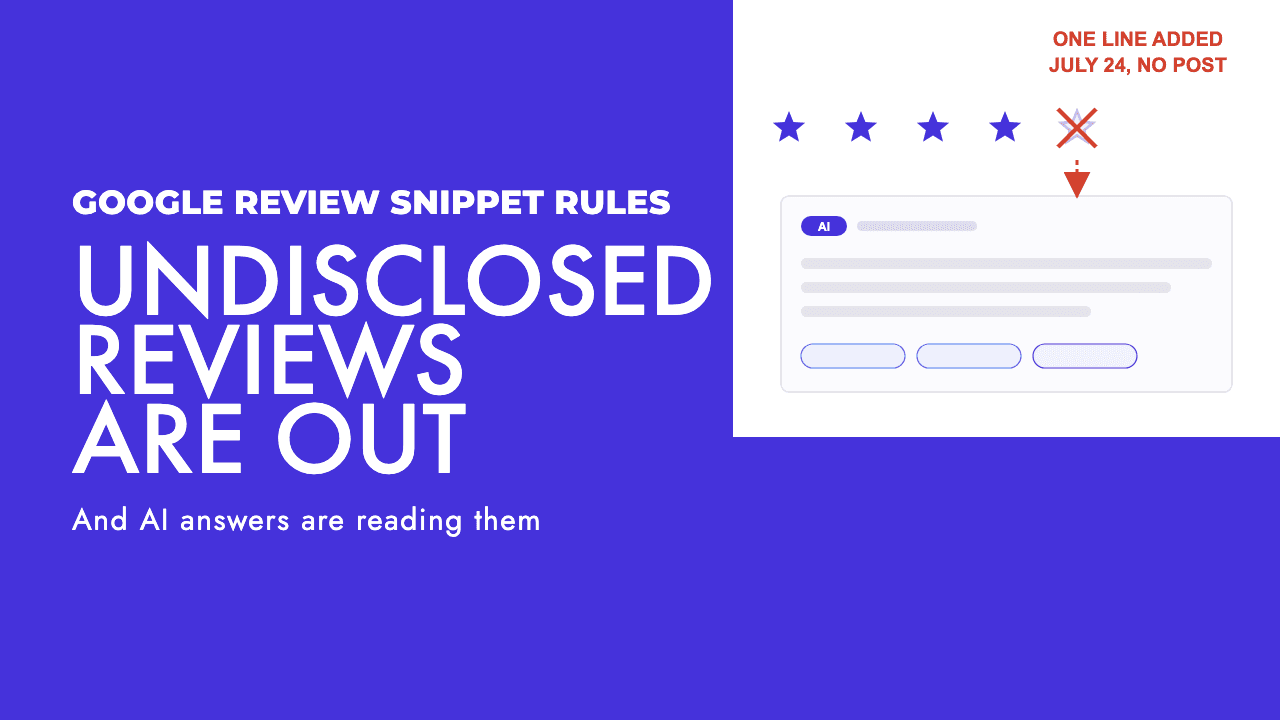
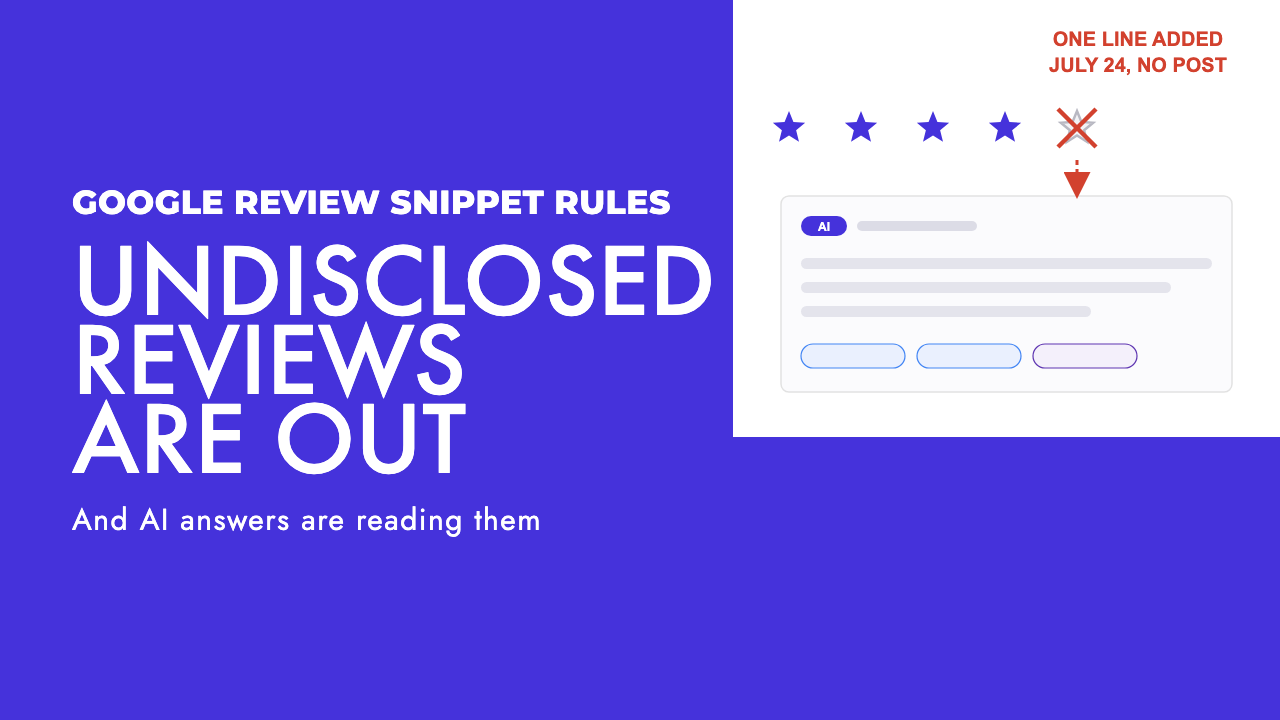
On July 24, Google added one sentence to its review snippet structured data documentation. Don't include fake or undisclosed incentivized reviews on your page or in your structured data markup.
That is it. No blog post, no announcement, just a new line in the guidelines section that governs whether you keep your star ratings. Search Engine Land and Search Engine Roundtable both covered it as a rich results story, which is technically correct and strategically beside the point.
Google does not write new guidelines for fun. It writes them when it has seen enough of a behaviour to bother naming it. And the behaviour it just named is one we run into constantly on local client sites: the review widget stuffed with testimonials collected in exchange for a discount, a voucher, or a free dessert, with no disclosure anywhere on the page.
What the new guideline actually says
Google gives two examples of what it now considers off limits. Reviews that aren't based on a genuine experience of a product or service. And reviews written in exchange for a benefit such as money, discounts, vouchers, or free products that don't clearly and prominently disclose the incentivization.
Read the second one closely, because it is not a ban on incentivized reviews. It is a ban on undisclosed ones. You can still offer a customer 10% off for leaving an honest review on your own site. You just have to say so, clearly and prominently, next to the review. That latitude does not extend to Google reviews: the Maps content policy already bans offering payment, discounts or free goods for a review outright, disclosed or not, along with pressuring customers to review while they are on the premises.
Almost nobody discloses. That is the compliance gap this rule opens up, and it is much wider than the fake review problem it gets lumped in with.
Worth remembering the older rule that still applies underneath it. Per Google's review snippet documentation, if the entity being reviewed controls the reviews about itself, pages using LocalBusiness or other Organization structured data are already ineligible for the star review feature. So the self-hosted testimonial carousel on your homepage was never going to earn you stars anyway.
Why the rich snippet is the boring half of this
Here is the practitioner read. If your only exposure is losing star ratings on a page that was probably ineligible for them already, this update costs you nothing. Plenty of agencies will send a "urgent Google update" email about it this week regardless.
The part worth your attention is what review text has quietly become. It is no longer just a conversion asset that happens to render some yellow stars. It is source material for the systems that decide which businesses get recommended in an AI answer.
Feefo ran identical travel queries across ChatGPT, Gemini and Perplexity and found every single Perplexity response leaned on a review based source, against 58% of ChatGPT's and 56% of Gemini's. That is one vertical, not proof about all of them, but travel is exactly the kind of recommendation query local businesses compete in.
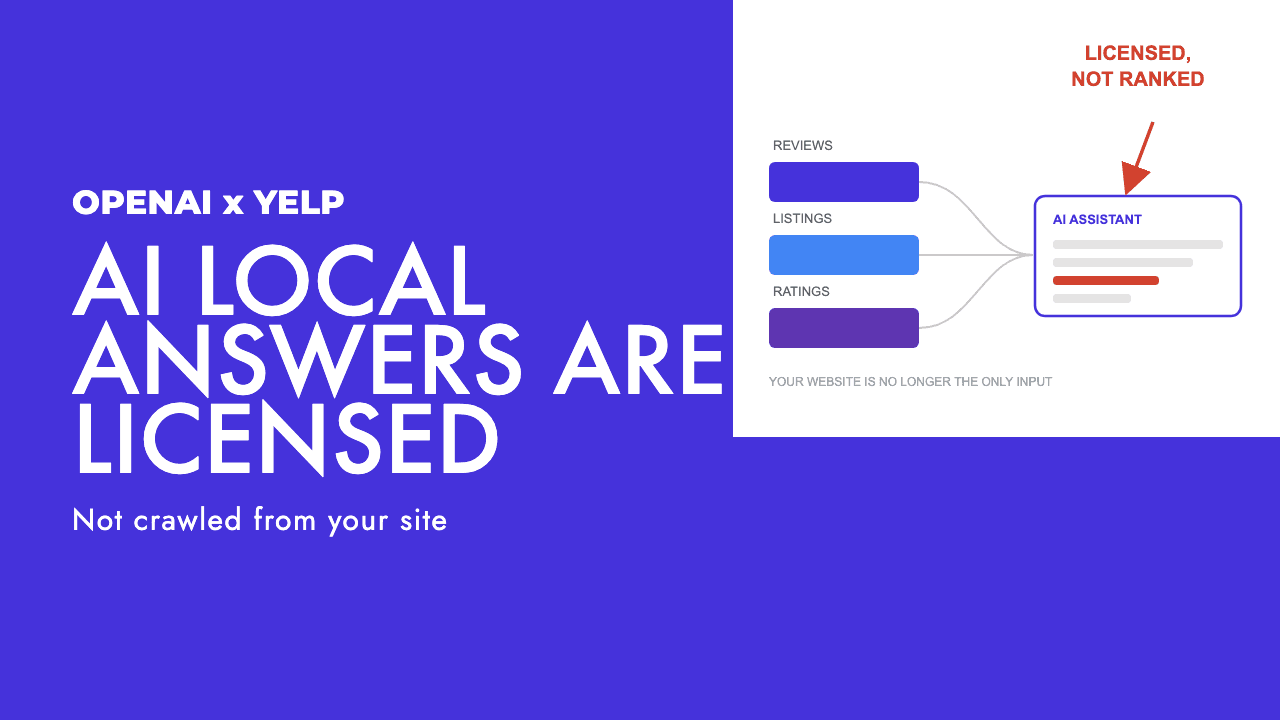
The other half of the picture comes from Steady Demand, which logged 14,472 Gemini citations across 1,487 local service queries (Search Engine Land). Business websites took nearly 60% of them, which sounds reassuring until you notice the remaining 40% went to Reddit, directories and review platforms, and that ChatGPT now licenses Yelp's reviews directly rather than crawling for them.
Both findings point the same direction. When someone asks an AI assistant for the best physiotherapist in Limassol or an emergency plumber in Austin, the answer is assembled from review language across platforms you do not own. Your site is one voice in that pile, and often not the loudest.
Our take: the incentive shortcut stopped being cosmetic
We think this is the moment the discount-for-a-review tactic flips from low risk to genuinely expensive, and the reason has nothing to do with Google enforcement.
Incentivized reviews are bland. People writing for a voucher produce short, generic, five star text with no specifics in it. "Great service, highly recommend." No mention of the burst pipe, the same day callout, the fact you worked around their tenant's schedule.
That blandness used to be harmless. A five star average is a five star average. But an AI model summarising why a business is good has nothing to work with in a wall of generic praise, so it reaches for the reviews that do contain specifics, which are usually on a third party platform, and often not yours. You paid for reviews that made your rating look better and your recommendation case worse.
This is the same lesson as the rest of AI search, arriving in a new place. Specificity is what gets quoted. We made this argument about page content in how to structure content so LLMs cite you, and it turns out reviews behave the same way. Detail is retrievable. Praise is not.
The legal layer got there before Google did
Google is late to this. In the United States, the FTC's Rule on the Use of Consumer Reviews and Testimonials, 16 CFR Part 465, has been in force since October 2024. It bans writing, buying and selling fake reviews outright, and separately bans giving compensation conditioned on a review expressing a particular sentiment, whether the condition is stated or implied. It lets the Commission seek civil penalties per violation, and the Commission has already been sending warning letters.
For Cyprus and the rest of the EU, the Omnibus Directive got there earlier still, applying from May 2022. Traders cannot submit or commission fake reviews, cannot claim reviews come from real customers without taking reasonable steps to check, and have to tell consumers whether and how they verify that reviews come from people who actually bought the product. That second obligation is the one businesses forget exists. If you display reviews and say nothing about verification, you are already short of it.
So the actual state of play for a business selling in both markets: the practice has been unlawful for years, and Google has now added a search visibility consequence on top. The order of those two things matters. Fix it because it is the law, not because you might lose a star rating.
What to do about it this week
This is a two hour audit for most local businesses, not a project.
- Find every review on your own site. Homepage testimonials, service page quotes, dedicated review pages, anything injected by a plugin. Note where each one came from.
- Kill anything you cannot source to a real customer. If nobody can say who wrote it or when, it goes, and an AI-written text check will flag the obvious fabrications. This includes the ones a previous agency added.
- Disclose the incentives you do offer. If a review came from a customer who got a discount for leaving it, say so next to the review, in the same visual weight as the review itself. Not in a footer, not in a policy page.
- Check your Review and AggregateRating markup against the page. Markup that claims ratings your visible content does not support is the version of this Google can detect at scale.
- Publish your verification statement. One or two sentences saying how you collect reviews and whether you check that reviewers are customers. This handles the EU obligation and reads as a trust signal in both markets.
- Then go work on the reviews you don't control. Google Business Profile, and whichever vertical platforms actually get cited for your industry.
That last point is where the real return sits. If a large share of AI citations for local queries land on third party platforms, your review strategy should be weighted toward those platforms, not your own testimonial section. We go deeper on that shift in local SEO in 2026 and what near me really means now.
The ask that actually works
The practical fix for bland reviews is a better ask, not more reviews.
Stop asking for a review. Ask a question. What was the problem you came to us with, and what did we do about it. Customers answer questions with specifics and answer requests with platitudes, and the specifics are what survive into an AI answer.
We have watched this play out across service businesses for years. The clinic that asks "how did the treatment go" gets reviews naming the procedure and the outcome. The clinic that asks "please leave us 5 stars" gets a wall of "very professional." Same star average, completely different retrievability. There is more on the review side of this in our dentist SEO breakdown, and the same ask works across SEO for clinics and healthcare practices.
Where this goes next
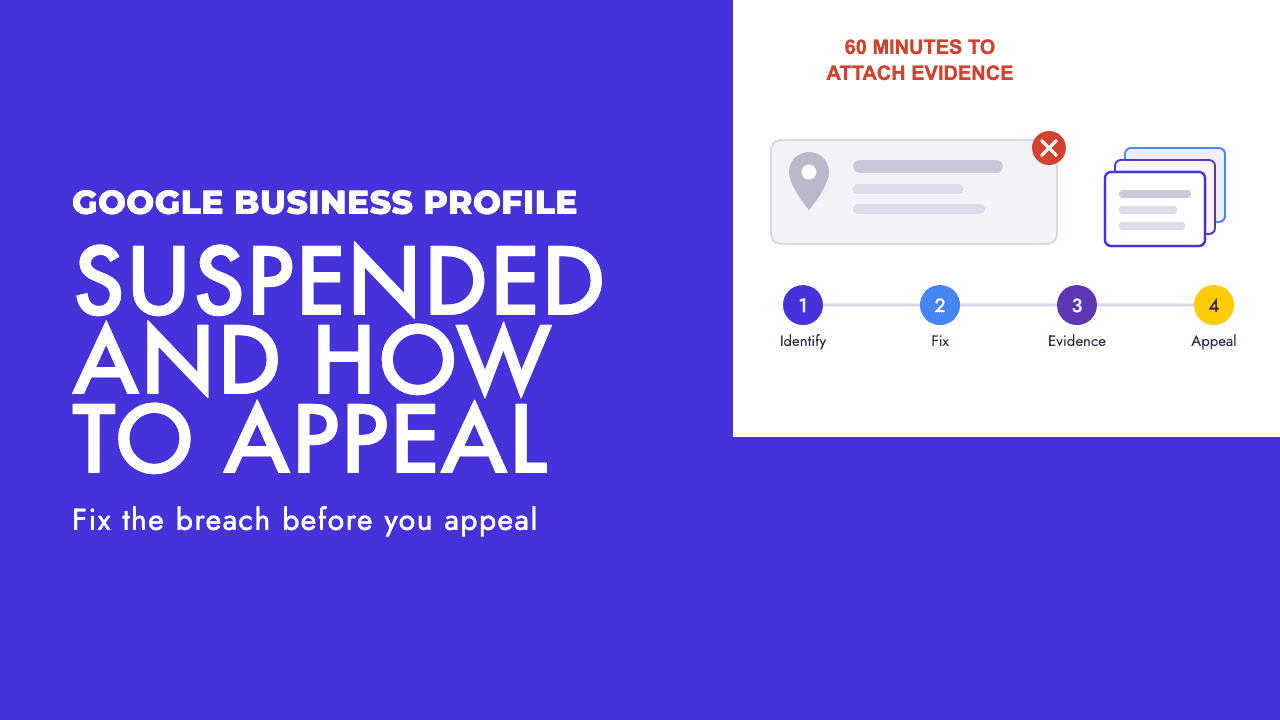
Our read is that Google's July line is a marker, not the end of it. Once you have written down that undisclosed incentivized reviews are a violation, the natural next steps are detection and enforcement in Google Business Profile, where the reviews Google actually owns live. Some of that machinery is already running: Google pauses incoming reviews and shows a public notice on the profile when it detects a suspicious spike (Whitespark's Q2 2026 roundup). Profile review suspensions are already the most disruptive thing that happens to a local business in search, and they arrive without warning.
If your review pipeline currently depends on incentives you have never disclosed, you have a window to clean it up quietly. That window closes the day this stops being a documentation change.
None of this is a reason to panic about reviews generally. Reviews are one of the few local ranking inputs you can still directly influence, and they matter more in AI answers than they did in ten blue links, not less. The tactic that has to go is the shortcut.
If you want a second pair of eyes on how your reviews and local presence read to both Google and the AI answer layer, our local SEO service covers exactly this, or start with a free SEO review and we will tell you what we find.