
The line between an ad and an answer just got blurry on purpose.
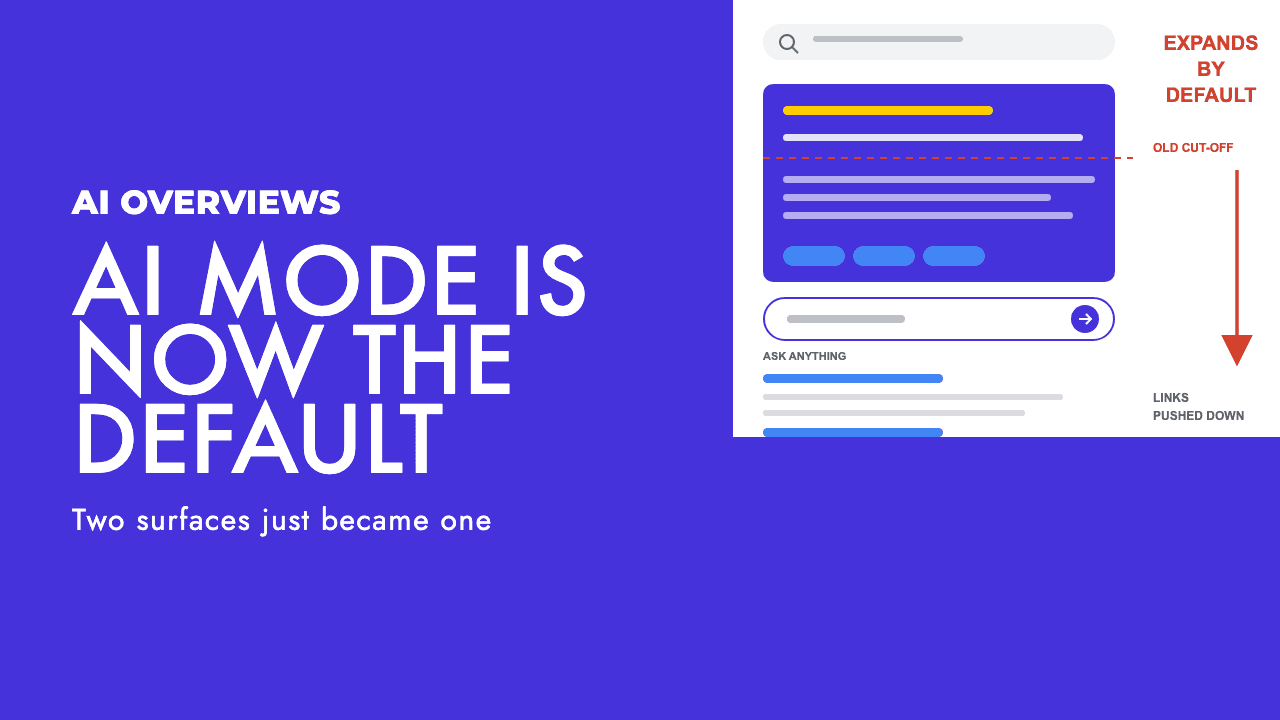
For 25 years the deal was simple. Paid results sat in a labelled block at the top, organic links sat below, and a user could tell the difference at a glance. Over May and June 2026 both Google and OpenAI started dismantling that arrangement. Ads are no longer stacked above the answer. They are being written into it, or wrapped around it.
At Google Marketing Live on 20 May, Google introduced a set of ad formats built with Gemini that appear directly inside AI Mode. ChatGPT opened conversion-optimised campaigns to advertisers in the first week of June. Two of the biggest answer engines on the planet decided, within weeks of each other, that the answer is now ad inventory: Google put the ad inside it, OpenAI put a performance ad unit next to it.
Here is our read on what changed, what it means for the unpaid side of search, and what we would actually do if it were our budget.
What actually changed in June 2026
Google announced four Gemini-built ad formats, and two of them live inside the AI answer rather than above it.
Conversational Discovery ads read the specific question a person asks and have Gemini assemble creative that highlights the product features relevant to that exact query. Highlighted Answers let a "highly relevant, high-quality ad" slot into the recommendation list AI Mode generates, sitting alongside the organic suggestions. Both were in testing at announcement. Google also showed AI-powered Shopping ads that write a custom explainer for high-consideration buys, and a Business Agent for Leads that drops a chat agent trained on your site straight into the ad (Google Ads blog).
OpenAI moved in parallel. Conversion-optimised ChatGPT campaigns opened to early-access advertisers in the first week of June, with an OpenAI Pixel to track post-click activity and a Conversions API to feed first-party data back in. These run through the ChatGPT Ads Manager, OpenAI's self-serve platform (Search Engine Land).
Strip away the product names and the shift is the same on both platforms. The answer is no longer a neutral zone. It is becoming the most valuable square of real estate in search, and it is now partly for sale.
The mechanics changed too, and that part matters more
Where the ad sits is the smaller story. How the ad gets built is the bigger one.
Classic search ads were keyword-driven. You picked the words that triggered your ad and wrote the copy yourself. The new formats do not work like that. You hand the system inputs, your product feed, conversion data, audience signals, and your landing page content, and it assembles the ad to fit the question. You no longer choose the exact words. You choose the raw material.
That is the detail most people are skating over. The inputs that fuel these AI ads are the same inputs that decide whether you get cited organically. Clear product information, well-structured pages, real proof, clean feeds. The machine reads your site the same way whether it is deciding to quote you for free or build a paid unit around you.
So the convergence everyone keeps predicting between organic and paid is not coming. It quietly arrived in the plumbing.
Why this makes organic citations more valuable, not less
The obvious reaction is fear. If ads are inside the answer, organic visibility must be worth less. We think that is backwards.
When the answer becomes monetised, an unpaid citation inside it becomes the scarcer and more trusted thing. Users are already learning to spot the "Sponsored" label, and Google has been careful to keep these formats clearly marked. The recommendation that the model reaches for on its own, with no ad spend behind it, carries a credibility that a labelled ad cannot buy.
There is a second reason. Ad inventory inside an answer is finite. Only so many sponsored slots can appear before the answer stops being an answer. Organic citation has no such cap. If the model trusts your content, it can pull from you across thousands of long-tail questions that will never be worth anyone's ad budget.
We see this constantly with client work. The pages that earn citations answer a whole cluster of real questions cleanly enough that a model can lift a sentence and trust it, rather than chasing a single high-value keyword. That is the asset ads cannot replace.
The risk nobody is pricing in
Here is the part that should make you cautious before you move budget.
Buying your way into the answer with ads is now easy. Buying your way into the organic citation is still against the rules, and Google has said so plainly. In May it updated its spam policies to state that they apply to all of Google Search, including generative AI responses, and its guidance treats manufactured mentions and citation networks aimed at AI features as spam. We wrote about that distinction in can you buy AI citations, and the line has only got sharper since.
So the two paths into the answer are not symmetrical. One is a transparent auction. The other is earned, and the moment you try to shortcut it you are in spam territory. Treat them as different disciplines with different rules, because Google does.
What we would do right now
Do not panic-shift your whole budget into AI ads, and do not ignore them either. Both reactions are lazy. Here is the order we would work in.
Get citable first. The content that earns organic mentions is the same content that makes your paid units relevant. Tight topic clusters, direct answers near the top of the page, named authors, real proof. This is content strategy work that compounds, and it feeds both sides of the answer. Our take on structuring content so LLMs cite you still holds.
Then test the new ad formats with proper tracking. If you run paid, the conversion objectives on ChatGPT and the AI Mode formats on Google are worth a controlled test. The key word is controlled. Set up the Pixel or Conversions API, measure actual conversions, and do not let "we are inside the AI answer" become a vanity metric. A sponsored slot you cannot attribute is just spend.
Keep your feeds and landing pages clean. Because the system builds the ad from your inputs, a messy product feed or a thin landing page now hurts you in paid as well as organic. That makes feed hygiene part of the ecommerce SEO job, and the technical SEO housekeeping that used to be a background chore is now also an ad-quality lever.
Watch your own answer share. Track how often you appear inside AI answers, paid and unpaid, for the questions that matter to your business. This is the new version of rank tracking, and it is where attention should go. Google's generative AI performance report in Search Console is the free starting point for the unpaid side.
The bottom line
Ads moving inside the AI answer is a repricing of organic search rather than the end of it.
The answer is now the prize, and there are two ways into it. One you can buy, transparently and at a cost that will rise. One you earn, slowly, and that no competitor can outbid you for. Smart businesses will run both, but they will not confuse them, and they will keep investing in the earned side precisely because the paid side is getting crowded.
If you are weighing how to split effort between getting cited and paying to appear, that is exactly the kind of call we help with. Our AI search optimization and PPC work sit on the same strategy table for this reason, and you can start with a free SEO review to see where you stand inside the answer today.
Update, September 2026
The OpenAI side moved fastest over the summer. ChatGPT Ads added conversion-optimised CPC campaigns for product feeds and product carousels in early August, then announced an expansion to 31 European countries on 19 August, with self-serve access to follow. Ads show only on the Free and Go plans, and OpenAI's line is that they are labelled, kept separate from the answer, and do not influence what ChatGPT says.
That separation matters for the argument above. An SE Ranking study of more than 50,000 commercial prompts found ads on about 26 percent of them in ChatGPT, close to the rate it measured in Google's AI Mode, with the sponsored unit sitting below the generated response, and only a small fraction of advertisers also appearing as cited sources. Paid and earned are being built as two systems, which is exactly why you have to work both. On the measurement side, Google's generative AI performance report went global in Search Console on 31 August, so the unpaid half of your answer share is now trackable for free.