
Google just stopped being the place people find your product and started being the place they buy it. That is the real story behind Universal Cart, the cross-merchant shopping basket Google unveiled at I/O 2026 on 19 May. Most of the coverage filed it under "another AI shopping feature." It is more than that. It is the first time the transaction itself moves off your site and onto Google's.
For twenty years, SEO had one job at the end of the funnel: win the click to your site so the purchase could happen there. AI Overviews already chipped away at that for researchers who never needed to click. Universal Cart goes further. It removes the click for the people who were going to buy.
What Universal Cart actually is
Universal Cart is, in Google's words, "an intelligent shopping cart and your new hub for shopping on Google." You add products to one basket while browsing Search, chatting with Gemini, watching YouTube or reading Gmail, and that basket follows you across all of them. (Google)
Built on Google Wallet and powered by Gemini, the cart works in the background. It tracks price history, flags price drops and back-in-stock alerts, checks for product incompatibilities, and surfaces loyalty perks and offers tied to your payment method. When you are ready, you check out with Google Pay in a few taps, or transfer the items to the merchant's site to finish there.
It is rolling out across Search and the Gemini app in the US this summer, with YouTube and Gmail to follow, and expansion to Canada, Australia and the UK after that. Launch partners include Nike, Sephora, Target, Ulta Beauty, Walmart, Wayfair and Shopify merchants such as Fenty and Steve Madden (Google).
The one detail everyone should hold onto
Here is the line that matters most for your business: "the brand stays the merchant of record."
No matter how the customer checks out, you remain the seller. You keep the order, the customer relationship and, the part that matters most, the data. That is the difference between Universal Cart and a marketplace like Amazon, where you rent someone else's customer. Google is positioning itself as the checkout layer, not the seller.
We think that distinction is the whole game. Marketplaces took the customer relationship away from brands and never gave it back. Universal Cart, at least as announced, leaves it with you. Whether that holds as the feature matures is the thing to watch, but for now it is a meaningfully better deal than the marketplace trade.
Why this is a bigger deal than the last ten AI features
We have written a lot this year about AI eating the click. The honest version is that most of those changes hit informational queries first, the "how do I" and "what is" searches where the user was never a customer anyway. Losing a click from someone reading a definition stings less than people pretend.
Universal Cart is different because it lands on commercial intent. The person adding your product to a Google cart is not researching. They are buying. That is the click ecommerce SEO has always been built to earn, and Google is now keeping it inside its own surfaces.
The practical effect: your product feed becomes a more important ranking asset than your homepage. The shelf is no longer your category page. It is the cart, sitting across four of Google's highest-traffic products. If your products are not clean, in stock and correctly described in your Merchant Center feed, you do not get the Buy button, and you are invisible exactly where the decision now happens. This is closer to technical SEO than to content marketing, and a lot of stores are not set up for it.
What we would actually do about it
None of this is exotic. It is feed hygiene done seriously, which is unglamorous work most stores skip, and the core of our ecommerce SEO work. Here is where we would put the effort.
Treat your Merchant Center feed as a product, not a chore. Accurate titles, real attributes, correct categories, clean images. Google is using product data to decide what shows up across AI shopping surfaces, so thin or stale data quietly costs you placement. The same facts belong on your product pages as structured data, which a schema markup generator will write for you, and the same feed discipline is what gets you into ChatGPT's product results. We see this constantly with client stores: the feed was set up once, years ago, and nobody has touched it since.
Get pricing and stock right in real time. Universal Cart actively tracks price history and stock status and pushes alerts. A feed that says "in stock" when you are out, or a price that lags your site, is now a visible failure, not a hidden one.
Lean into reviews and ratings. When an AI cart is comparing options and flagging the better buy, social proof in your product data is a tiebreaker. This is the same signal that has mattered in Shopping for years, with higher stakes.
Rethink YouTube as a place to sell, not just to be seen. With the cart reaching into YouTube, a product demo is no longer top of funnel. It can be the checkout. If you have product video sitting there as brand awareness, that math has changed.
Fix your attribution before it breaks. When a sale starts in Gemini, runs through a Google cart, and lands as a Google Pay order, your analytics may not tell the story you are used to. Decide now how you will measure these so a "drop" in site conversions does not get misread as a problem when it is just a new path. This connects to the wider measurement shift we cover in our work on agentic commerce.
If you are in Cyprus, not the US
Universal Cart is US-first, then Canada, Australia and the UK, which puts UK stores in an earlier wave. Cyprus and the wider EU are not in the early waves, and EU regulation around self-preferencing and payments will shape how, and whether, this arrives in the form Google demoed.
That is not a reason to wait. Every move above, clean feeds, accurate stock, strong reviews, product video that can sell, is the same work that already wins in Google Shopping and in AI search today. It pays off now and it positions you for the cart when it crosses the Atlantic. The stores that scramble when it launches will be the ones that ignored their feed for years.
The bigger pattern
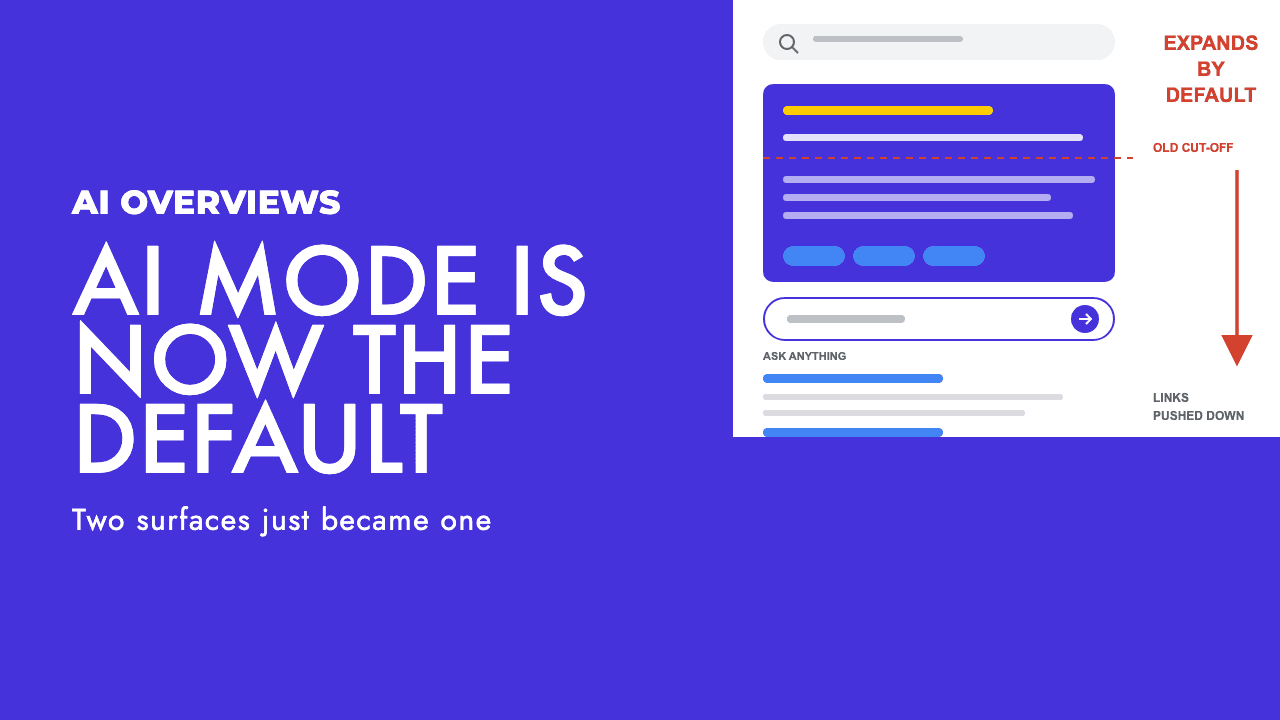
Step back and the direction is clear. Google spent 2026 moving from the front of the journey to the end of it. AI Overviews answered the question. The new AI search box shaped the query. Universal Cart now takes the purchase. Each step keeps more of the journey inside Google.
The lesson is to make sure that wherever Google decides the moment of truth happens, your product is the one that is accurate, available and obviously the right choice. Panicking and opting out both miss that. The brands that win the cart will be the ones whose data earned it.
If you want a straight read on whether your product data and store are ready for any of this, grab a free SEO review and we will tell you where you actually stand.
Update, September 2026
Two months on, Google's own Universal Cart page still describes the cart as rolling out across Search and the Gemini app in the US, and we have not seen a general-availability announcement or a date for the UK wave. The protocol underneath it has kept moving, though. On 27 August Google extended UCP checkout to hotel bookings inside AI Mode with ten partners including Booking.com, Expedia, Hilton and Marriott, US and English only, with the hotel or booking platform staying merchant of record. If you run a hotel, that is the same pattern arriving in your category.
Worth noting for balance: OpenAI went the other way. It retired Instant Checkout in March, six months after launch, and now sends ChatGPT purchases through merchant apps rather than completing them in the chat. Google is betting that a cart it owns can succeed where an in-chat buy button stalled. Either way the feed work above is the entry ticket.