
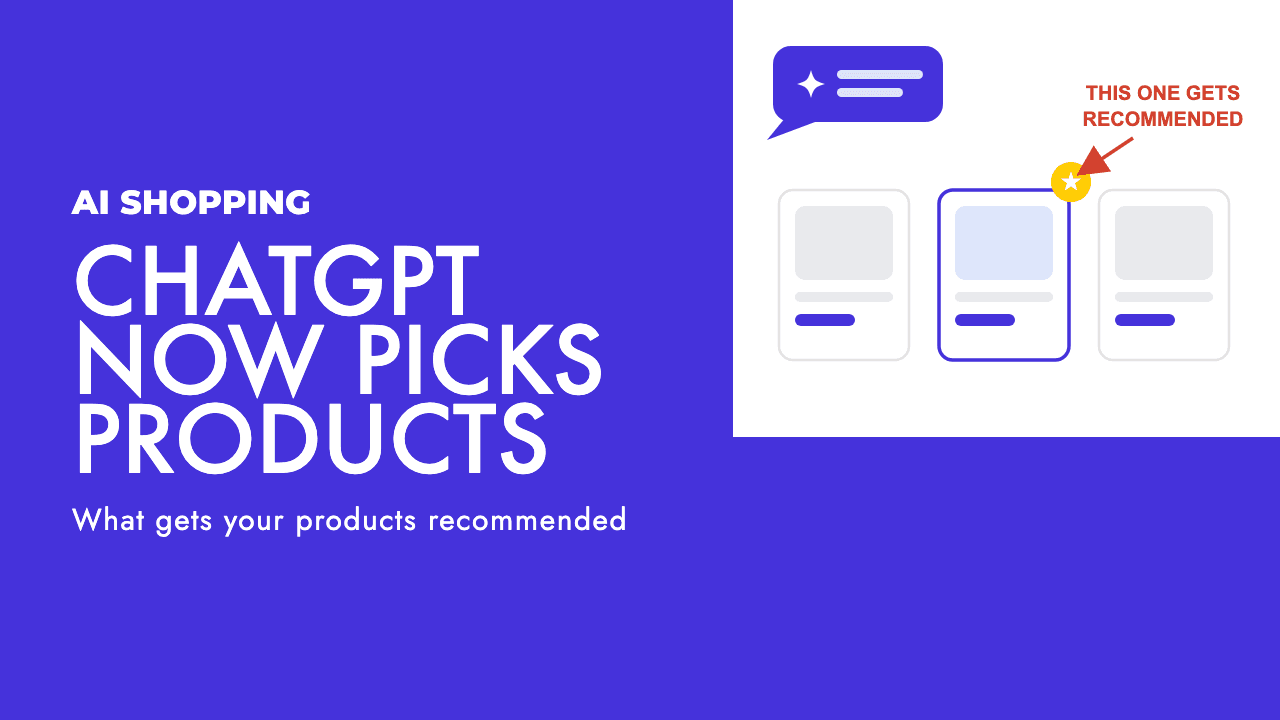
ChatGPT just quietly changed what it is. For most of the past year it was a place people asked questions, and occasionally a place they clicked "Buy." As of this month it is a product discovery engine. Ask it for the best waterproof hiking boot under 200 dollars and it will browse a catalog of real products, compare them side by side, show images and prices, and hand you to the merchant when you are ready to buy.
OpenAI's announcement extended the Agentic Commerce Protocol from checkout into full product discovery (OpenAI). The short version: ChatGPT no longer needs to send you to a retailer's site to find a product. It reads structured feeds from merchants and recommends from them directly.
If you run an online store, this is the most important shift in the buying funnel since AI Overviews started answering research questions. And most of the advice you will read about it is wrong, because it treats this like SEO. It is not SEO. There is no page to rank, no meta title to write, no blue link to win.
There is no ranking here, there is a feed
The mental model to drop first: ChatGPT is not crawling your product pages and ranking them. It is ingesting a structured product feed you provide, as delimited files or through the feed API, and choosing from that (OpenAI Developers).
That feed carries the fields you would expect: a stable item ID, title, description, price with currency, availability, product URL, image and brand as required fields. OpenAI's own guidance is to send the full feed once a day and push price and stock changes through the API throughout the day (OpenAI Developers), which is the tell for how much accuracy matters here. A stale feed is not a slightly worse ranking. It is a product that gets quietly dropped when the price it quoted turns out to be wrong.
OpenAI has been clear that product results are organic and unsponsored, ranked on relevance to the user, with availability, price, quality and whether you are the primary seller among the factors it weighs (OpenAI). Recommended feed attributes like review counts, star ratings, Q&A and performance signals such as popularity and return rate are what give the model something to separate one product from another.
So the "content" that wins in ChatGPT commerce is not your blog or your category copy. It is your product data. This is the part traditional SEO teams consistently underrate, and we see it constantly: the merchants with the cleanest, most complete, most honest feeds are the ones a machine can confidently recommend.
Your catalog may already be in it
Here is the part that catches people off guard. You may not need to do anything to be eligible, and you may already be listed without realising.
Shopify merchants and US Etsy sellers have their catalogs integrated automatically, with no application or setup (ChatGPT for merchants). Everyone else applies through the same page and joins a waitlist. Major retailers including Target, Best Buy, Sephora, Home Depot, Wayfair and Walmart are already integrated (OpenAI).
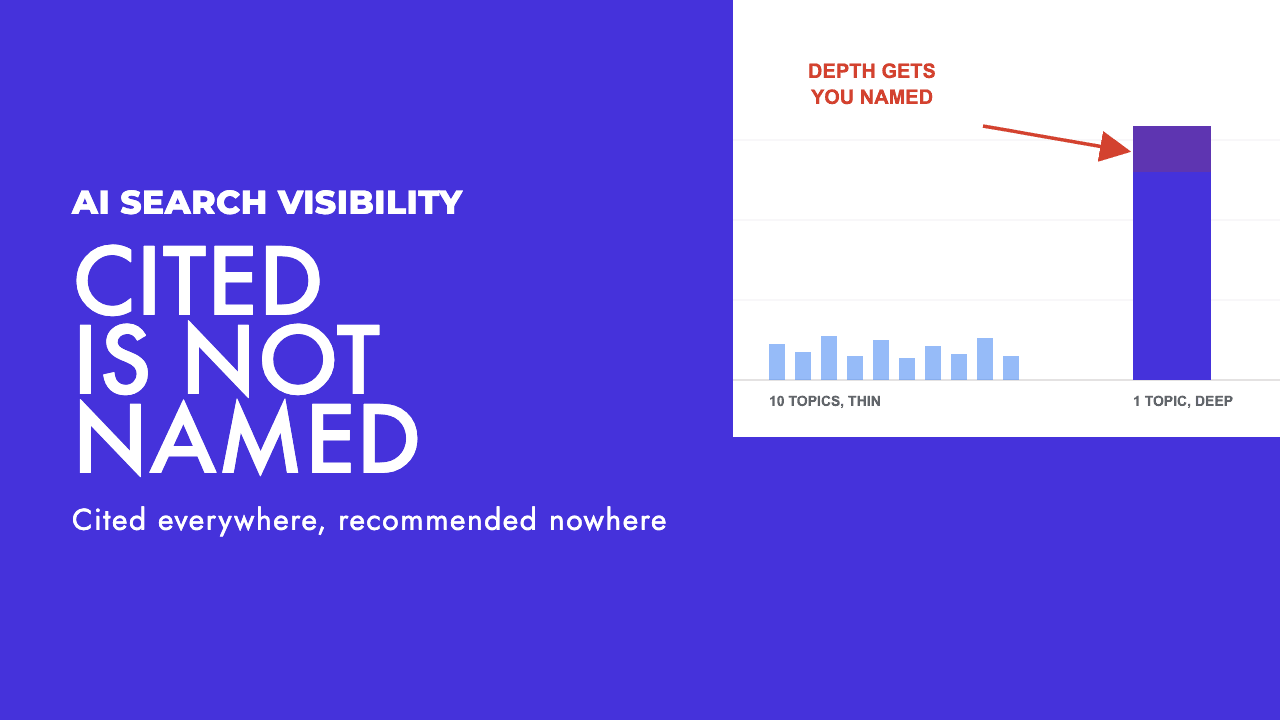
Automatic eligibility sounds like a gift. It is closer to a warning. Being in the index is not the same as being recommended. If your catalog got swept in through a platform integration and your product data is thin, inconsistent, or missing reviews, you are in the room but you are the product the model talks around, not the one it names.
Being included is not being recommended
This is the whole game, so it is worth slowing down on.
When ChatGPT picks a product to recommend, it is making a confidence call. Can I trust this price? Is it actually in stock? Do the reviews suggest a real customer will be happy? Is the description specific enough that I can match it to what this person asked for? Every gap in your feed is a reason for the model to reach for a competitor whose data answers those questions cleanly.
Three things move that confidence needle more than anything else:
- Real-time accuracy. Wrong prices and phantom stock do not just cost one sale. Inconsistent or outdated data gives the agent a reason to deprioritise you in future sessions. Machines remember bad data.
- Reviews and ratings in the feed. A product with credible aggregate ratings gives the model something to justify a recommendation with. A product without them is a guess it would rather not make.
- Descriptions written for a question, not a keyword. Old-school SEO product copy stuffed with search terms reads as noise to a model trying to match intent. Write descriptions that answer what a buyer would actually ask: what it is for, who it suits, what it is made of, when not to buy it.
If that sounds like the discipline behind getting cited in AI answers generally, it is. We wrote about the passage-level version of this in how to structure content so LLMs cite you. Product discovery is the same principle applied to a feed instead of a page.
The Cyprus and small-merchant reality check
Most of this is US-first. Etsy auto-inclusion, the Shopify sales channel, the big-box launch partners: they are American rollouts. If you are selling from Cyprus or serving a non-US market, you are not the priority audience for this launch, and it would be dishonest to tell you otherwise.
That does not mean sit it out. It means prepare the thing that will matter when it reaches you, which is your feed. Clean product data, structured identifiers, honest availability, and genuine reviews are not ChatGPT-specific work. They are the same feed hygiene that already decides your fate in Google Shopping and, increasingly, in agentic checkout across platforms. Call it ecommerce SEO fundamentals with a machine reader in mind. You are not building for one channel, you are building the infrastructure every AI buyer will read.
For a smaller merchant, there is even an edge here. This is a data quality contest, not a domain authority contest. You cannot outrank Wayfair on links, but you can absolutely out-describe them on a niche product with a cleaner, more specific, better-reviewed feed entry. Machines do not care how big you are. They care whether your data is trustworthy.
What we would actually do this quarter
Our practitioner take, stripped of hype: treat product data as the new on-page SEO and treat this as infrastructure work, the technical SEO end of the job, not a content campaign.
- Audit feed completeness before anything else. Every product should have a real description, accurate price, correct availability, high-quality images, a working product URL and a stable ID that survives variant changes. Fix the feed, not the funnel.
- Get reviews and ratings into the feed. If you collect reviews but they never reach your product data, they cannot help you where the recommendation happens.
- Rewrite descriptions for questions. Pull your five best sellers and rewrite their descriptions to answer what a real buyer asks out loud. That is the language the model matches against.
- Check where the purchase actually happens. As of this update, ChatGPT hands the buyer to your own site or app to complete the purchase, with no transaction fee, and OpenAI has said the first version of Instant Checkout "did not offer the level of flexibility" it wanted (OpenAI). If you still run in-chat checkout, merchants pay a fee on completed purchases, so know your number before you celebrate the channel.
- Watch who owns the customer. As we argued when Google launched Universal Cart, the strategic question with any off-site checkout is whether you keep the customer relationship and the data or rent someone else's audience. Read the terms, not the press release. The same question applies when an agentic browser visits your site on a shopper's behalf.
The bigger picture is the one we have been making all year: the click to your website is no longer the finish line. It happened with research queries and AI Overviews, we covered it in what AI shopping agents mean for SEO, and product discovery in ChatGPT is the same story reaching the buy button. The businesses that win are not the ones shouting loudest. They are the ones whose data a machine can trust.
Update, September 2026
The checkout half of this story has moved since July. OpenAI's merchant page now says shoppers discover and evaluate products in ChatGPT but complete purchases on the merchant's own website or app, with no transaction fee on those sales, and that a self-serve integration for more merchants and regions is due later in the year (ChatGPT for merchants). Shopping is still live for US users only. Separately, ads arrived in ChatGPT over the summer and expanded across Europe in August; OpenAI's position is that advertising "does not influence the answers ChatGPT provides" and that ads are labelled and kept separate from answers (OpenAI). Product results remain organic, which makes the feed work above more important, not less.
If you want a second pair of eyes on whether your product data is ready for this, that is exactly the kind of thing our AI search optimization work covers, and you can start with a free SEO review.