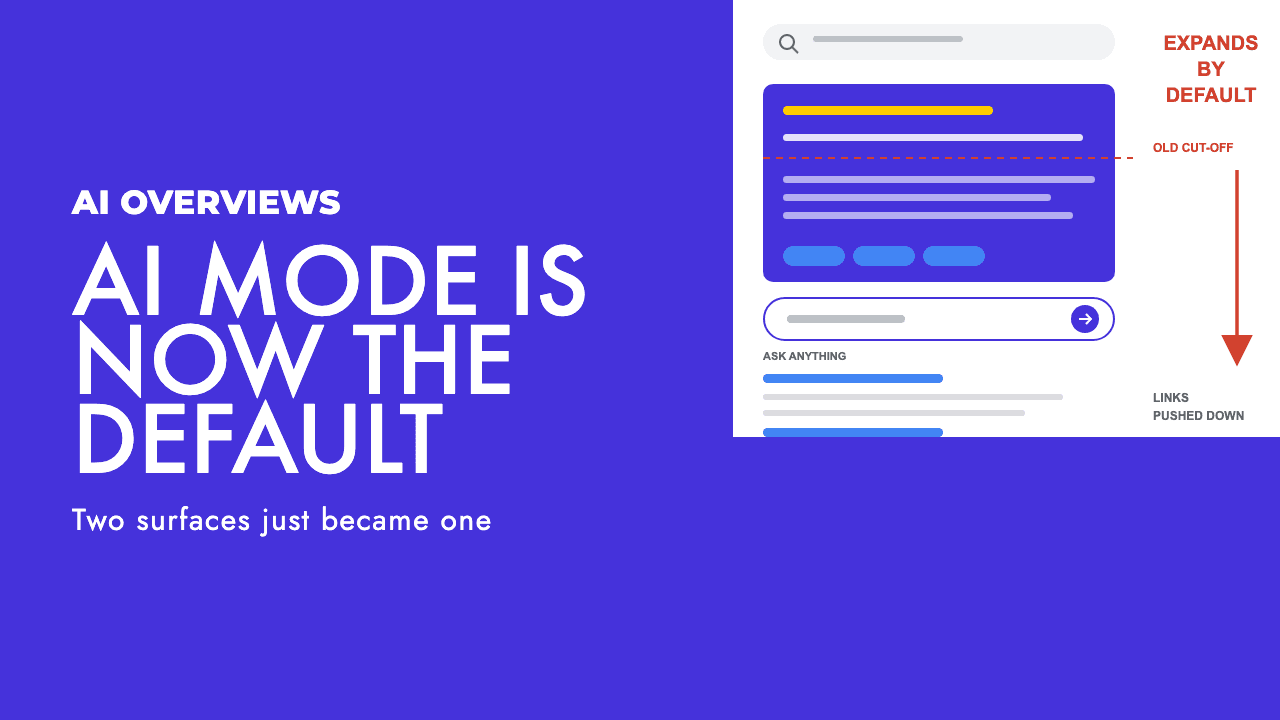

Ask ChatGPT "what is the best online casino" and watch what happens. You rarely get a name. You get a disclaimer about gambling responsibly, a note about checking your local laws, and maybe a vague list of "things to look for." Ask the same question in a Google AI Overview and you often get nothing at all, just the regular blue links underneath.
That is not a bug. iGaming is the hardest category in search to win right now, and AI engines have made it harder. They treat gambling as high-risk, sensitive, money-and-life territory, and they are deliberately conservative about who they name. Which means the old casino SEO playbook of rank, win the click, convert is being squeezed from both ends.
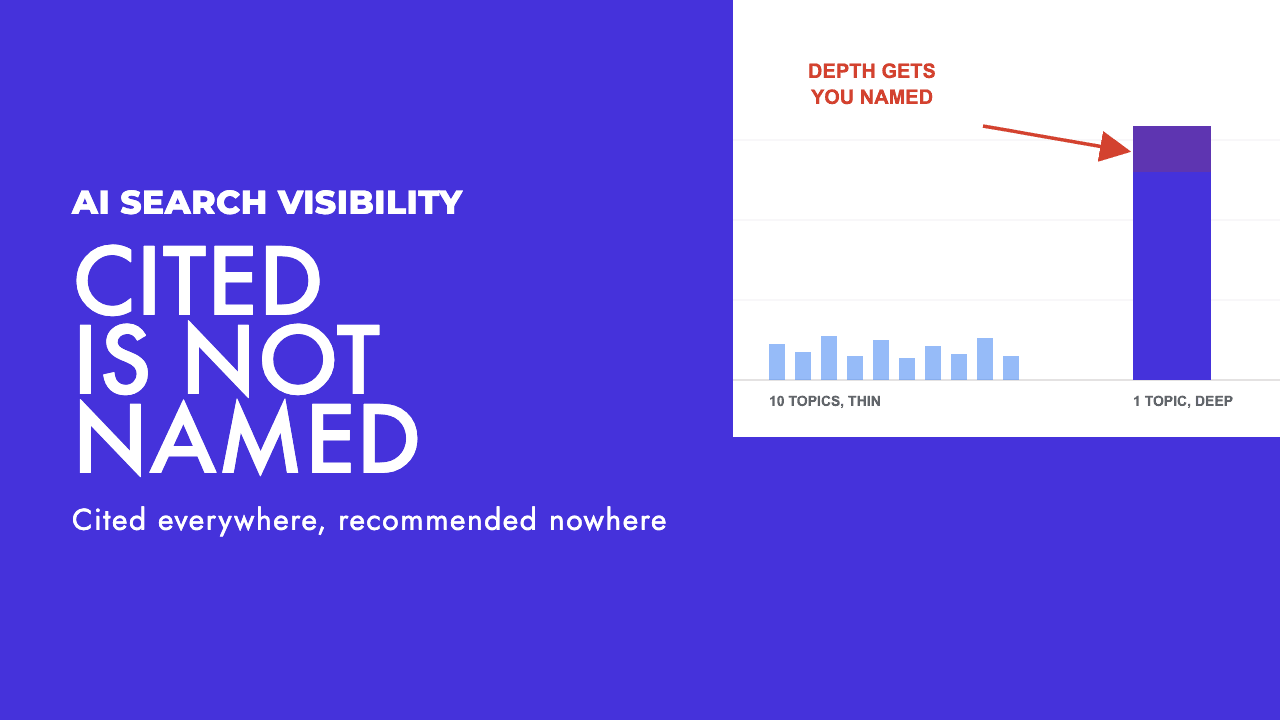
Here is the thing most operators are missing: the brands that win AI visibility in gambling are not usually the casinos themselves. They are the comparison sites, the affiliates, and the editorial properties that AI engines feel safe citing. If you run an iGaming brand and you are not thinking about that layer, you are optimising for a recommendation the model will not make.
iGaming SEO is still one of the most valuable niches in search
Anyone who has bought paid search in this vertical knows the stakes. Casino and iGaming SEO terms are among the most expensive clicks in the whole industry, and the reason is simple: organic visibility here is worth a fortune and brutally hard to earn, so operators will pay almost anything to find someone who can deliver it. You can pull the volume and cost picture for your own terms with our keyword research tool for volume and CPC.
We see the demand on our side too. Our iGaming and casino SEO service page is one of the most-visited pages on our site, and the enquiries that come through it arrive constantly, from operators, affiliates and the agencies that serve them.
In Cyprus, where a big chunk of Europe's iGaming operators are headquartered, the same conversations are happening in every office we walk into. The industry is not shrinking. The way it gets found is changing.
Why AI engines are so cautious about gambling
AI engines classify gambling as Your Money or Your Life content. That is Google's own term for topics that can affect a person's health, finances, or safety, and it is the category where they apply the strictest quality and trust standards.
In practice, this shows up three ways:
- AI Overviews trigger less often for gambling queries. Google's own AI features documentation says AI Overviews only show when its systems judge them additive to classic Search and "often don't trigger," and in our experience gambling queries sit firmly on the wrong side of that line. Ask about a casino bonus and you are more likely to get standard results than a summarised AI answer.
- ChatGPT and Gemini hedge instead of recommending. They will explain how online casinos work all day long. Ask them to pick one and they pivot to responsible gambling messaging and "do your own research."
- Citations skew toward third parties. When AI engines do cite a source on gambling, it tends to be a regulator, a news outlet, or an established review site, not the operator's own marketing page.
This is consistent with how Google has long handled YMYL content. Its helpful content guidance and quality rater standards both lean hard on demonstrated expertise, trust, and real-world reputation for exactly these categories. AI answers inherit that caution because they are built on the same underlying ranking and trust signals.
Our take: this is not a temporary phase that gets relaxed once the models mature. Regulatory pressure on gambling advertising is increasing in most markets, not easing. The conservative posture is going to harden. So the smart move is to stop fighting it and start working with it.
The winners are the comparison and review layer
Here is the strategic shift. If AI engines will not name your casino directly, they will cite the sites that rank, review, and compare casinos. Those sites become the distribution channel for AI visibility.
We ran the SERP for the core commercial terms ("igaming seo," "casino seo," "casino seo services") and the pattern is clear. The top of the results is dominated by directories and aggregators, SEMrush's agency listings, Trustpilot, Clutch, SE Ranking, plus a handful of specialist agencies. Original, genuinely useful guidance on the vertical is thin. The same dynamic plays out on the consumer side: "best casino" style queries are owned by comparison properties, and those are the pages AI engines pull from when they reluctantly say anything at all.
For operators, that means two parallel jobs:
- Earn placement and citations on the review and comparison sites that AI engines trust. This is digital PR and affiliate strategy more than on-page SEO. The same logic we lay out in our guide to valuable backlinks for online casino websites applies here, except the goal is no longer just link equity. It is being the casino that gets named inside a source the model already cites.
- Make your own brand verifiable. When a model is deciding whether it is safe to mention you, it leans on signals it can corroborate: a visible licence, a clean regulatory record, consistent NAP and entity data, third-party reviews that line up. Vague trust claims do nothing. Verifiable ones do a lot.
For affiliates and comparison sites, the opportunity is even more direct. You are the layer AI engines are willing to cite. Structuring your content to be extractable, current, and demonstrably independent is how you become the source behind the answer.
What actually moves the needle for iGaming AEO
Answer Engine Optimization for gambling follows the same fundamentals we cover in our AEO guide and our AI Overviews playbook, with a few vertical-specific twists. Here is where we focus client effort.
Lead with the regulated, verifiable facts. Licence numbers, jurisdictions, payout percentages, withdrawal times, responsible-gambling tools. AI engines reward content that states checkable facts plainly, and in a YMYL category that caution cuts in your favour if you give them facts they can stand behind.
Answer the comparison questions directly. "Which casinos pay out fastest," "what is the safest licensed casino in [market]," "minimum deposit casinos." Structure each answer as a clean, self-contained block near the top of the page. That is what gets lifted into an AI summary.
Win the entity, not just the keyword. Make sure your brand exists cleanly as an entity across the web: consistent name, licence, and details on your site, in business listings, and on the review platforms. Models assemble their picture of you from many sources. Contradictions get you dropped.
Get the international setup right. iGaming is multi-market by nature, and a Cyprus-licensed brand serving German, Greek, and English players needs its language and regional targeting to be airtight, which is international SEO groundwork before it is an AI search problem. We wrote a full breakdown in hreflang tags for multilingual casino sites, and it matters more under AI search, not less, because models pick the wrong regional page if your signals are muddy. International targeting is core to how we approach iGaming and casino SEO.
Build the trust signals AI engines can corroborate. Author expertise, editorial standards, responsible-gambling pages that are real and not boilerplate, third-party validation. This is the slow work, and it is the work that separates the brands AI engines will name from the ones they will not.
Where traditional SEO still does the heavy lifting
None of this means classic search is over for gambling. Far from it. The blue links are where the click and the deposit still happen, because AI engines are sending gambling traffic back to standard results more often than almost any other category.
So the structure for 2026 looks like this. Traditional SEO still wins the click and the conversion. AI search optimization wins the citation and the brand mention that feeds the consideration stage. Backlink building and digital PR do double duty, earning rankings and earning the third-party trust that makes a model comfortable naming you. You need all three running together, and in iGaming the third one is the differentiator.
The operators who treat AI search as a reason to abandon SEO are reading it backwards. The ones who treat it as an extra layer on top of solid fundamentals are the ones we see pulling ahead.
The bottom line
AI engines are not going to start enthusiastically recommending casinos. The caution is structural and it is getting stronger. Winning iGaming SEO in 2026 means accepting that, then doing the harder work: becoming the brand that is so well-licensed, so consistently represented, and so frequently cited by trusted third parties that the model has no good reason to leave you out.
That is a tougher bar than ranking number one ever was. It is also a much more durable position once you have it, because trust and verifiable reputation do not get wiped out by the next algorithm update.
If you run a casino, sportsbook, or affiliate brand and you want to know where you actually stand in AI search today, that is exactly what we dig into in a free SEO review. We will show you who is getting cited in your space and what it would take to be one of them. And if you want the work handled end to end, that is what our iGaming SEO services are built for. Gambling is not the only YMYL vertical where this plays out, and we take the same approach to crypto SEO work.
Update, September 2026
Two things landed over the summer that change the measurement side of this, if not the strategy. Google's generative AI performance report in Search Console went global on 31 August, so every casino, sportsbook and affiliate site can now see whether its URLs appear in AI Overviews and AI Mode at all. It reports impressions, pages, countries and devices, with no clicks and no queries, which makes it a presence check rather than a traffic report, and it is the cleanest way to test the "AI engines rarely surface gambling pages" claim against your own site.
The other is regional. From 30 August Google's site reputation manual actions no longer apply for searchers in the EEA. That is the policy aimed at casino affiliate content parked on big publisher domains, and some affiliates will read the change as a green light. Read the small print first: the penalty goes, but the affected section is separated from the host's authority and left to rank on its own, which removes the whole point of the tactic. We would not build a strategy on it.
Sources: Google Search Central, helpful content guidance; Google Search Central, AI features and your website; Search Engine Land, Search Console AI performance reports rolling out globally.