
For twenty years SEO has been built on a single moment. A person has a need, types a query, sees a page of results, and clicks. Win that moment and you win the visit. Everything we do, titles, content, links, schema, has been aimed at that one instant when a human looks at a search result and decides.
Google just announced something that quietly removes the moment.
At I/O 2026 the company introduced Search agents, starting with what it calls information agents. These run continuously in the background, scanning blogs, news sites, social posts and Google's own real-time data, and they notify their owner the instant something matches what they asked for. An apartment hunter sets their criteria once and the agent watches listings for weeks. A sports fan gets pinged when a merch drop lands. The person searches once. The agent searches forever.
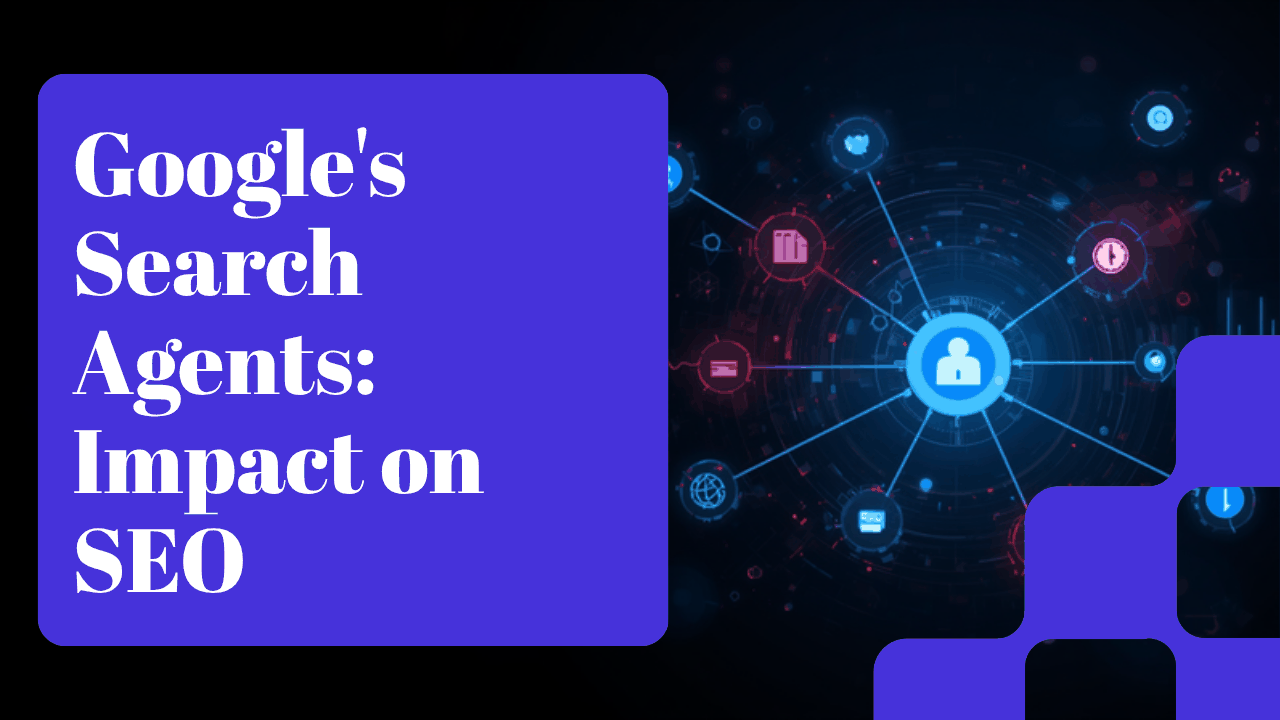
We have been digging into what this means for the businesses we work with in Cyprus and the US, and the short version is this: the search did not get smarter, it got persistent. That sounds small. It is not.
What Google actually shipped
Information agents are standing instructions, closer to a saved search with a brain than to a chatbot or an AI Overview.
You tell the agent what you care about once, and it keeps working. Google describes them as agents that "intelligently reason across information to find exactly what you need at exactly the right moment," pulling from web sources plus its live data on finance, shopping and sports. They run 24/7 in the background and surface synthesised updates when there is something worth telling you.
Availability is still narrow. Google said the agents would launch over the summer for Google AI Pro and Ultra subscribers only, so this is early-adopter territory today. But the direction is unmistakable, and it sits alongside Google's other recent move, the new generative AI performance reports in Search Console, which finally let site owners see impressions inside AI Overviews and AI Mode. Google is building the agent layer and the measurement layer at the same time. That is not a coincidence.
Why the persistent search breaks the old model
Here is the part that matters. Classic SEO optimises for a query that happens at a known time. Agentic search optimises for a query that is always open.
When a human searches, your content either ranks at that second or it does not. When an agent searches, the relevant moment is not when the user acts, it is when your content changes. Publish an update, change a price, post an availability, and that is the trigger. The agent was already watching. You did not win a search, you matched a standing condition.
This flips two things we have taken for granted.
Freshness stops being a tiebreaker and becomes the entry ticket. An agent monitoring "new commercial units near Limassol under a certain budget" is reacting to changes in the world. A page you last touched eight months ago is invisible to that loop, no matter how well optimised it was the day you published it. We have written before about impressions climbing while clicks stay flat. Agents push that further. The signal shifts from "is this page good" to "did something here just change that my user should know about."
Being extractable beats being persuasive. No human reads the agent's source pages. The agent does. It parses your structured data, your dates, your prices, your availability, and decides whether to surface you, the same way an AI shopping agent reads a product page before it ever adds anything to a basket, or an agentic browser works through your site on a user's behalf. Your hero image and your clever headline are doing nothing in that exchange. Clean, current, machine-readable facts are doing everything.
Our take: this is GEO with a clock attached
We want to be honest about the hype cycle here, because there will be a wave of "agentic SEO" courses by the end of the summer and most of them will be repackaging things you already know.
Most of what makes you visible to an information agent is what already makes you visible in AI Mode and answer engines. Be the recognised source on your topic. Structure your content so a machine can lift a clean answer from it. Keep your entity consistent across the web. Search Engine Land made the same broad point recently, that the goal of search is shifting from rankings to recognition, arguing that "a high-ranking page can be largely invisible to these systems if the brand behind it hasn't established recognition and preference." We agree, and agents are the clearest expression of it yet. An agent is far more likely to keep returning to a source it has learned to trust than to re-evaluate the open web from scratch every time.
The genuinely new dimension is cadence. The old GEO playbook says "be the best answer." The agentic version adds "and keep proving it on a schedule the agent can feel." That is the part nobody had to think about before, because a one-off human search never cared whether you updated last Tuesday or last year.
So no, you do not need to throw out your strategy. But if your content strategy is a burst of publishing followed by months of silence, that pattern was already weak and agents make it weaker.
What to actually do now
You do not need to chase a feature most of your customers cannot use yet. You do need to stop building for a search world that is closing. Here is where we would put the effort.
Treat freshness as a system, not a chore. Decide which of your pages describe things that change, pricing, stock, property listings, service areas, opening hours, event dates, and commit to keeping those genuinely current. Stale facts are the fastest way to get dropped from a monitoring loop. This is doubly true if you operate across markets, where a half-updated multi-location or international setup quietly rots.
Make your key facts machine-readable. Structured data stops being a nice-to-have when the reader is a machine. Mark up prices, availability, locations, dates and reviews so an agent does not have to guess. If you are not sure what an agent can currently extract from your pages, that is exactly the kind of gap a technical audit is built to find.
Build recognition, not just rankings. Get cited in the places agents already trust, keep your business details identical everywhere they appear, and earn a reputation as the source on your niche. Recognition is what makes an agent return to you instead of re-deciding every time.
Watch the new Search Console reports. Now that Google exposes generative AI impressions, start tracking whether you appear inside AI surfaces at all. The report went global on 31 August with impressions, pages, countries and devices, but no clicks and no queries, so treat it as a presence check rather than a traffic report. We walked through how to read it. You cannot improve a layer you are not measuring, and this is the first time most businesses can see it.
The bottom line
Information agents are early, limited, and behind a paywall today. It would be a mistake to panic-optimise for them this quarter.
It would be a bigger mistake to miss what they signal. Search is moving from a thing people do to a thing that runs on their behalf, and the businesses that win are the ones a machine can find, read and trust on any given day, not just the day someone happens to type a query. That is a higher bar than ranking, and it rewards the same boring discipline it always has, just measured on a clock that never stops.
If you want a clear read on whether your site is built for that world or the old one, a free SEO review is the fastest way to find out. We work with businesses through our Cyprus SEO agency and across the US on exactly this shift, from AI search optimisation to the technical SEO groundwork that makes your content legible to whatever is doing the searching next.
Update, September 2026
Google has not, as far as we can find, published anything since I/O that widens information agents beyond AI Pro and Ultra subscribers, so the "early-adopter territory" line above still stands. The agentic push went elsewhere over the summer: on 27 August Google started completing hotel bookings inside AI Mode with ten booking partners in the US, and its agents now phone local businesses for price quotes. Same lesson as above: the agent reads facts, not persuasion, and the businesses with current, machine-readable facts are the ones it can act on.